
8.0/10
Luxury25 yr life
Original Cabin, Silver 92553004
RIMOWA
A 35-liter anodized-aluminum cabin case with a frame closure, dual TSA locks, ball-bearing Multiwheels and lifetime functional coverage.
- Repair
- 7.3/10
- TCO
- 7.4/10
$1550.00
Durable buying guide
Choose carry-on luggage by checking the rules for every airline and aircraft on your itinerary; limits can vary, and published dimensions may include wheels and handles. Also compare empty weight, usable interior space, closure and handle construction, wheel stability, and access to replacement parts.
2 products
Higher-priced options whose materials, features, service, and tradeoffs still need evidence-based comparison.
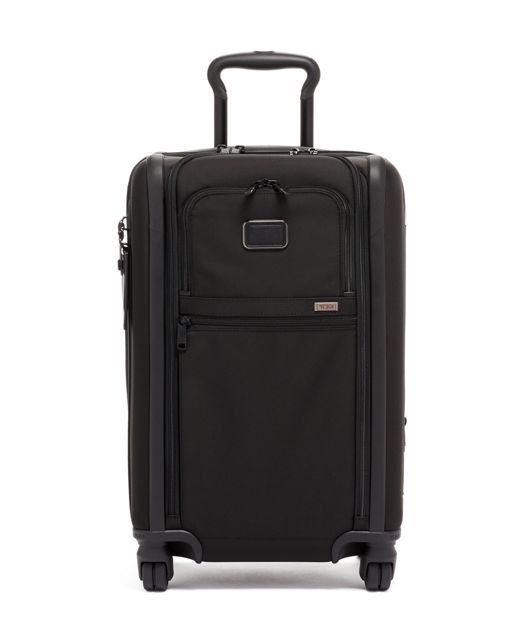
RIMOWA
A 35-liter anodized-aluminum cabin case with a frame closure, dual TSA locks, ball-bearing Multiwheels and lifetime functional coverage.
4 products
Superior features, extended warranties, and high-end materials for enhanced performance.

Away
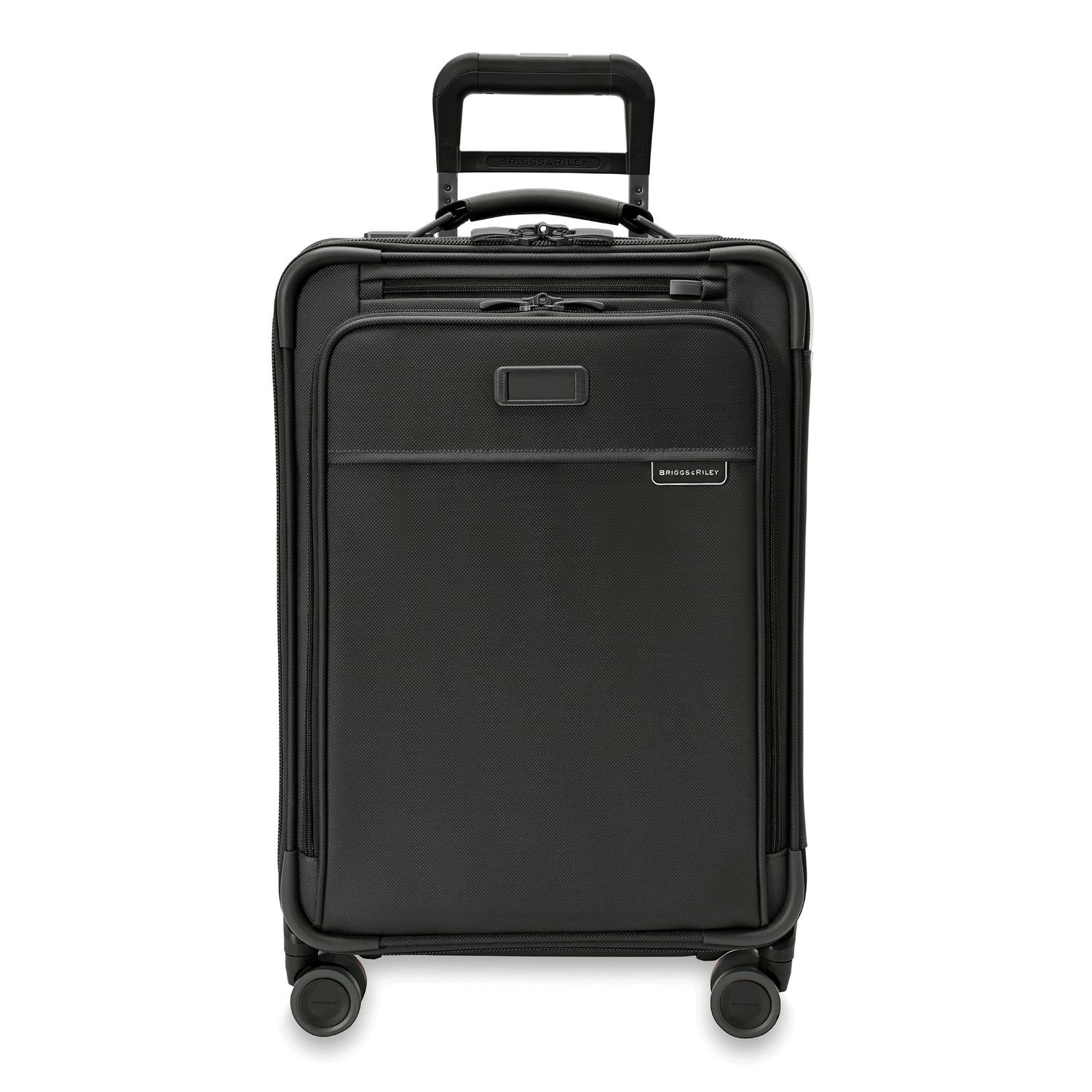
A 32-liter aluminum carry-on with dual TSA locks, spinner wheels, compression panels and lifetime repair support.

Solgaard
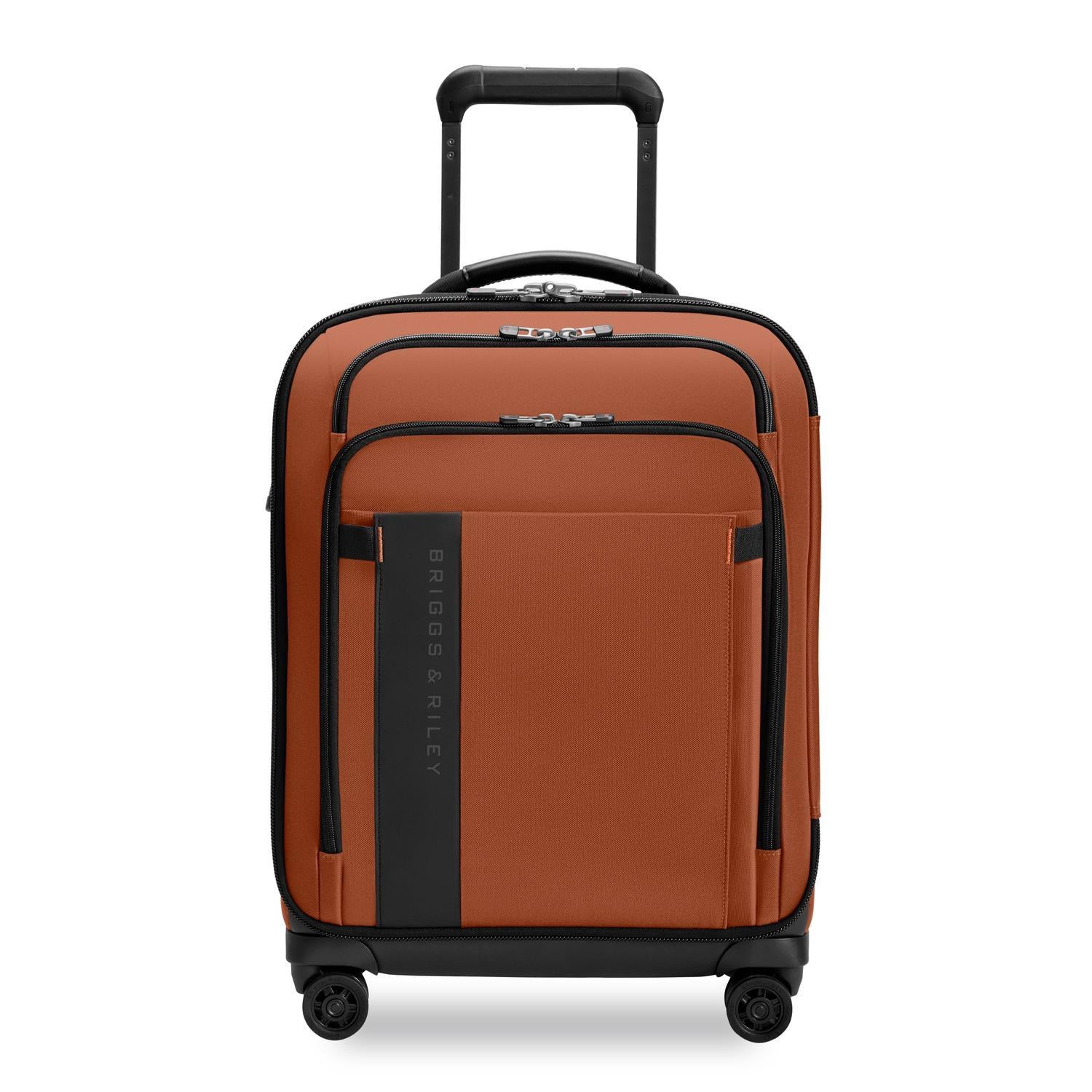
A polycarbonate carry-on with a removable hanging shelf system, TSA lock, USB pass-through and 360-degree wheels.
6 products
A balanced blend of performance, quality, and price for the discerning user.
Travelpro
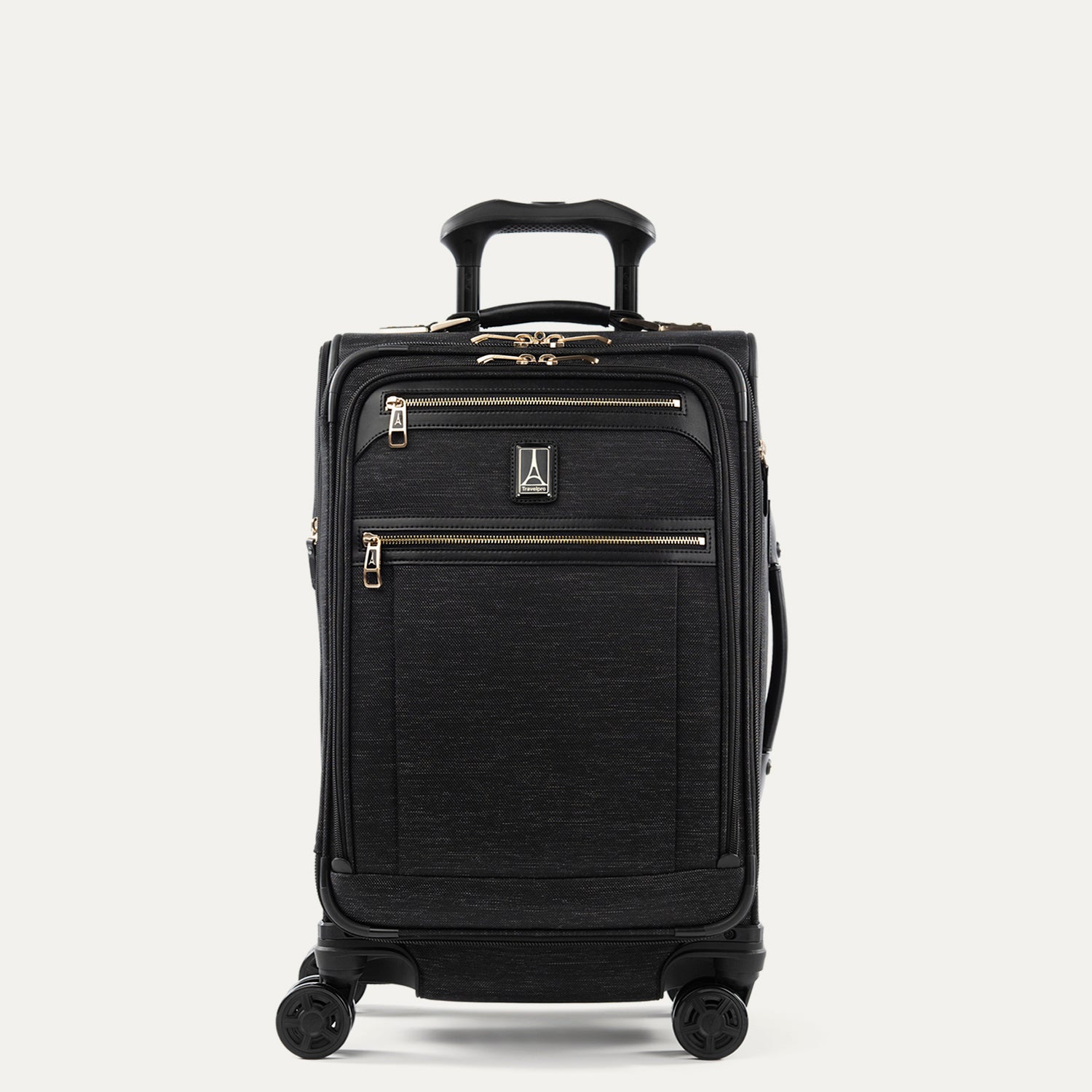
A 46-liter soft-side spinner with MagnaTrac wheels, two-inch expansion, a removable suiter and USB-A/C pass-through ports.
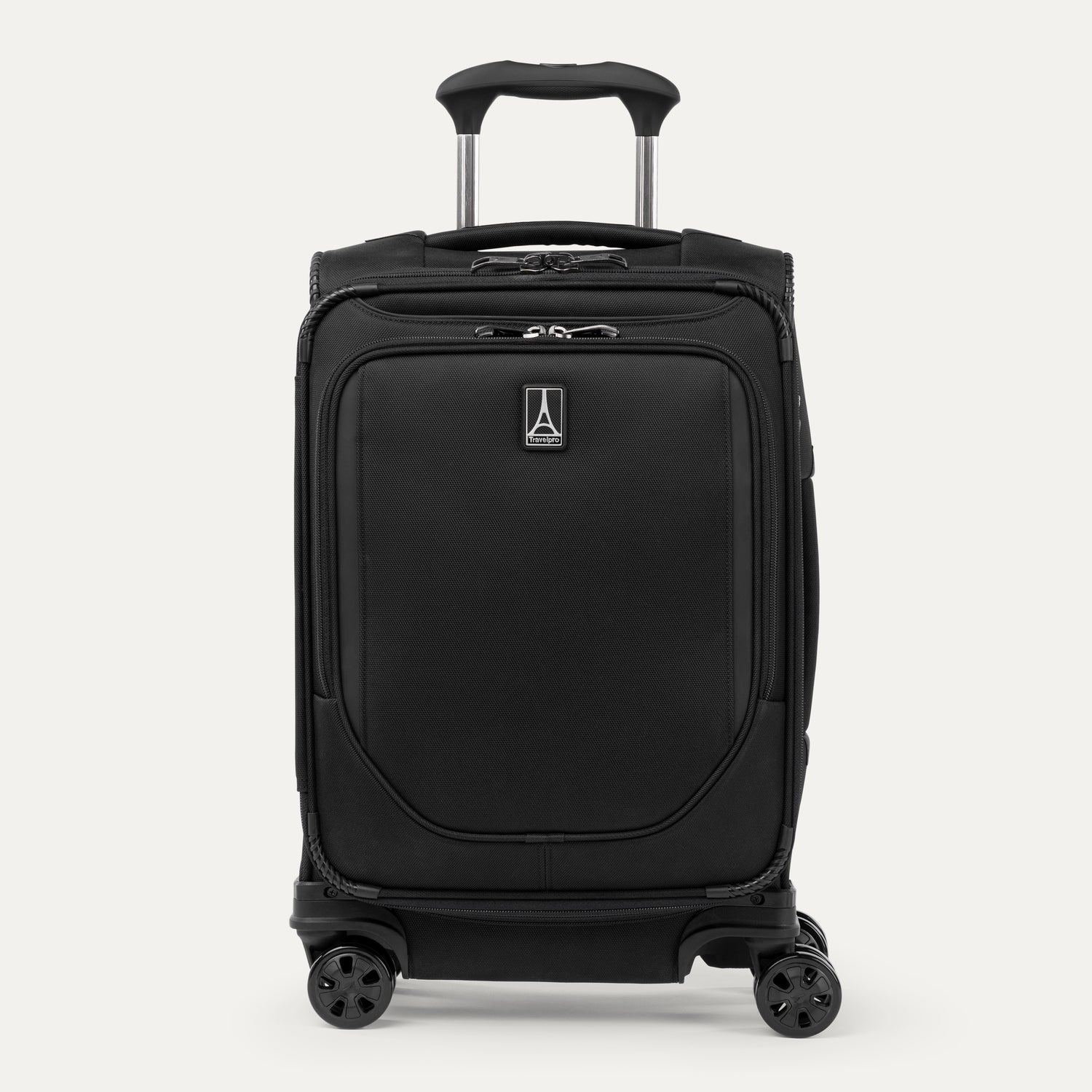
Travelpro
A 38-liter, 6.8-pound compact spinner with MagnaTrac wheels, YKK zippers, a removable compression organizer and two-inch expansion.

Monos
A 36-liter polycarbonate spinner with a protected 16-inch laptop pocket, YKK zippers, compression panel and limited lifetime warranty.

Thule
A 35-liter 800D soft-side spinner with a molded polycarbonate back, YKK zippers and removable compression panel.
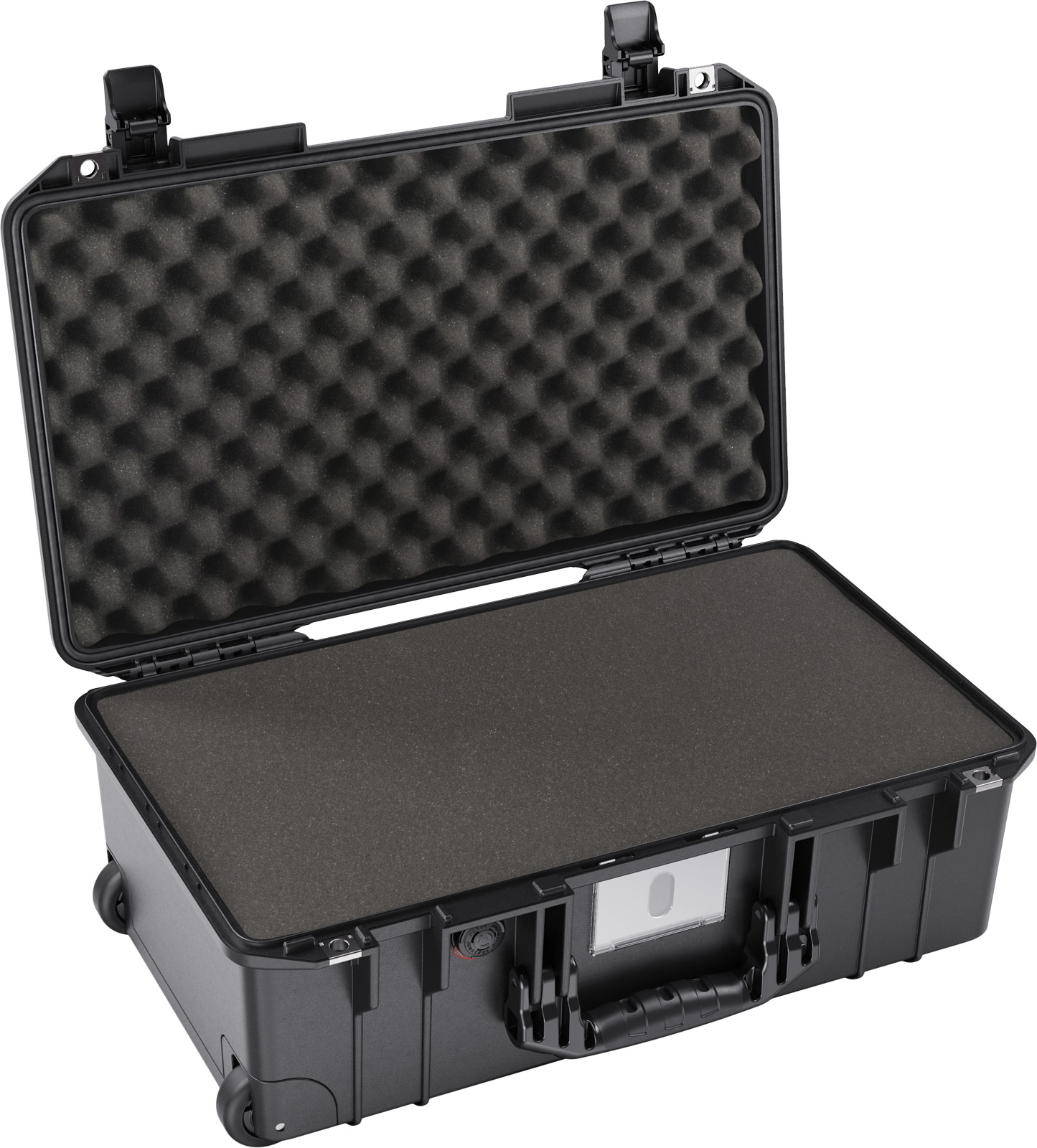
Pelican
An IP67 hard equipment case with HPX² polymer, O-ring seal, pressure valve, trolley handle and stainless-bearing wheels.
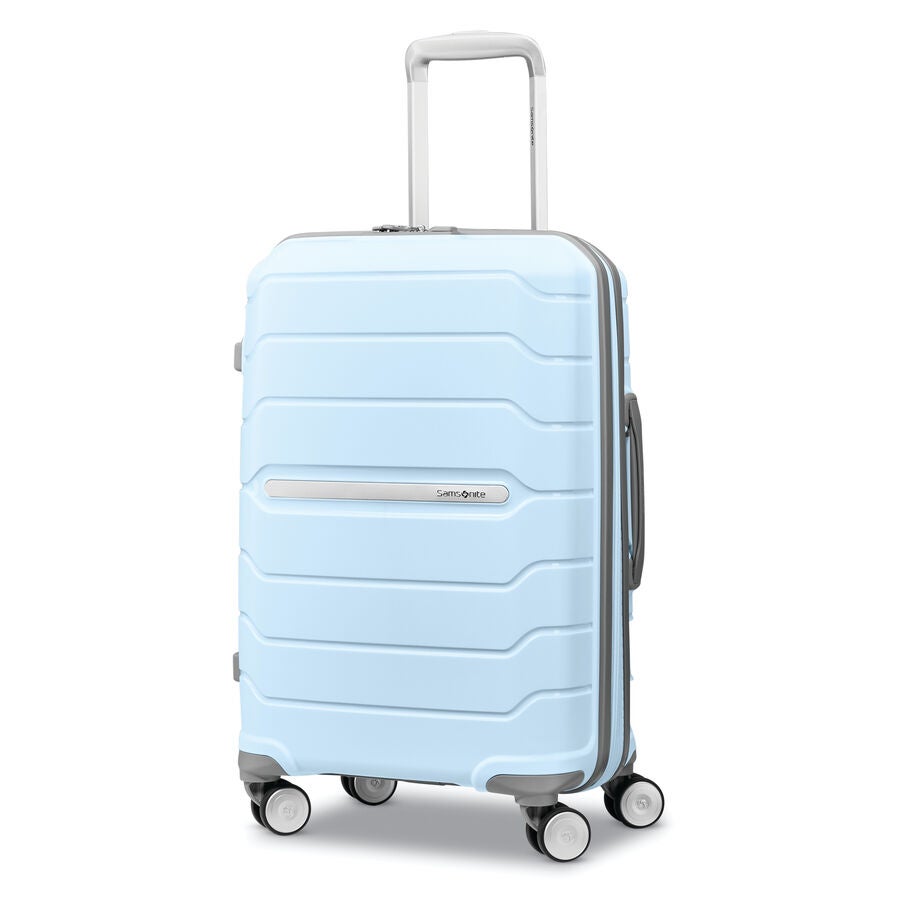
Samsonite
A 6.5-pound polypropylene spinner with double wheels, one-inch expansion, cross-straps and a recessed TSA lock.
Buying guide
Begin with the rules of the airlines and aircraft you actually use, not a generic “carry-on approved” label. Delta currently caps a carry-on at 22 by 14 by 9 inches and states that the measurement includes handles and wheels; it also warns that limited-bin regional aircraft may accept only personal items in the cabin. Compare every published outer dimension, including protrusions, with each operating carrier’s current limit before buying.
Roll the candidate bag loaded, over a threshold and through tight turns. Check that every wheel tracks straight, spins freely, and mounts without obvious looseness. Travelpro’s repair guide identifies wheels as the luggage-to-ground contact point and recommends clearing debris before diagnosing a fault; it also discusses tightening loose wheel screws. For long service, favor a model with accessible fasteners and exact replacement wheels rather than a wheel housing permanently buried in the shell.
Extend the telescoping handle fully, apply only gentle side pressure, and confirm that it locks consistently at useful heights. Run the zipper around corners without overfilling the case, and inspect seams, corner structure, carry handles, and the lining around service hardware. Travelpro’s guide separately addresses wheel, zipper, and handle faults, which is a useful checklist of likely service points. Before purchase, verify who will repair the exact model, how parts are obtained, and whether shipping or labor is excluded.
Useful volume is more important than an expansion zip that pushes the packed bag beyond its size limit. Look for a stable compression system, a layout that does not force the closure under tension, and quick access to items likely to be removed at security. TSA says carry-on liquids, aerosols, gels, creams, and pastes generally belong in one quart-size bag, with containers limited to 3.4 ounces or 100 milliliters each. Pack a realistic load and confirm that you can lift it safely overhead before committing.
FAQ
No. Carry-on allowances can vary by airline, cabin class, and aircraft type, so check every carrier on the itinerary before buying. Compare the bag’s full external dimensions—not just the shell—and include wheels and handles. For example, Delta lists a 22 by 14 by 9 inch limit and explicitly includes those protrusions.
Only if its expanded external dimensions still fit the operating airline’s limit. Treat the expansion zipper as extra packing flexibility, not permission to exceed the sizer: measure the fully packed bag at its widest points, including wheels and handles. Delta also notes that an oversize bag, or one that cannot fit when bins are full, may be checked at the gate.
It matters most on itineraries with a cabin-bag weight cap and when you must lift the case overhead. IATA says allowances vary and that some airlines impose weight limits, sometimes starting at 5 kg (11 lb). Compare published empty weights, then weigh the bag with a realistic load; a lighter case preserves more of the allowance for belongings.
Look for wheel, carry-handle, telescoping-handle, and zipper components that the maker identifies for the exact model, plus accessible fasteners and a documented repair channel. Briggs & Riley’s repair guide illustrates the practical advantage: it offers model-specific kits for wheels, handles, and zipper pulls and describes replacing or refastening common parts.
Confirm the battery chemistry, watt-hour rating, and whether it can be removed without tools. FAA guidance says battery-equipped baggage generally belongs in the cabin unless the battery is removed; checked-bag exceptions are narrowly limited to batteries no larger than 0.3 g lithium metal or 2.7 Wh lithium ion. Recheck the airline’s policy before departure.
Yes. Cabin capacity and aircraft type can force gate checking even when the bag meets the stated limit. Delta says personnel may further restrict carry-ons and may gate-check a bag when overhead space is short; IATA likewise says items exceeding applicable limits may go in the hold. Choose sturdy closures and removable batteries, and keep essentials in a small item you can separate.
Honoring the visionaries whose work paved the way for the products we rely on today.
French engineer Maurice Partiot patented a wheeled suitcase in the United States in 1949. The design predates later commercial rolling luggage, but the patent application was not pursued and the patent lapsed in 1967, making his work an early documented step in the category’s development.
Bernard D. Sadow developed a commercial rolling suitcase and applied for the U.S. Rolling Luggage patent in 1970; it was granted in 1972. His four-wheeled design was pulled by a loose strap and helped establish wheeled movement as a practical feature of travel luggage.
Northwest Airlines pilot Robert Plath reworked the rolling suitcase in 1987 by standing the case upright, adding two base wheels, and fitting a retractable handle. After crew members adopted the design, he founded Travelpro and brought the Rollaboard concept to mainstream travelers.
Research last refreshed
John M. Hendrick · 1947
Hendrick describes paired wheels positioned to keep a tilted suitcase balanced, plus an extensible pulling handle and structural reinforcement to resist sagging. The design directly frames durable carry-on tradeoffs among leverage, stability, wheel placement, and case stiffness.
Barnett H. Book · 1949
Book proposes removable snap-on casters that fit sockets integrated with metal corner guards, with a separate end handle for rolling. The concept highlights serviceable wheel attachment, protection at impact-prone corners, and the ability to remove rolling hardware for ordinary carrying or storage.
Clarence F. Norlin · 1950
Norlin details wheels that retract into a dedicated end compartment and are operated through a handle-linked mechanism. Its stated aim of retaining nearly the capacity of conventional luggage with the same external dimensions remains relevant when assessing carry-on volume, protrusions, and mechanical complexity.