
8.0/10
Luxury25 yr life
Original Cabin, Silver 92553004
RIMOWA
A 35-liter anodized-aluminum cabin case with a frame closure, dual TSA locks, ball-bearing Multiwheels and lifetime functional coverage.
- Repair
- 7.3/10
- TCO
- 7.4/10
$1550.00
Durable buying guide
Wheeled luggage, travel backpacks, daily backpacks, duffels, and totes fail in different ways. Choose the closest subcategory before comparing wheels, handles, zippers, fabric, frames, and repair programs.
Limits: A broad luggage score cannot replace a use-specific comparison. Follow the subcategory links for products and limitations that match the intended trip.
4 products
Higher-priced options whose materials, features, service, and tradeoffs still need evidence-based comparison.
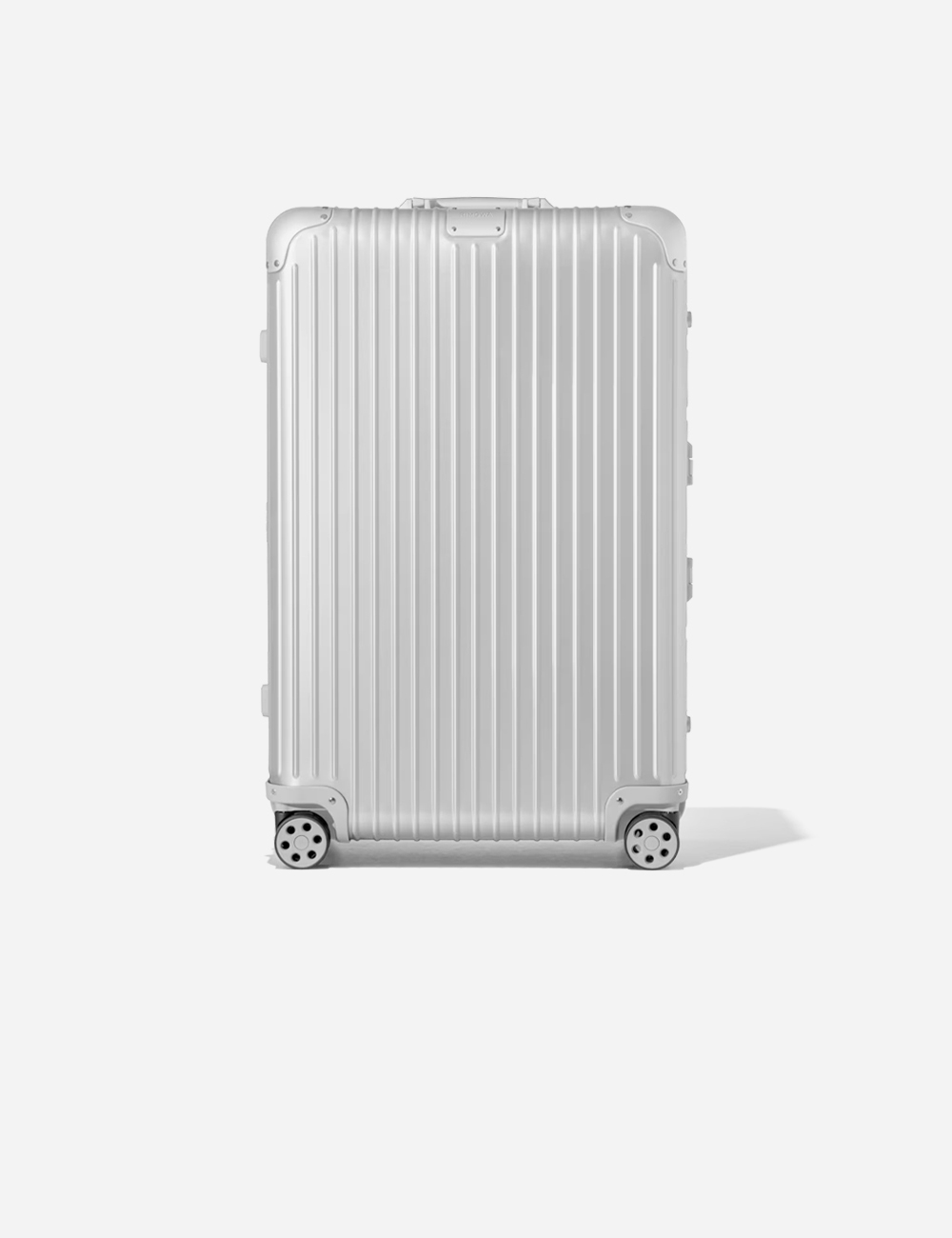
RIMOWA
A 35-liter anodized-aluminum cabin case with a frame closure, dual TSA locks, ball-bearing Multiwheels and lifetime functional coverage.
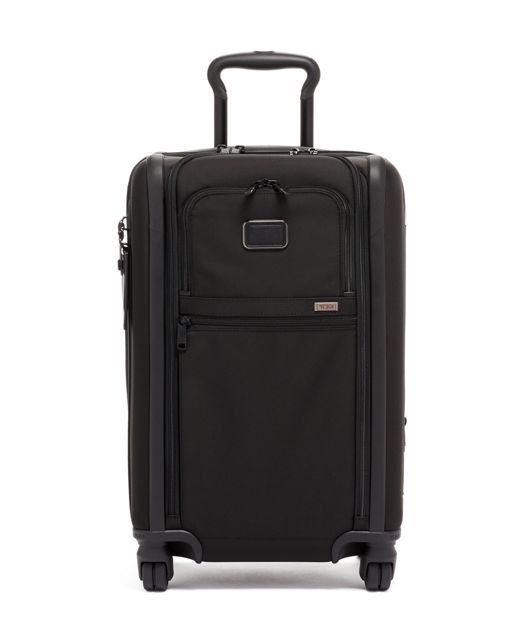
RIMOWA
An 86-liter anodized-aluminum check-in case with a rigid frame, dual TSA locks, ball-bearing Multiwheels and lifetime functional coverage.
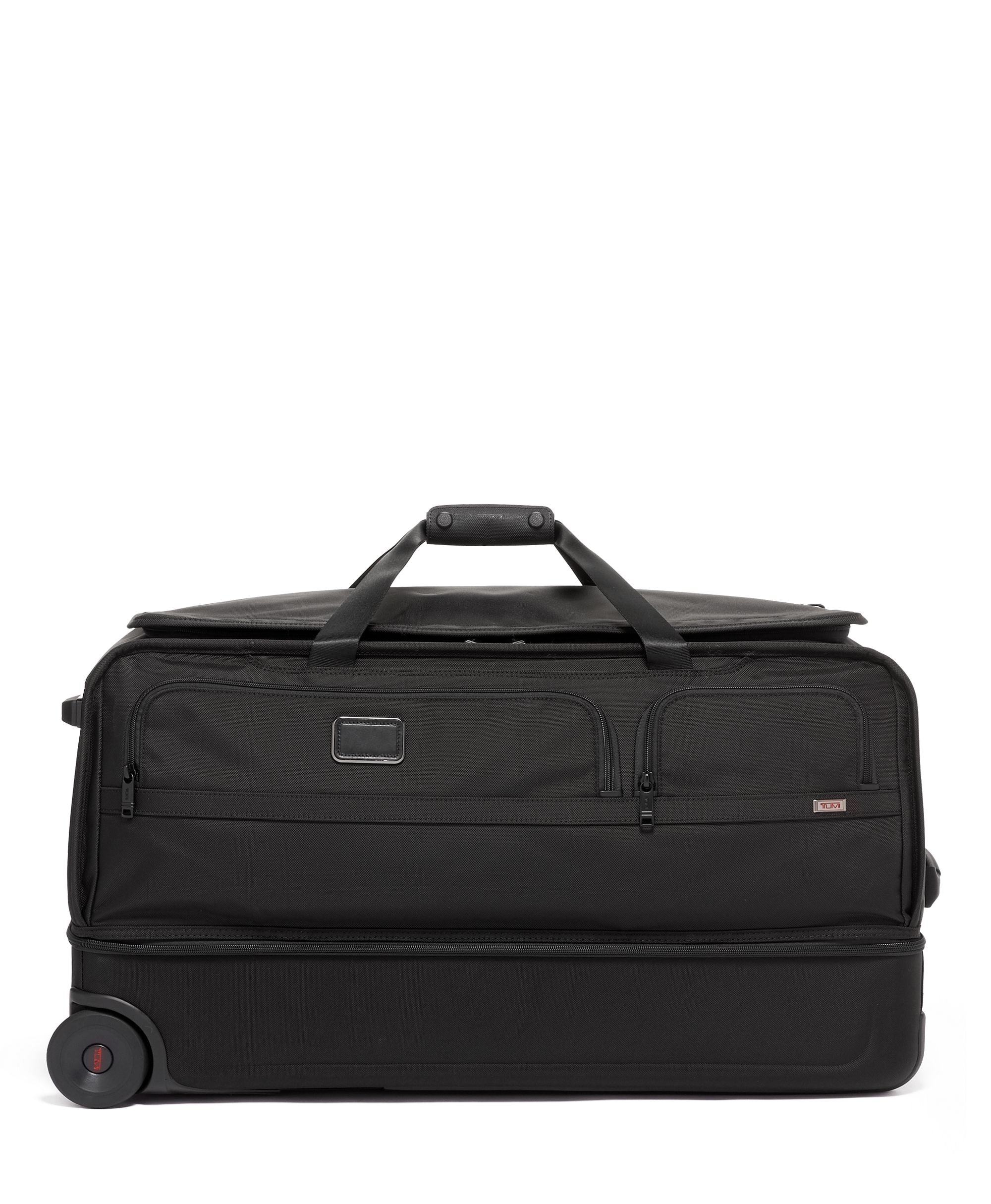
TUMI
A 98-liter FXT ballistic-nylon rolling duffel with a split interior, recessed wheels, reinforced base and five-year warranty.
9 products
Superior features, extended warranties, and high-end materials for enhanced performance.
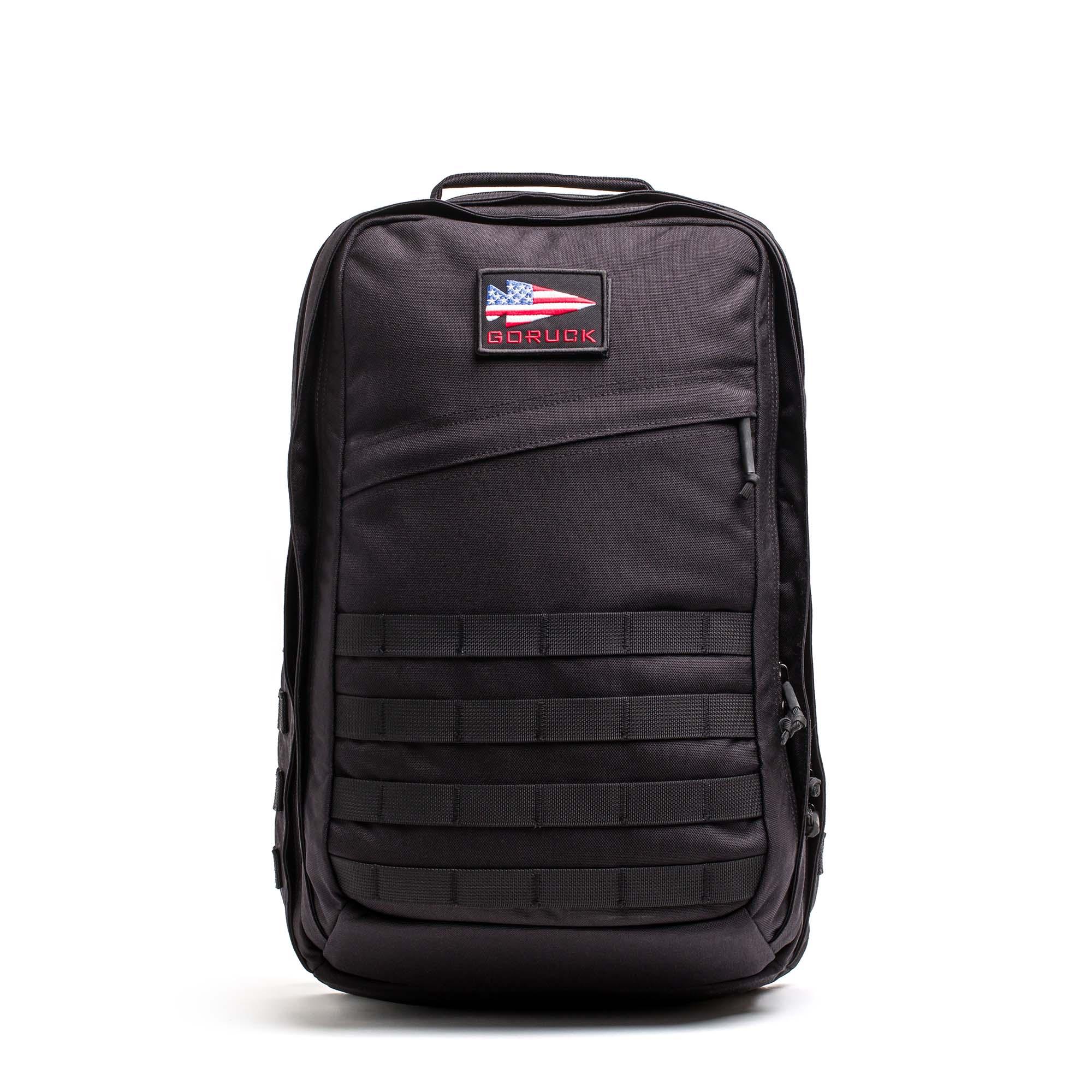
GORUCK
A 34-liter two-compartment travel ruck in 1000D Cordura with MOLLE webbing, a frame sheet and the SCARS lifetime guarantee.
Travelpro
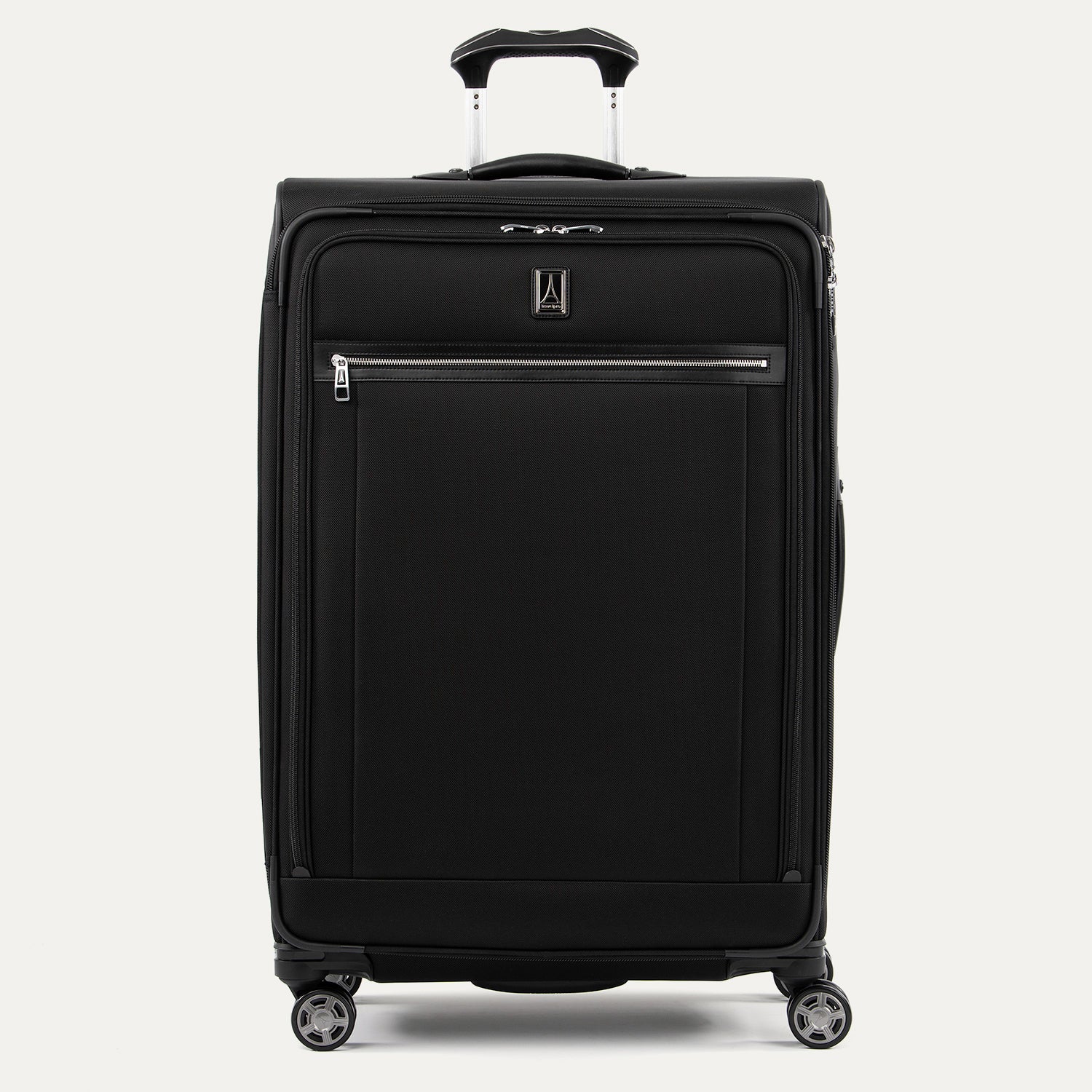
A 143.5-liter soft-side spinner with MagnaTrac wheels, two-inch expansion, an integrated TSA lock and a fold-out suiter.

Filson
A 43-liter USA-made heritage duffle in dry-waxed Rugged Twill, Bridle Leather and solid brass hardware.

Away
A 32-liter aluminum carry-on with dual TSA locks, spinner wheels, compression panels and lifetime repair support.

Eagle Creek
A 115-liter recycled-ballistic-polyester expedition trunk with heavy-duty wheels, configurable dividers, cargo net and lifetime functional coverage.

Solgaard
A polycarbonate carry-on with a removable hanging shelf system, TSA lock, USB pass-through and 360-degree wheels.
41 products
A balanced blend of performance, quality, and price for the discerning user.
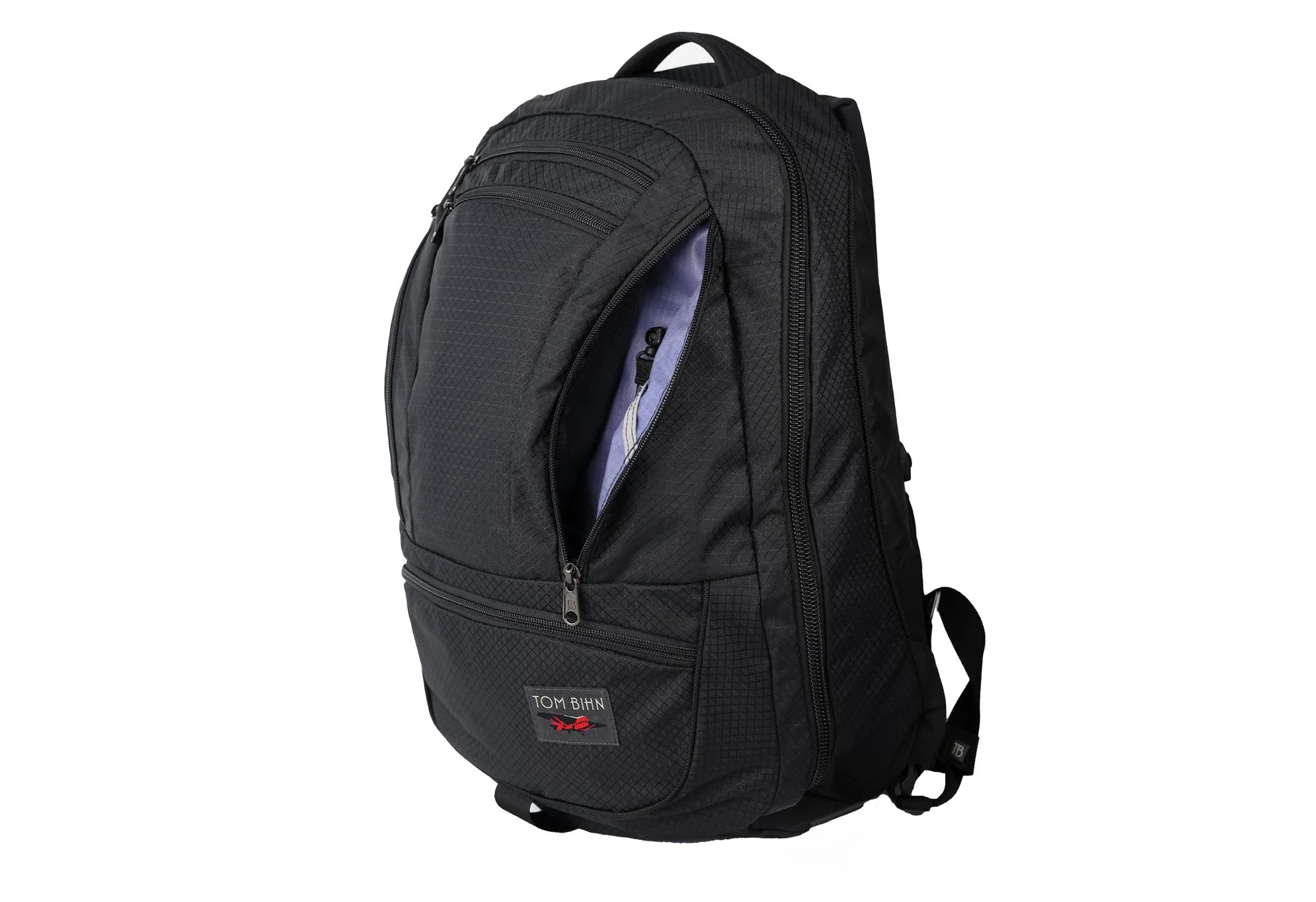
Tom Bihn
A 30-liter Seattle-made clamshell travel pack with an internal frame, five independent exterior pockets and a lifetime guarantee.
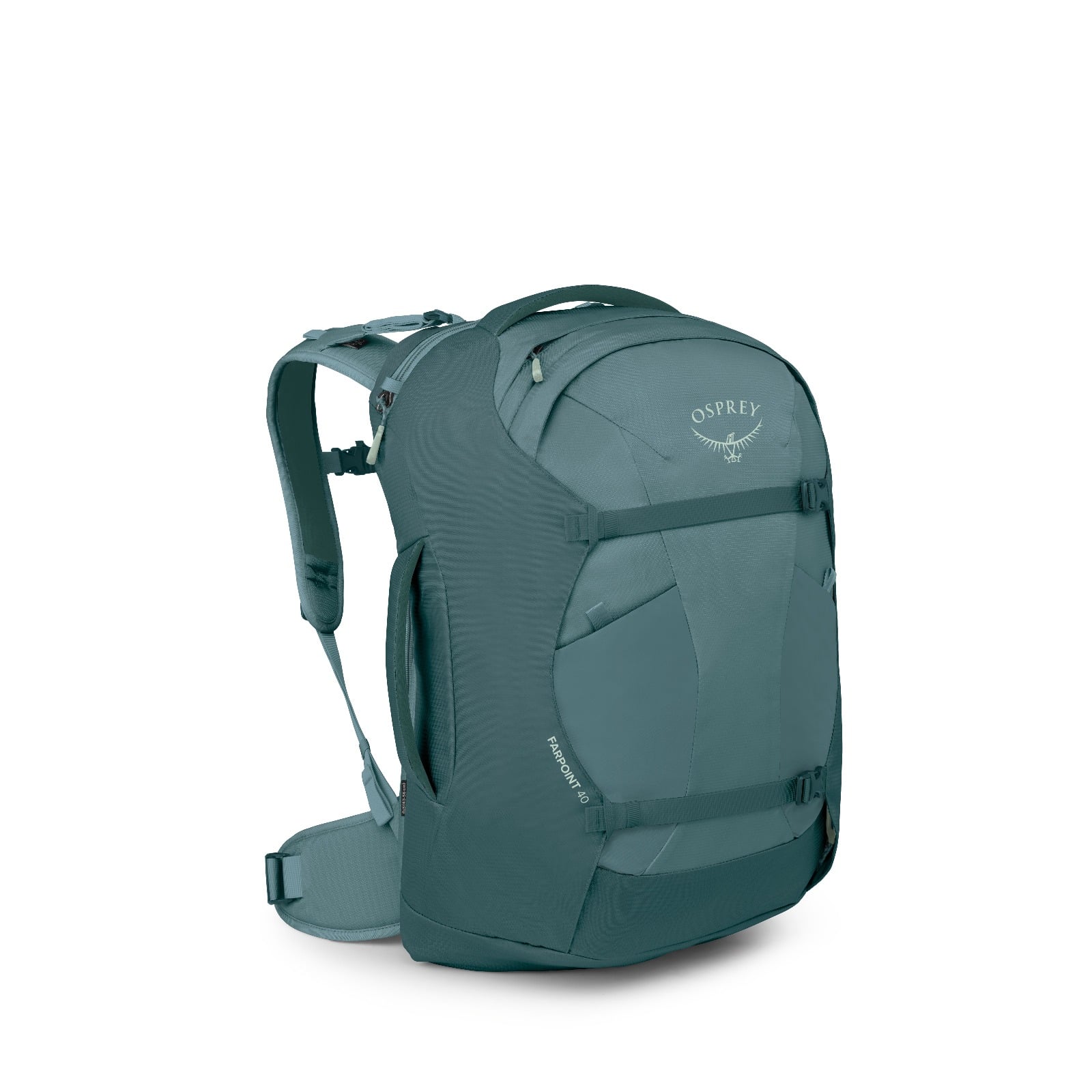
Osprey
A 40-liter carry-on travel pack with an adjustable AirScape harness, LightWire frame and stowaway shoulder straps and hipbelt.
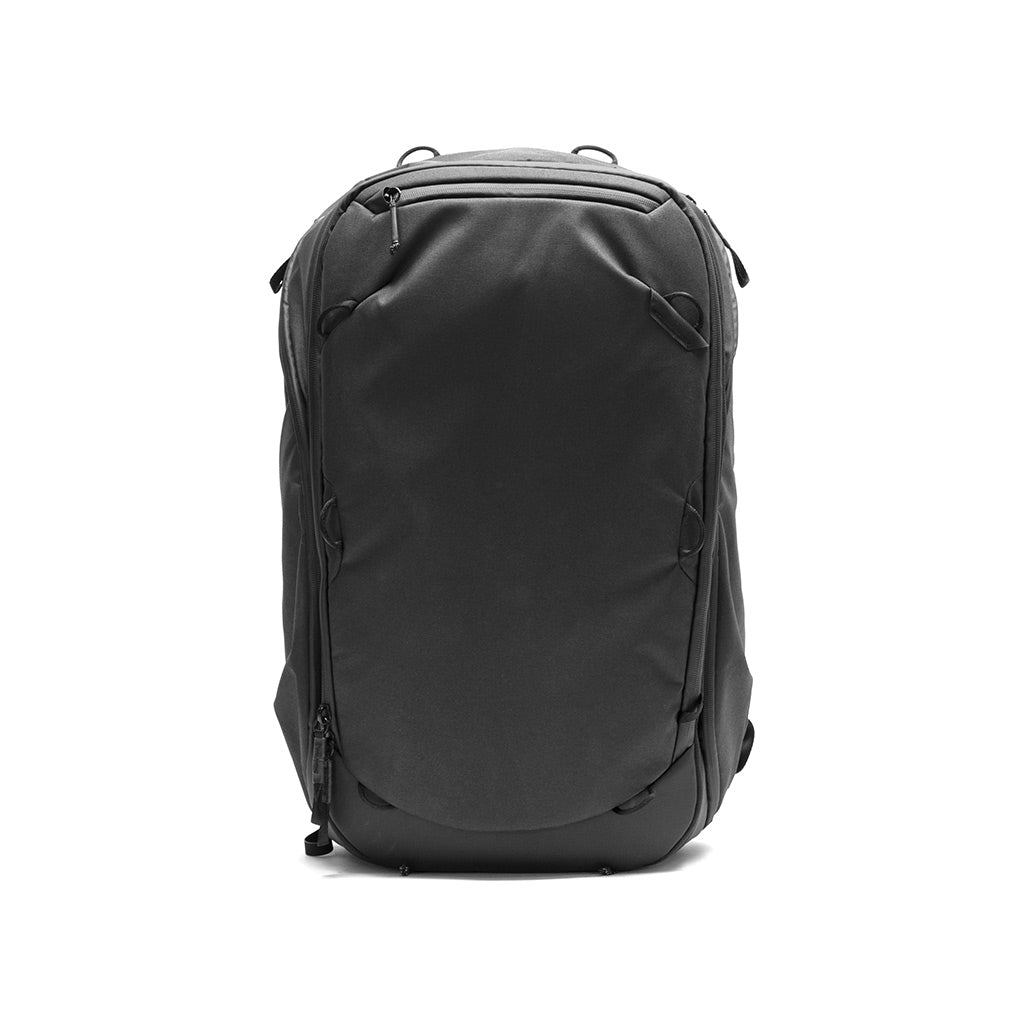
Peak Design
An expandable 30-to-45-liter travel backpack with rear, side and front access, stowable straps and a weatherproof recycled shell.
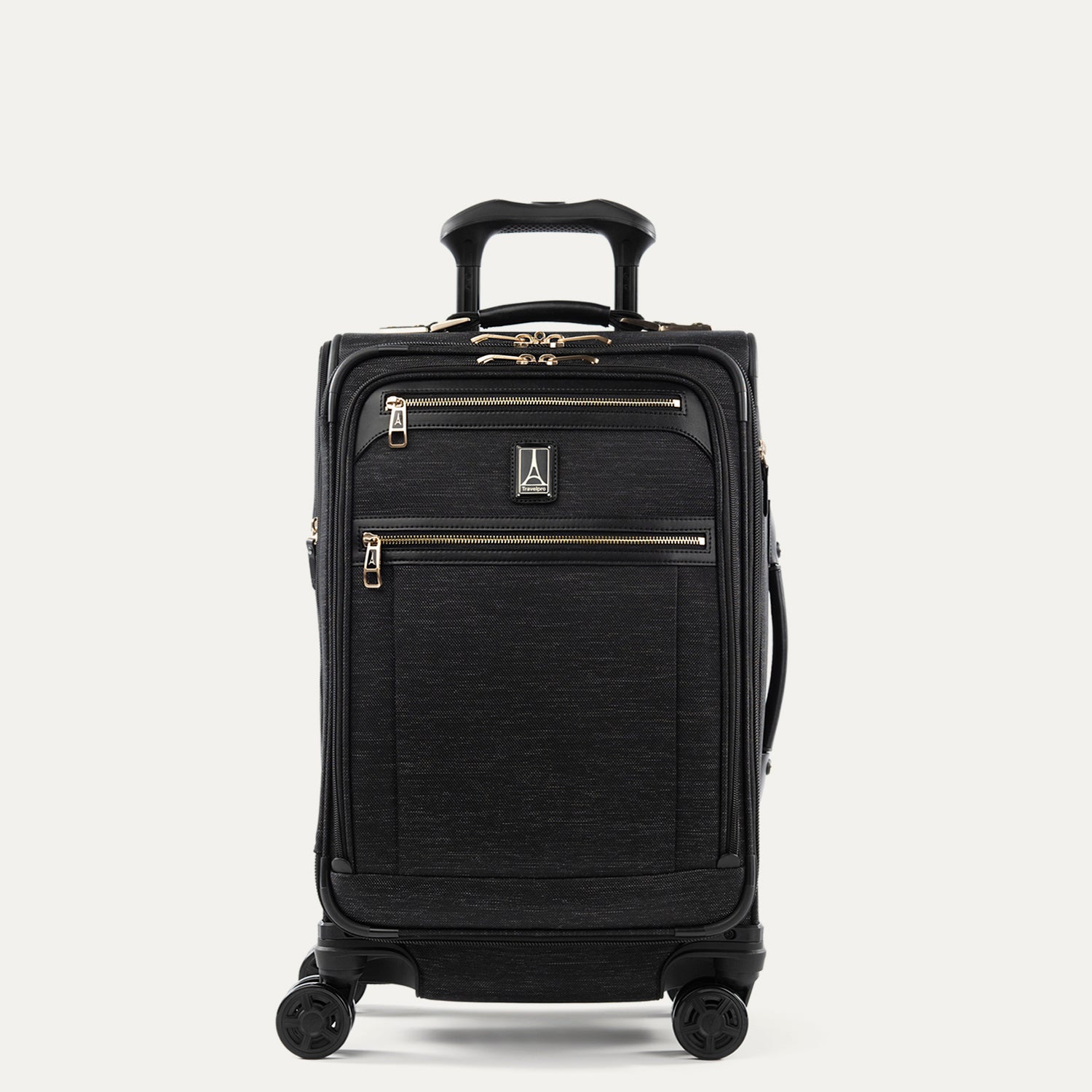
Travelpro
A 46-liter soft-side spinner with MagnaTrac wheels, two-inch expansion, a removable suiter and USB-A/C pass-through ports.
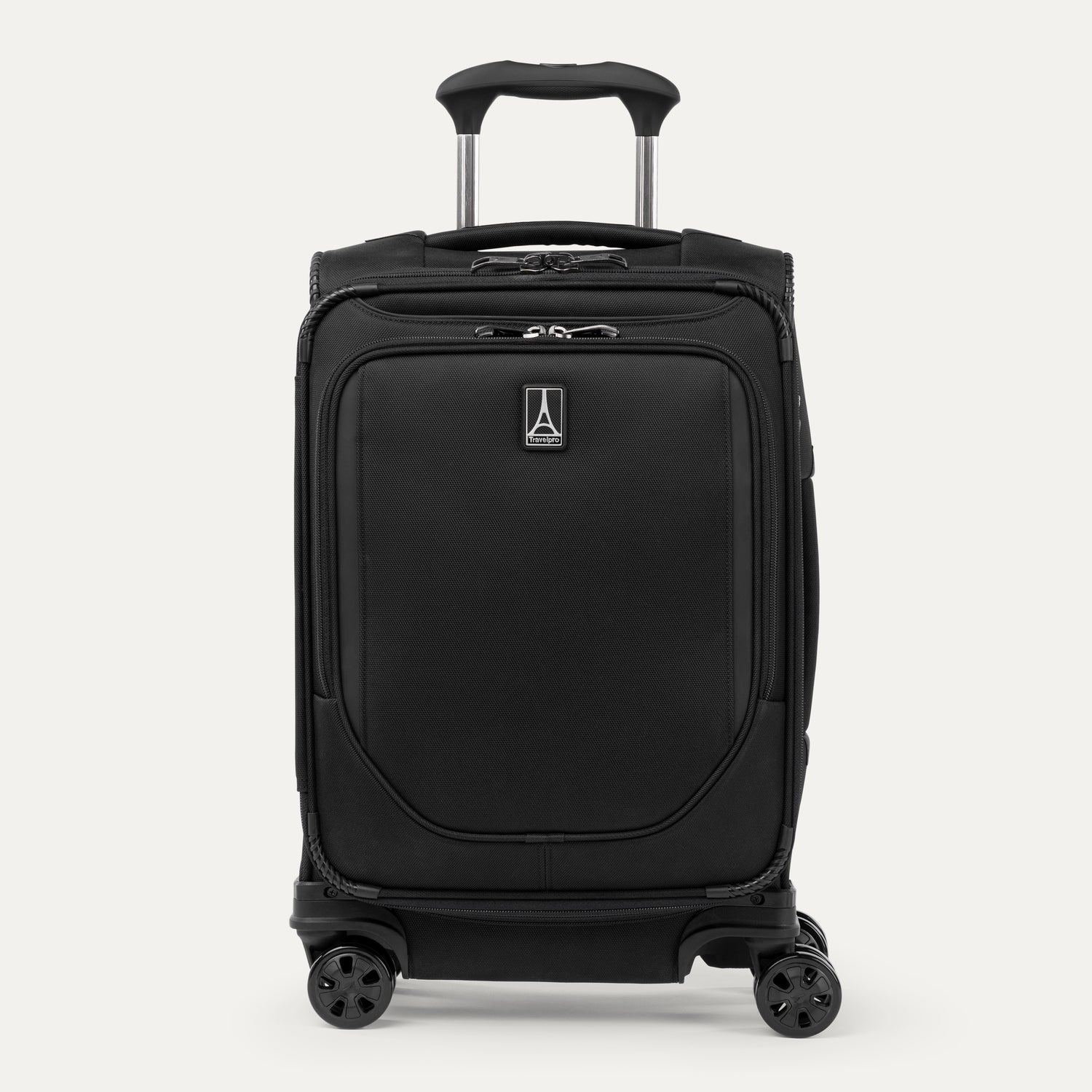
Travelpro
A 38-liter, 6.8-pound compact spinner with MagnaTrac wheels, YKK zippers, a removable compression organizer and two-inch expansion.
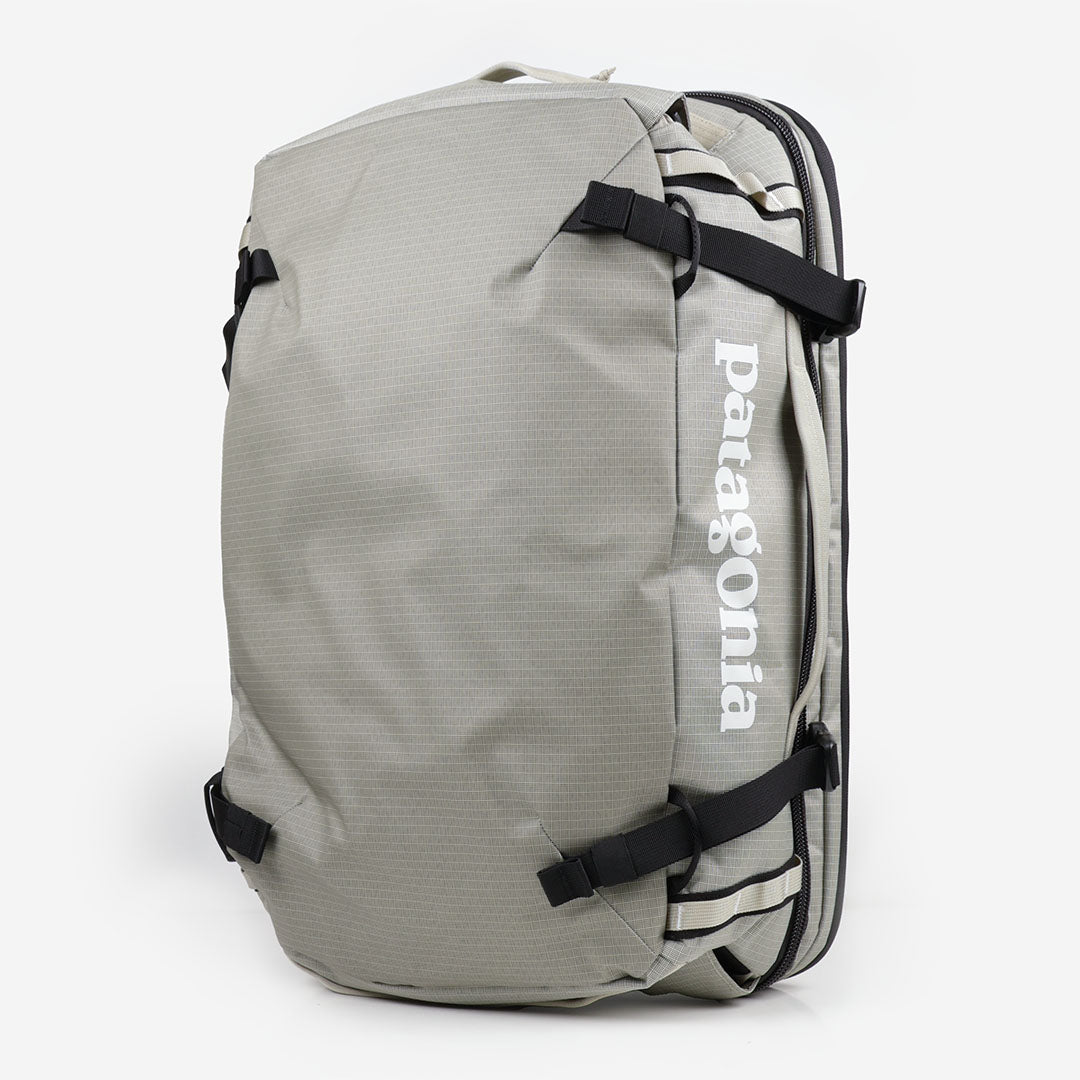
Patagonia
A 45-liter convertible carry-on built from recycled TPU-laminated ripstop, with three carry modes and a 15-inch laptop compartment.
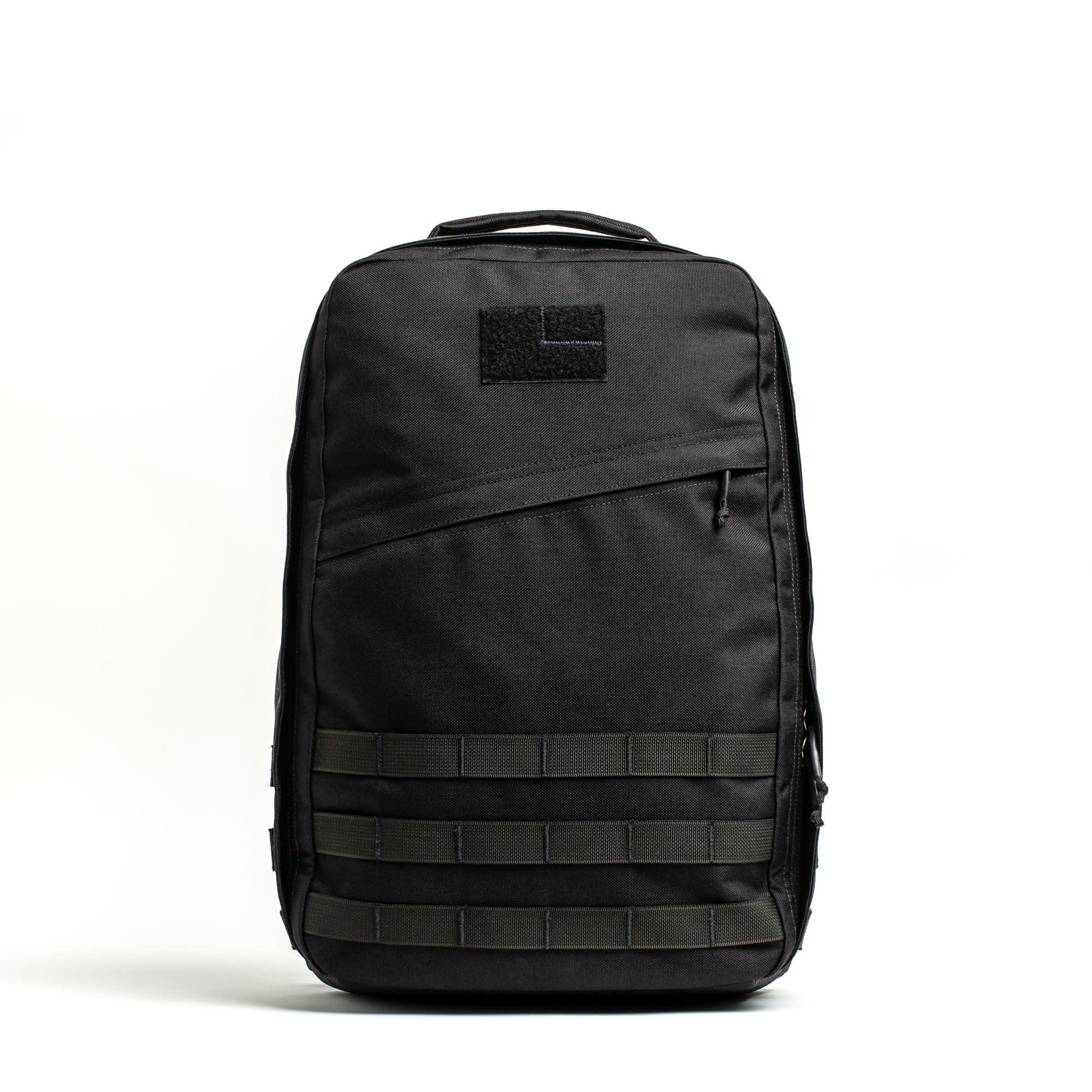
GORUCK
A USA-made 21-liter clamshell ruck in 1000D Cordura with a raised laptop compartment, removable frame sheet and SCARS lifetime guarantee.

Tom Bihn
A lightweight 25-liter Seattle-made daypack with five independent-volume exterior pockets, centered bottle storage and a lifetime guarantee.
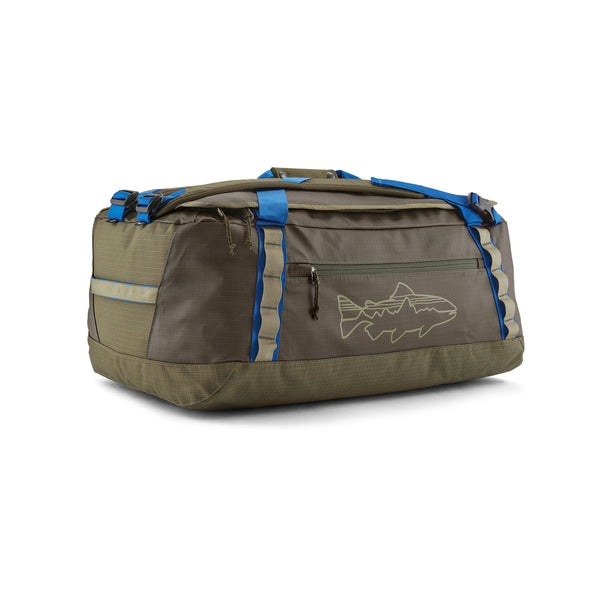
Patagonia
A 55-liter recycled-polyester gear hauler with removable backpack straps, a padded base and Patagonia's Ironclad Guarantee.
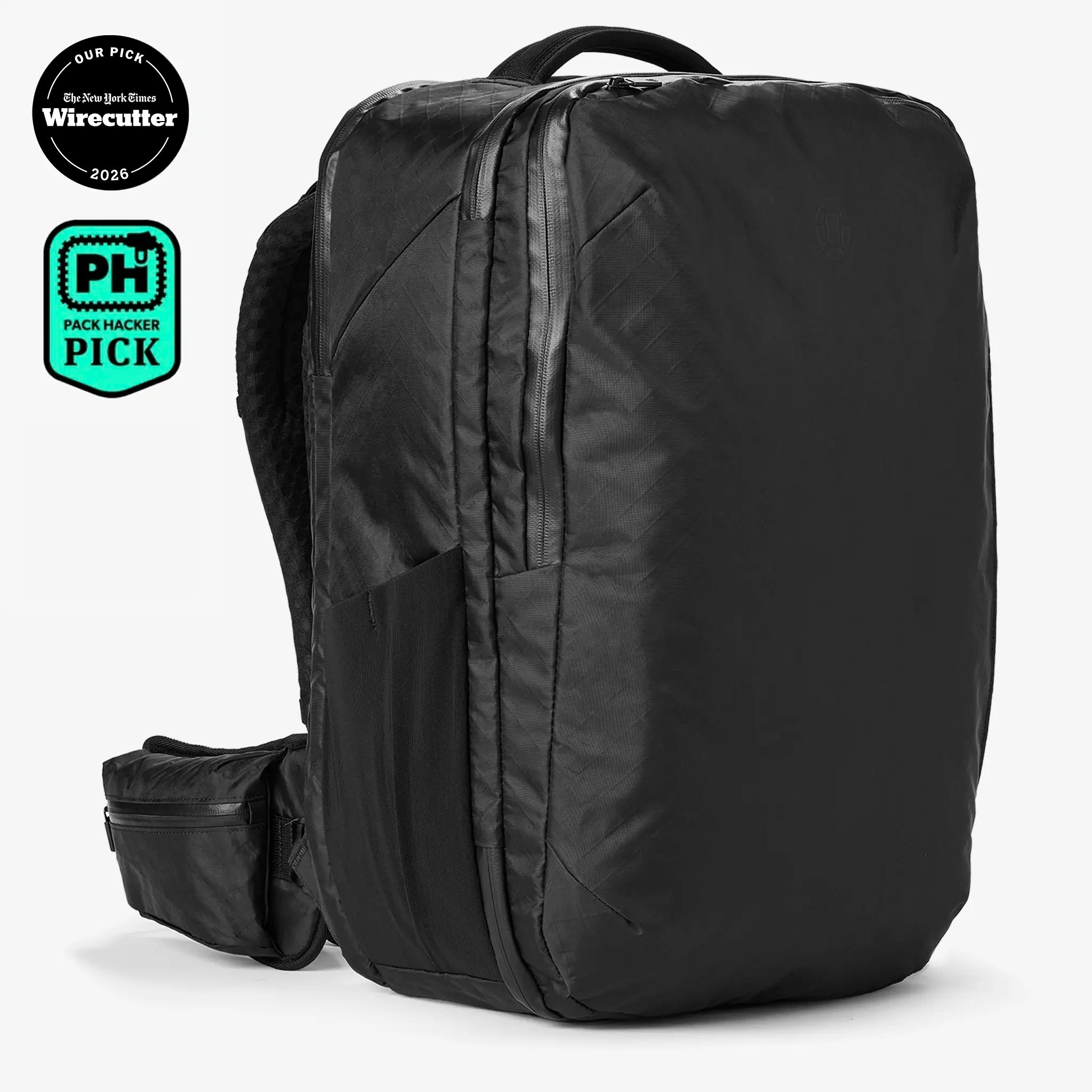
Tortuga
A carry-on-sized 40-liter travel backpack with a height-adjustable harness, load-bearing hipbelt and waterproof ECOPAK sailcloth shell.

Cotopaxi
A 42-liter suitcase-opening travel pack with recycled TPU-coated nylon, tuck-away straps, three interior zones and a 15-inch laptop sleeve.
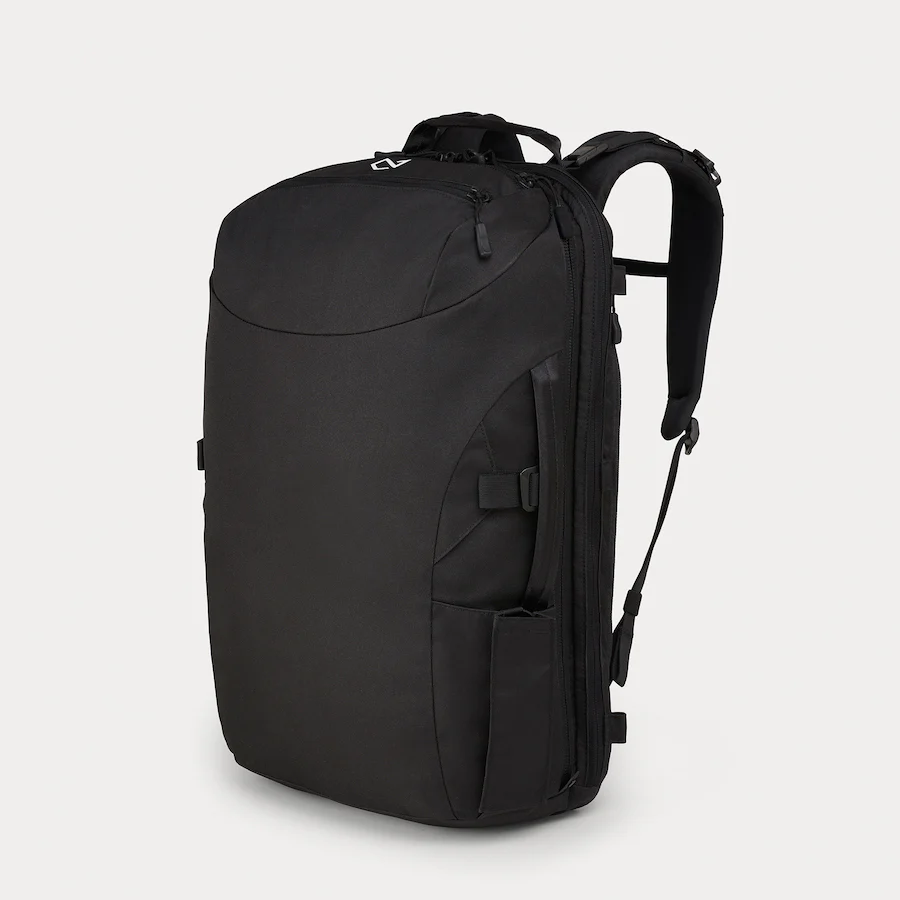
Minaal
A 35-liter lay-flat travel pack with fully hideaway straps, dual-device storage and an included seam-sealed rain cover.
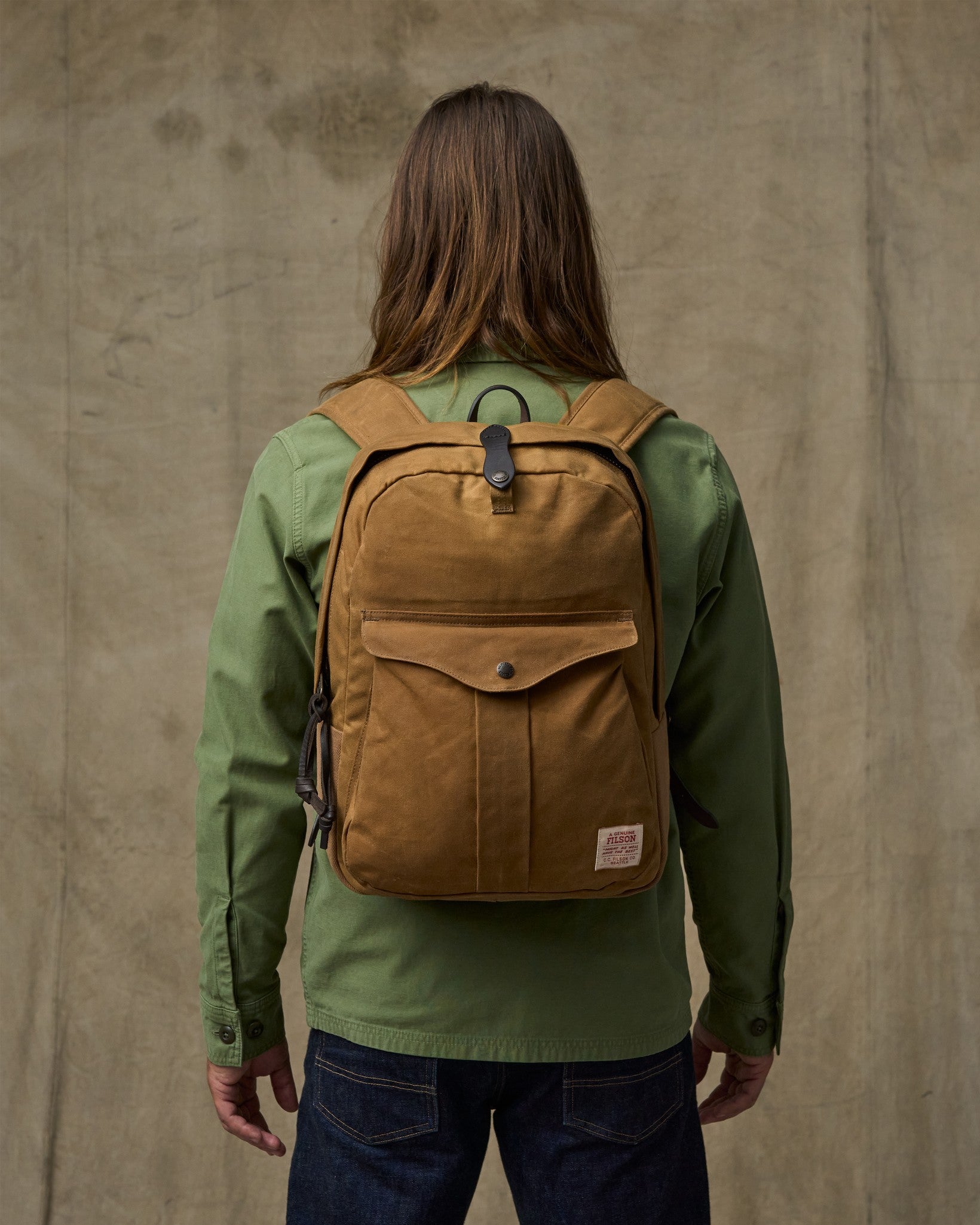
Filson
A 23-liter heritage daypack combining waxed Tin Cloth, Rugged Twill, Bridle Leather and a brass YKK zipper.

Monos
A 36-liter polycarbonate spinner with a protected 16-inch laptop pocket, YKK zippers, compression panel and limited lifetime warranty.

Thule
A 35-liter 800D soft-side spinner with a molded polycarbonate back, YKK zippers and removable compression panel.
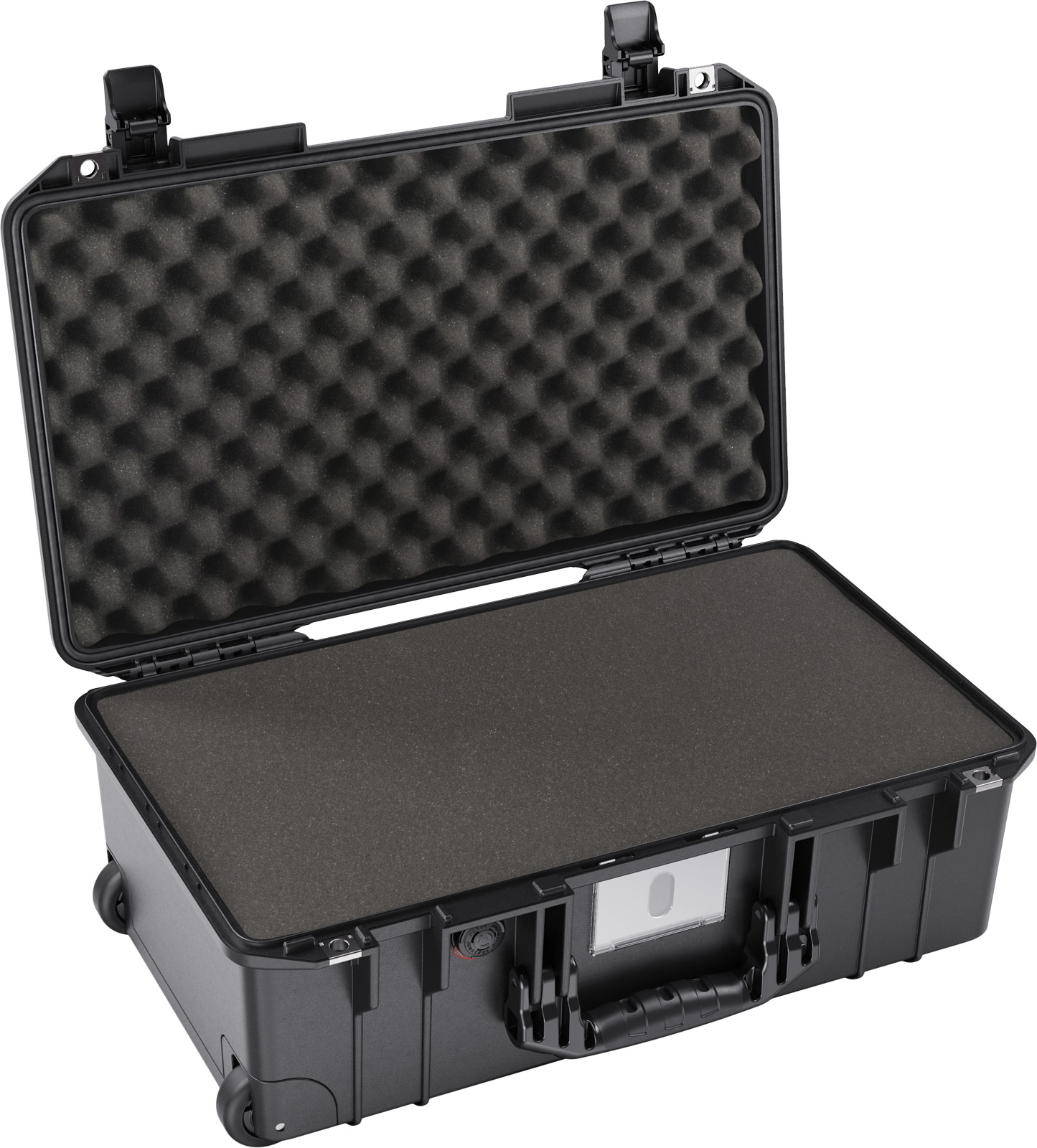
Pelican
An IP67 hard equipment case with HPX² polymer, O-ring seal, pressure valve, trolley handle and stainless-bearing wheels.
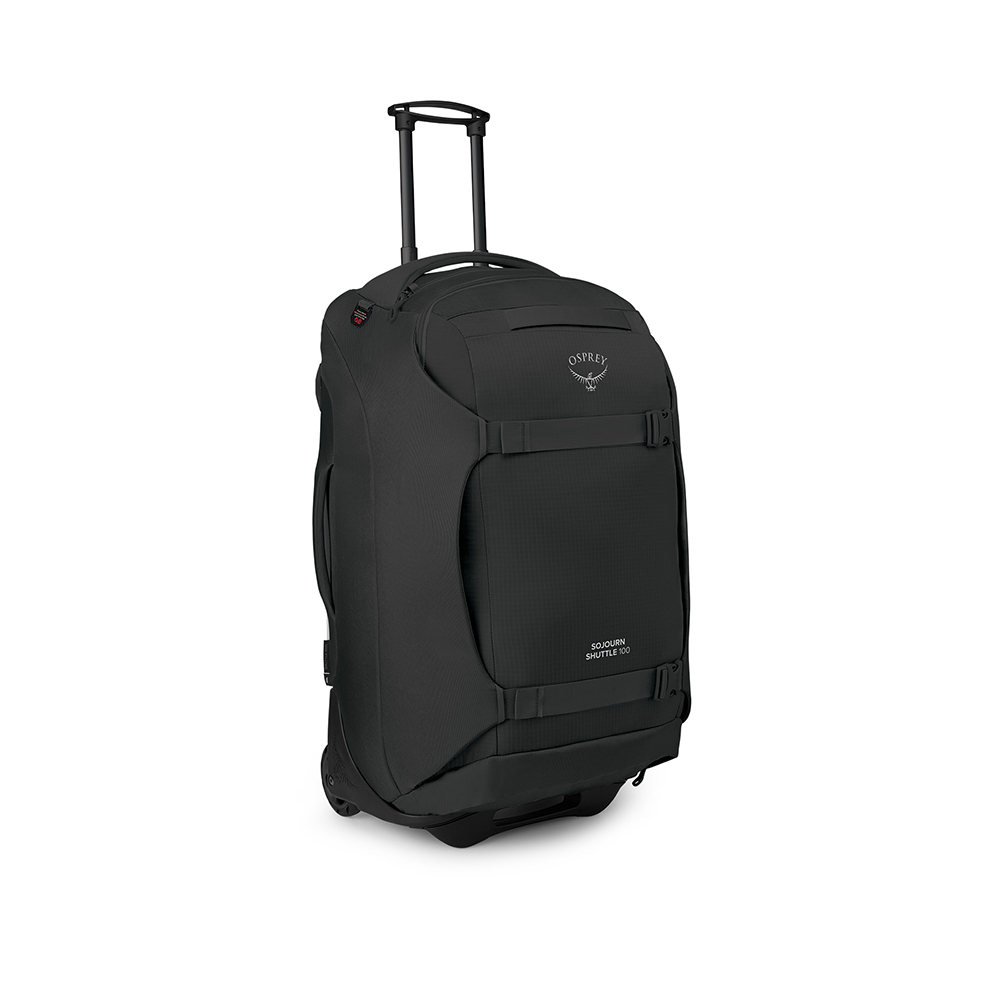
Osprey
A 108-liter recycled-nylon wheeled duffel with a wide aluminum HighRoad chassis, 110 mm wheels and StraightJacket compression.
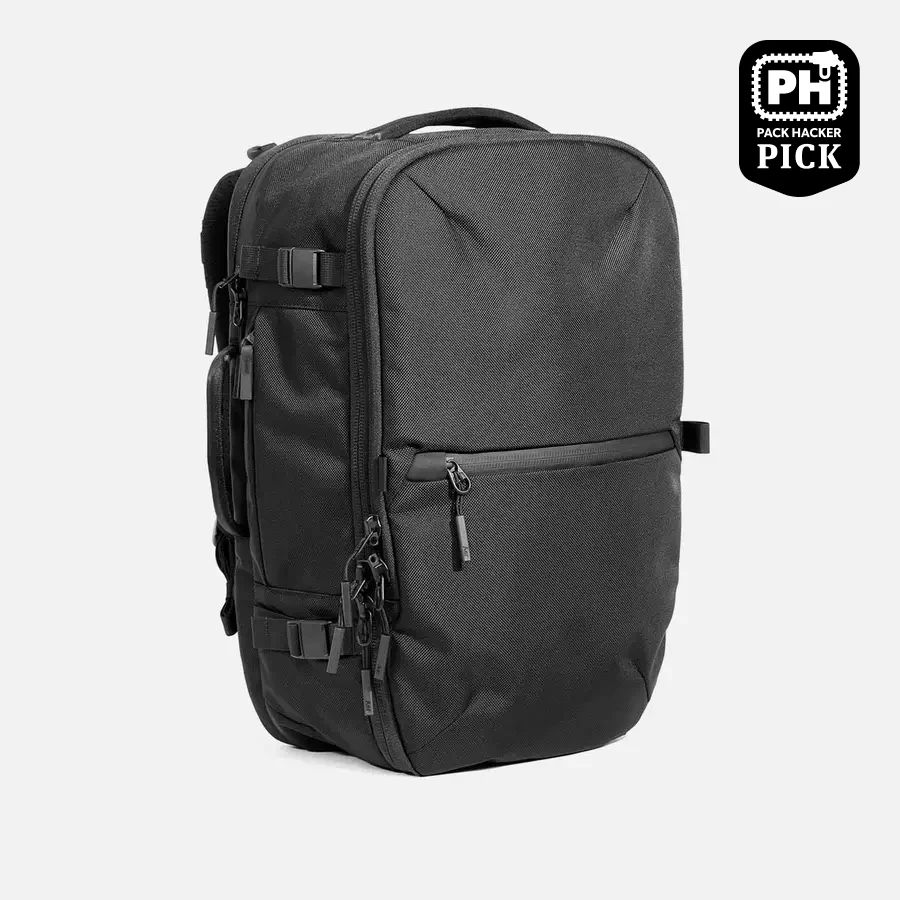
Aer
A discontinued 35-liter clamshell travel pack in 1680D Cordura with a suspended 16-inch laptop sleeve and magnetic compression straps.
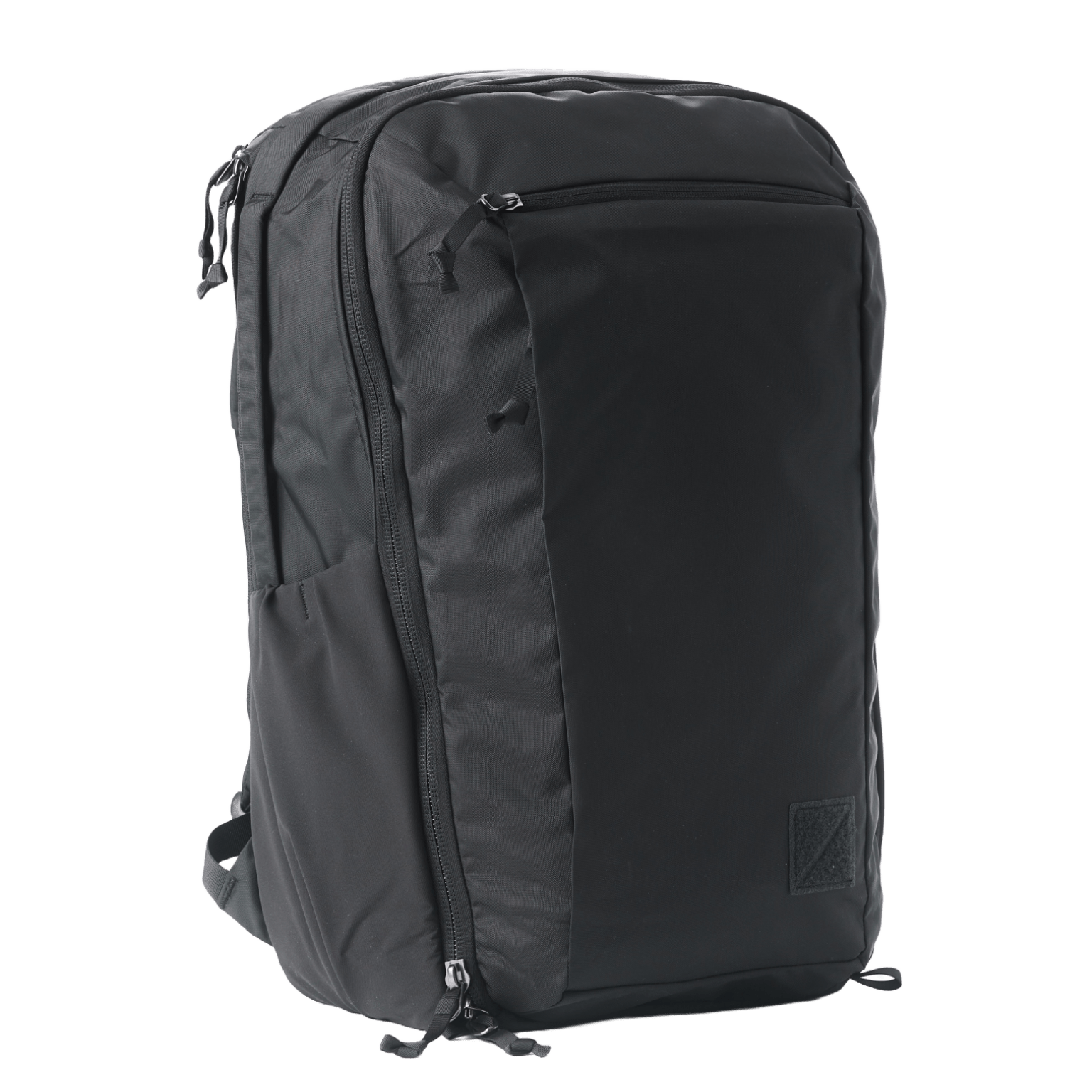
Evergoods
A 35-liter clamshell travel pack with a solution-dyed 420D nylon shell, aluminum-reinforced frame and stowable hipbelt.
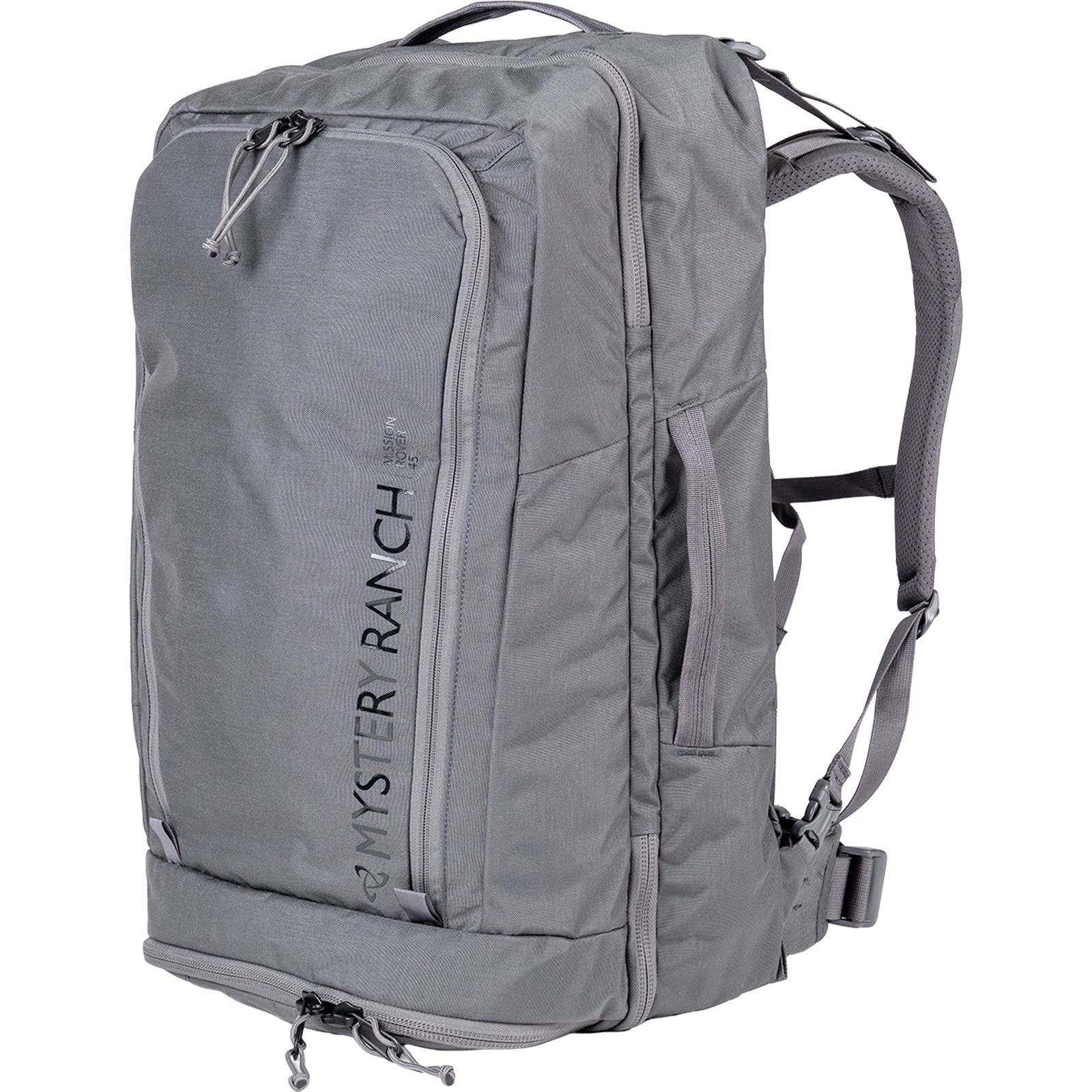
Mystery Ranch
A 42-liter three-way travel bag in recycled 840D ballistic nylon with clamshell packing, stowable backpack straps and a shoe compartment.

Evergoods
A 24-liter panel-loading daypack in solution-dyed 840D ballistic nylon with a suspended laptop compartment and aluminum-reinforced frame.
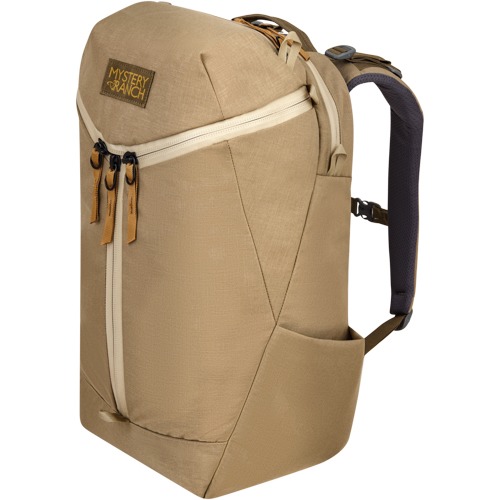
Mystery Ranch
A discontinued 25.8-liter three-zip daypack in recycled 500D Cordura with dual bottle pockets and a padded laptop sleeve.
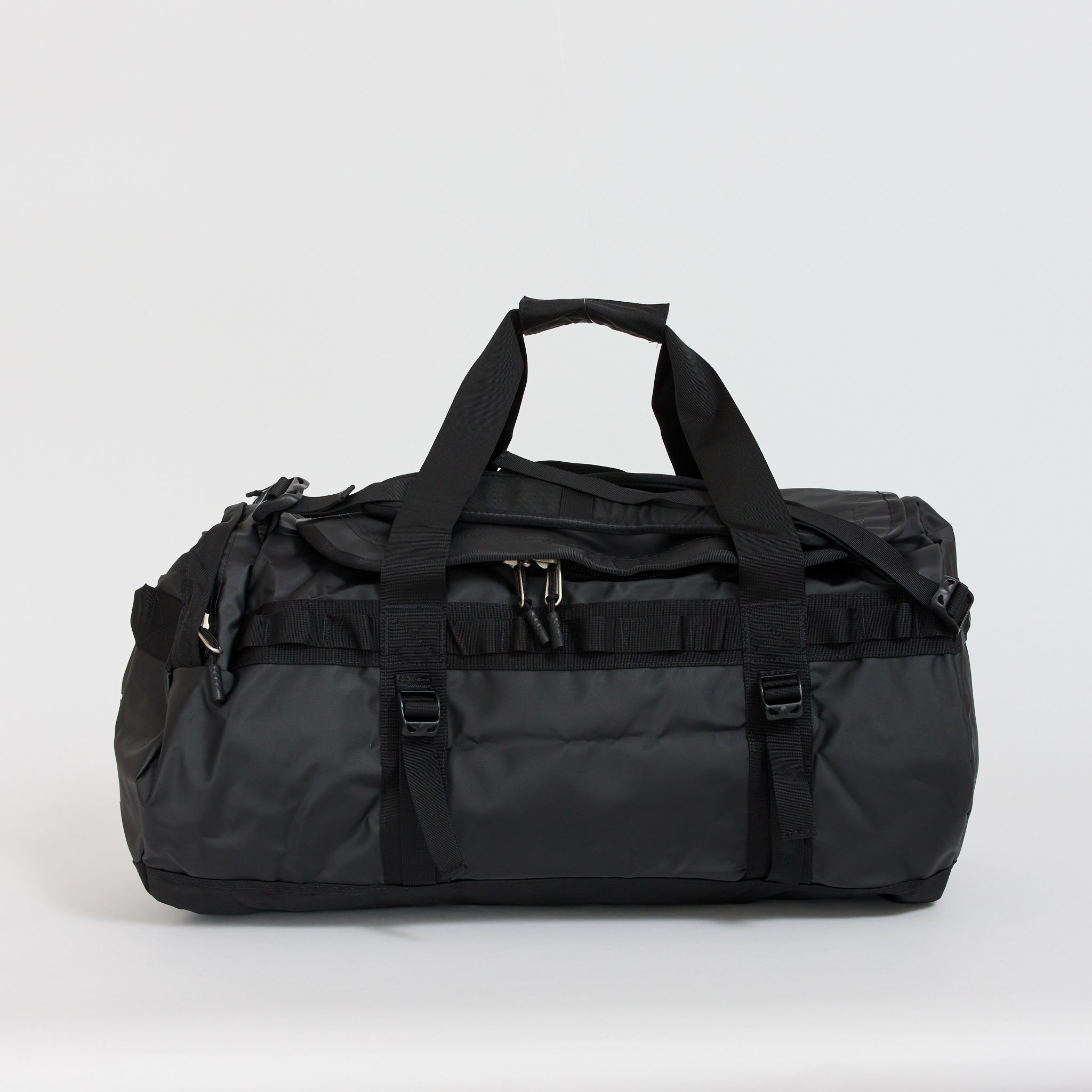
The North Face
The iconic 71-liter expedition duffel in coated recycled polyester with a D-zip opening, compression straps and removable alpine-cut shoulder straps.

GORUCK
A compact aviator-style 32-liter duffel in 1000D Cordura with six pockets, a padded shoulder strap and the SCARS lifetime guarantee.
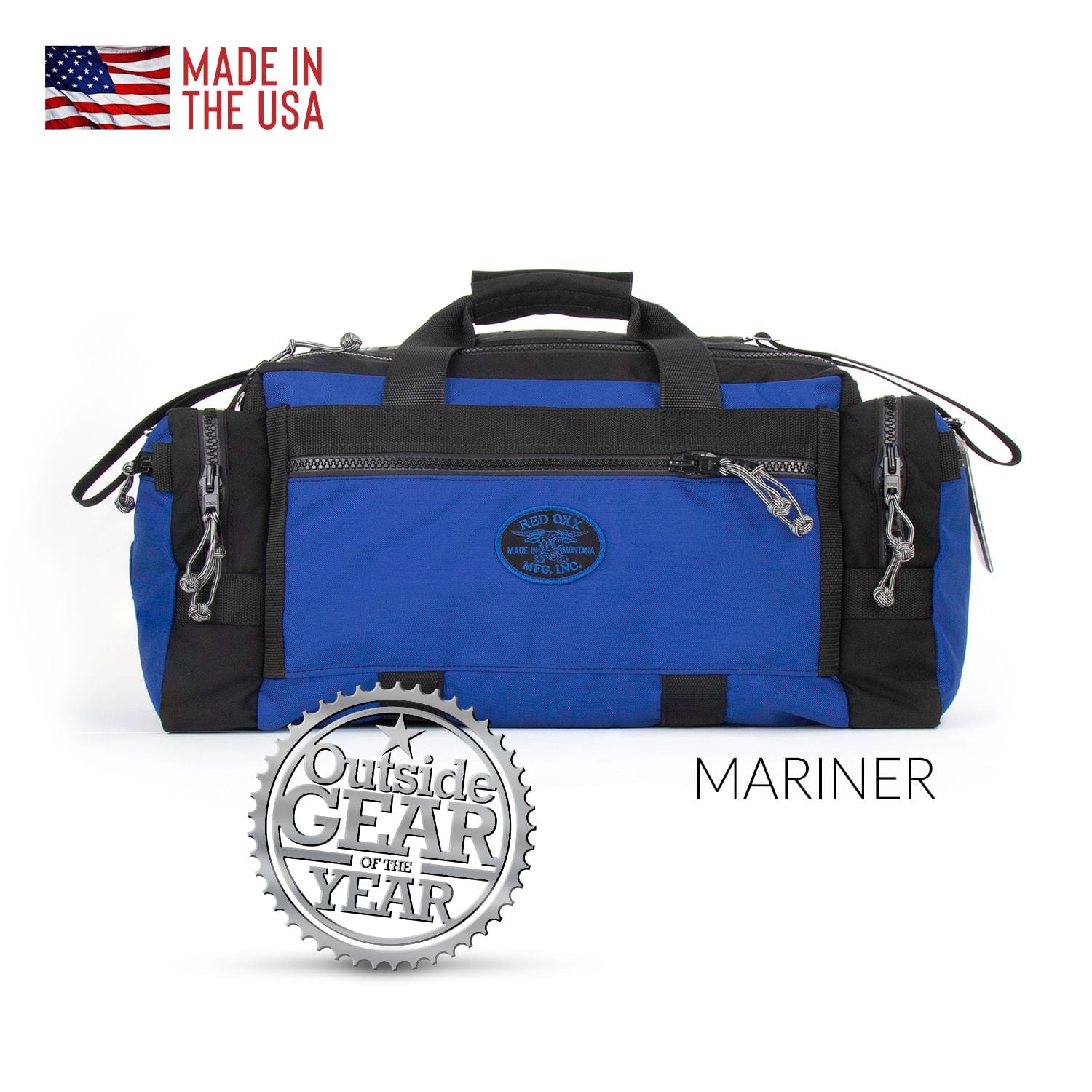
Red Oxx
A Montana-made 39.3-liter carry-on duffel in 1000-weight Cordura with oversized YKK Vislon zippers and a transferable No Bull lifetime warranty.
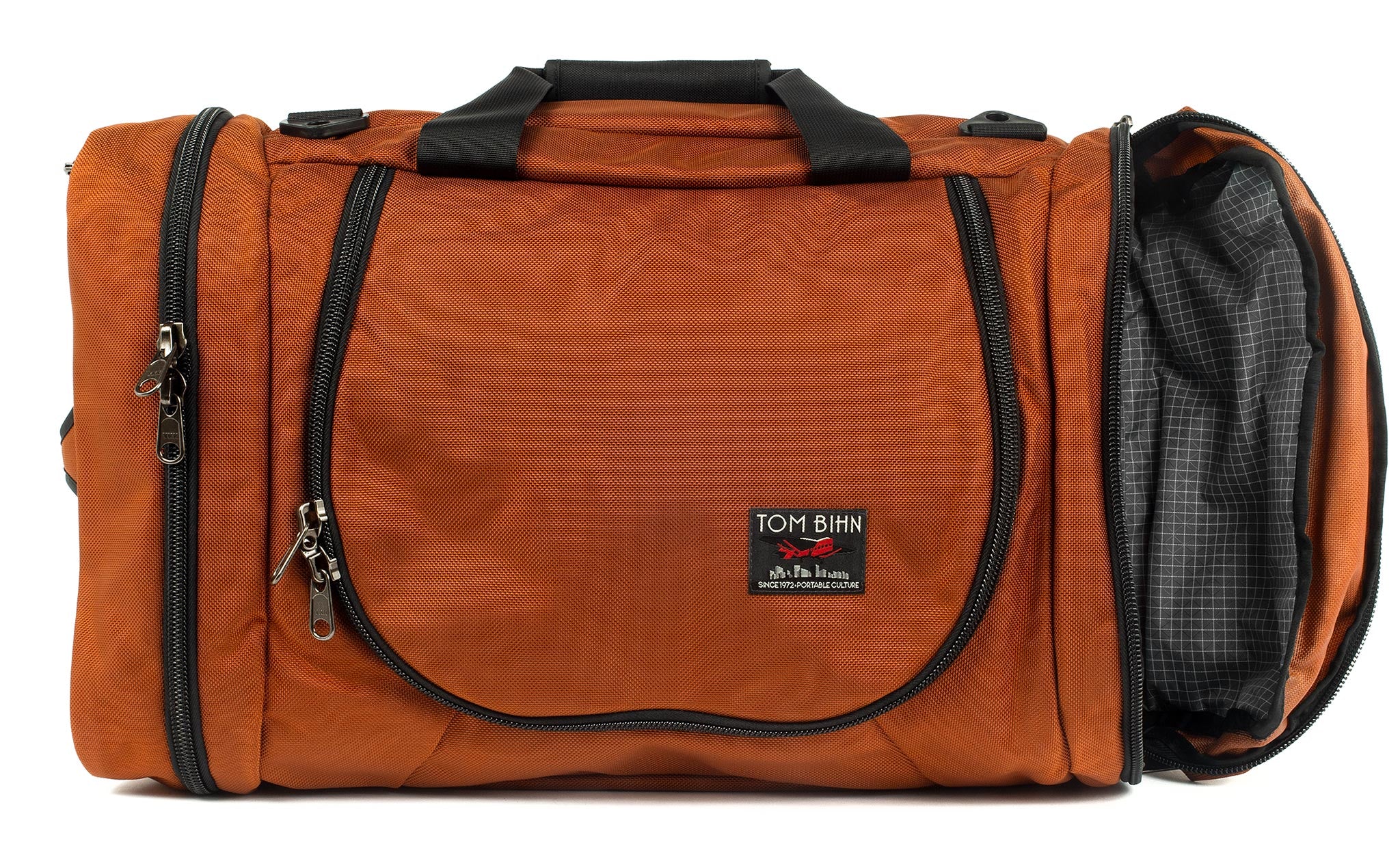
Tom Bihn
A Seattle-sewn 45-liter maximum-size carry-on with stowable backpack straps, expandable end compartments and heavy YKK water-repellent zippers.
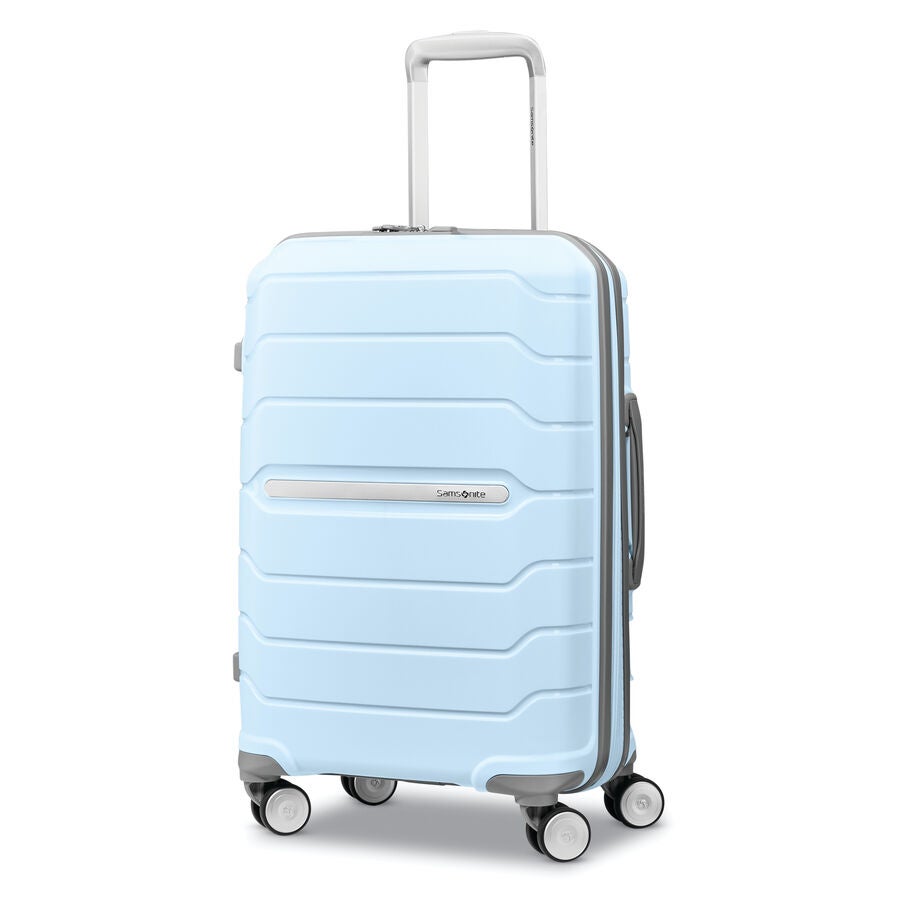
Samsonite
A 6.5-pound polypropylene spinner with double wheels, one-inch expansion, cross-straps and a recessed TSA lock.
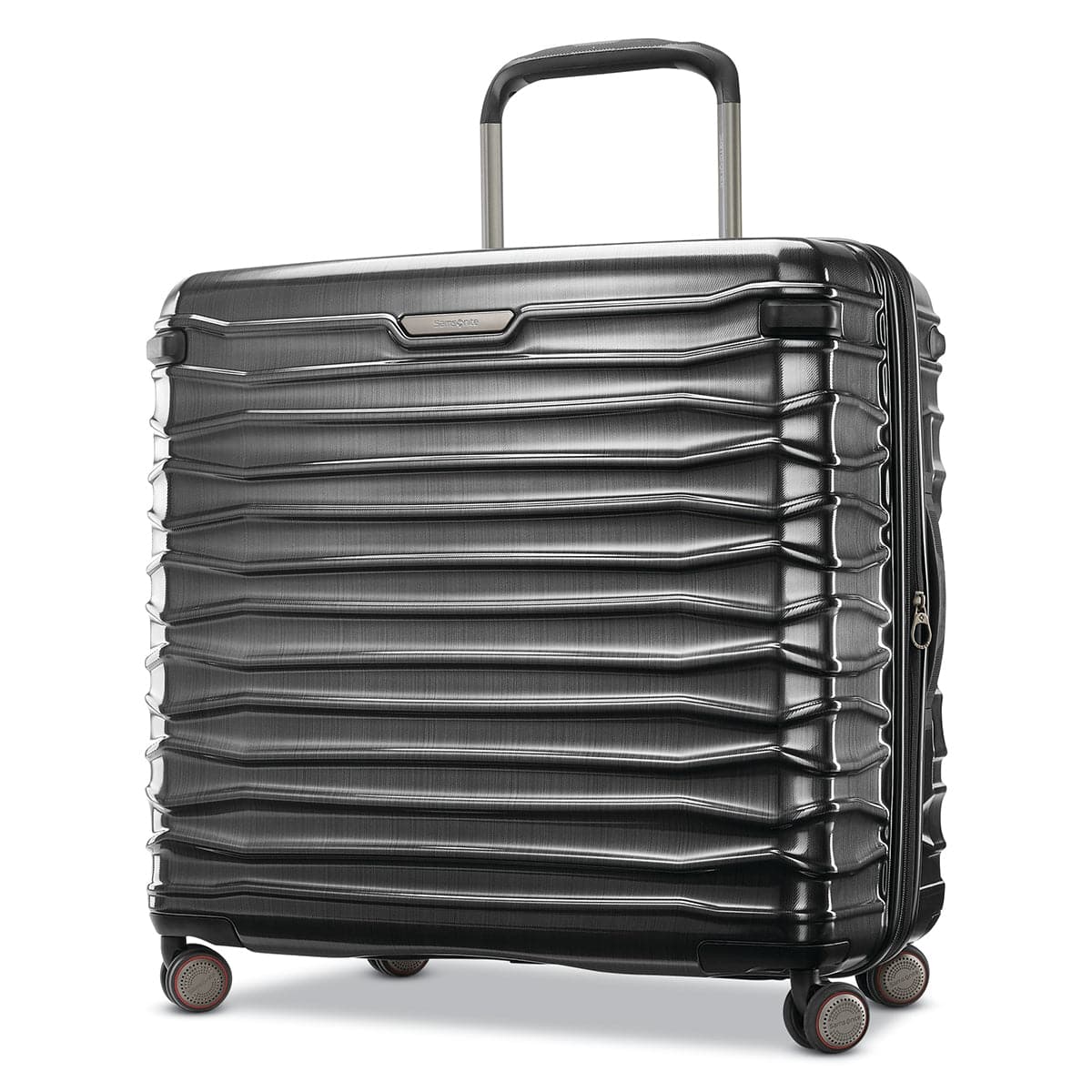
Samsonite
A discontinued wide-format polycarbonate spinner with offset Tru-Trac GT wheels, YKK Fuzion zippers and modular two-sided packing.
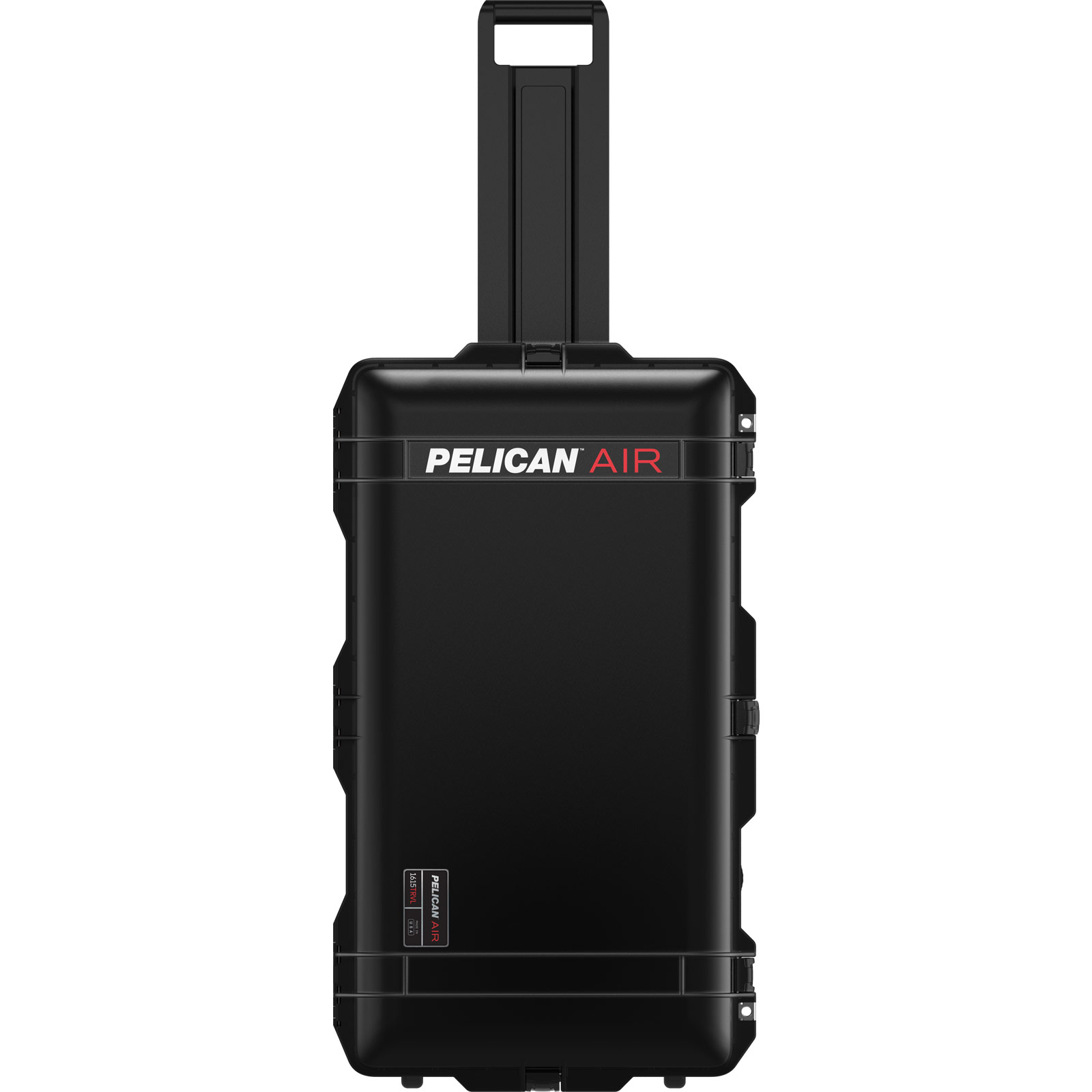
Pelican
An IP67 hard travel case with HPX2 polymer, TSA-key latches, stainless-bearing wheels, lid organizer and packing cubes.
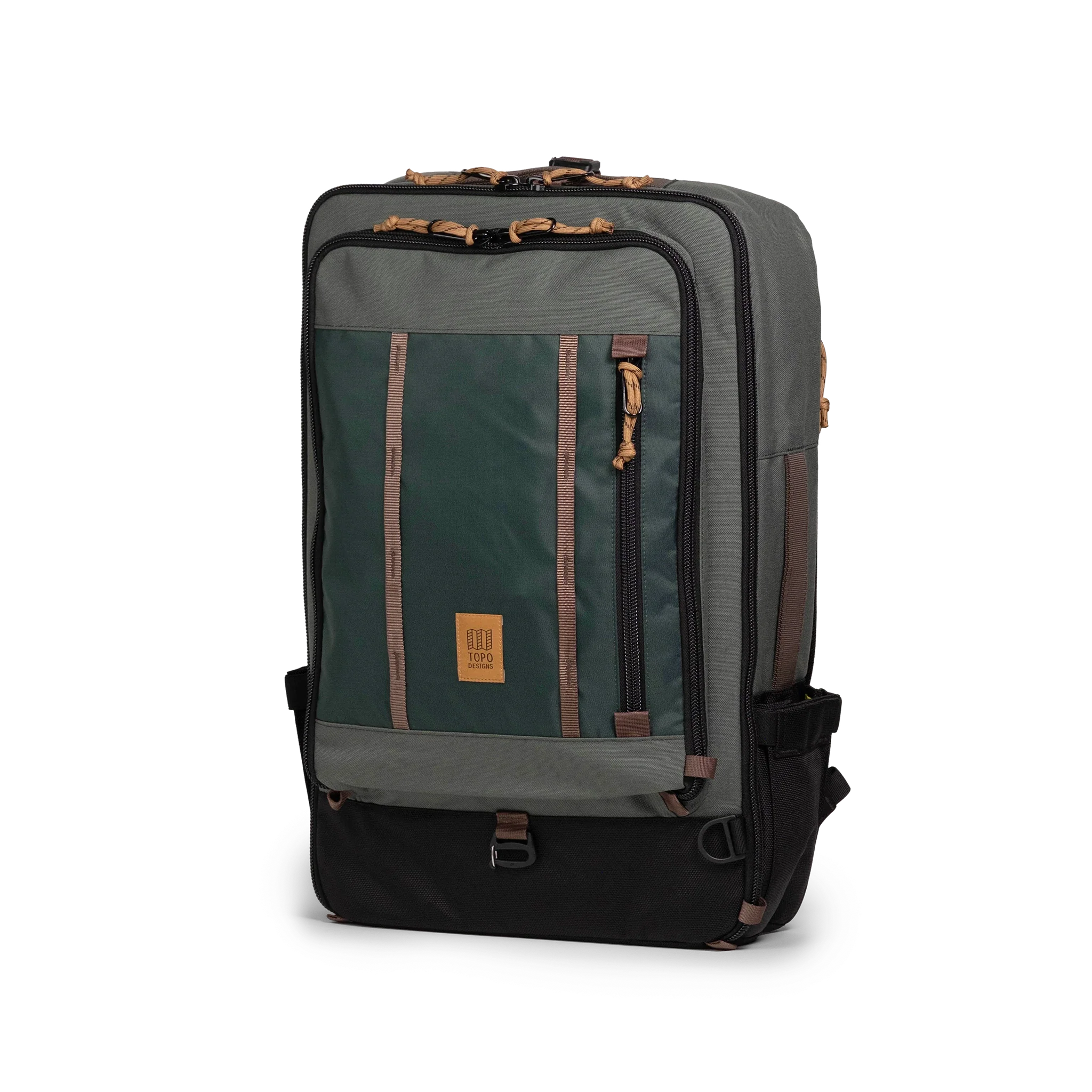
Topo Designs
A final-sale 40-to-45-liter convertible travel bag with recycled nylon shells, stowable straps and PackFast modular attachment loops.
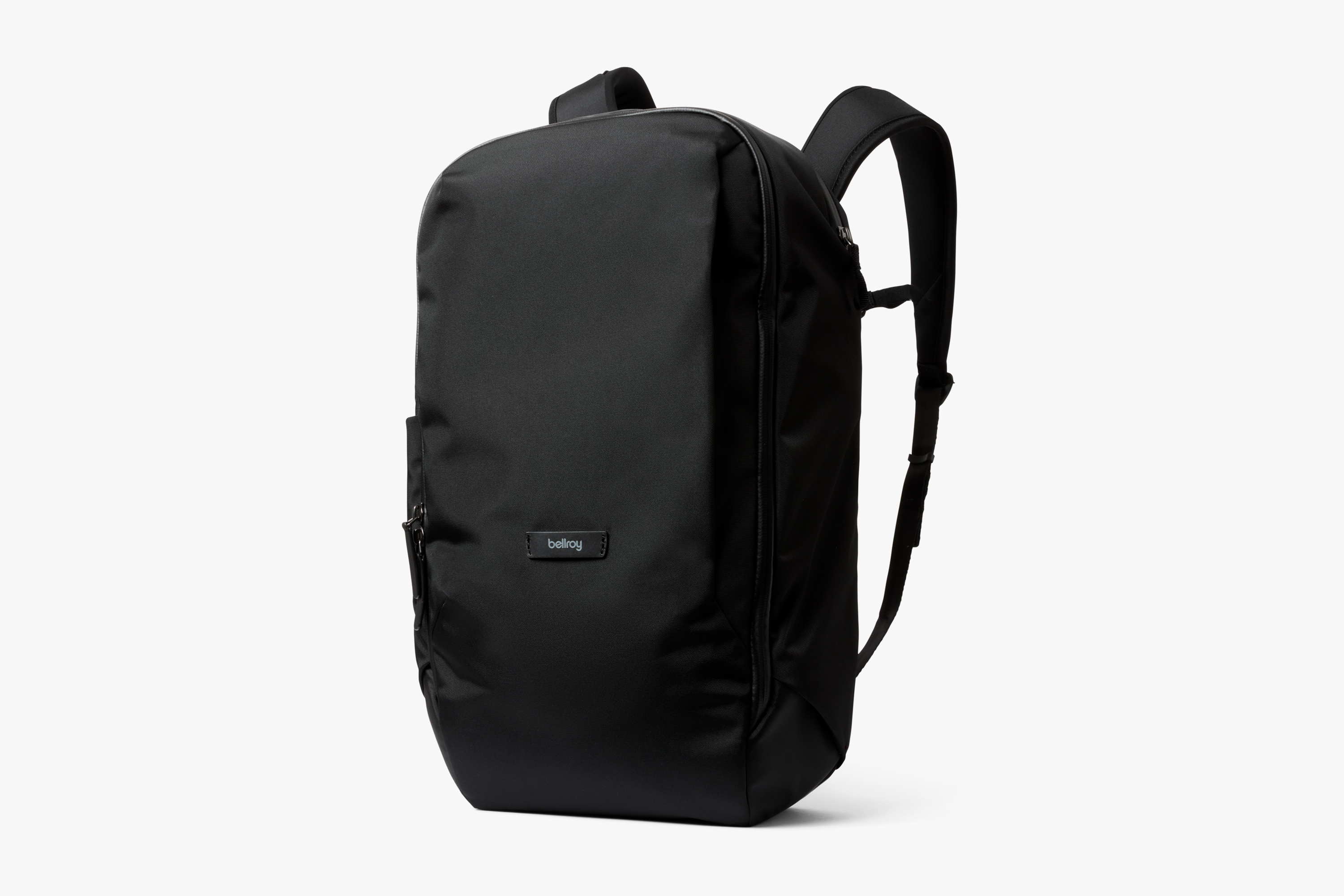
Bellroy
A 26-liter clamshell work-and-travel pack with a separate 16-inch laptop section, contoured harness and recycled Dura Weave shell.
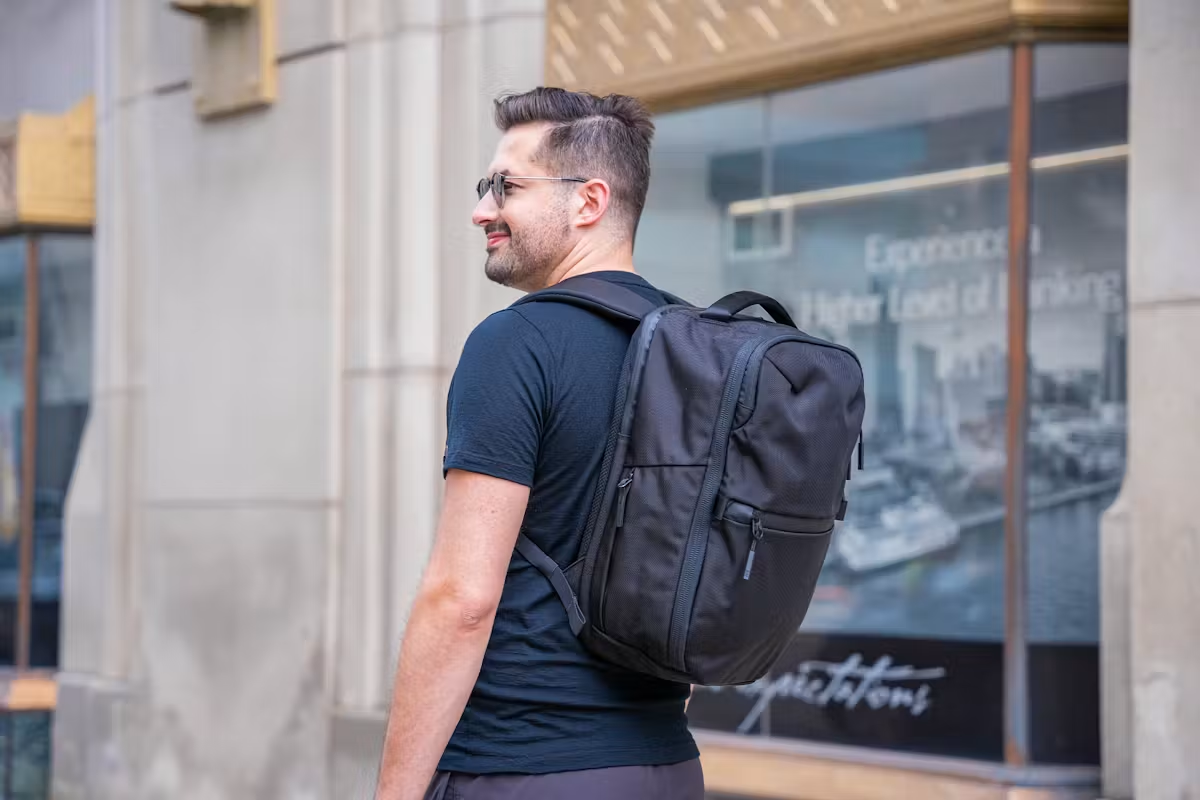
Aer
The discontinued original 24-liter clamshell City Pack Pro in 1680D Cordura, with a suspended 16-inch laptop sleeve and luggage pass-through.
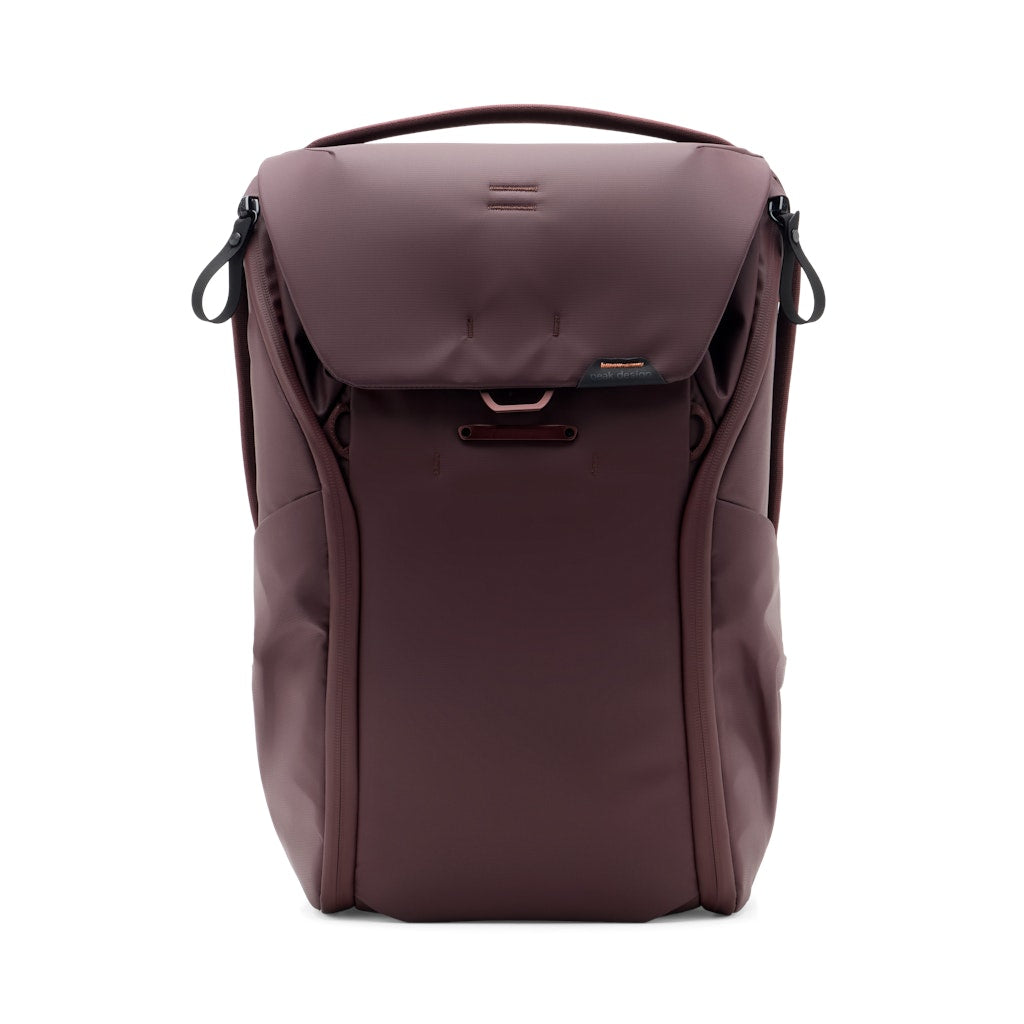
Peak Design
A 20-liter photo-and-everyday pack with MagLatch top access, dual UltraZip side access and three configurable FlexFold dividers.
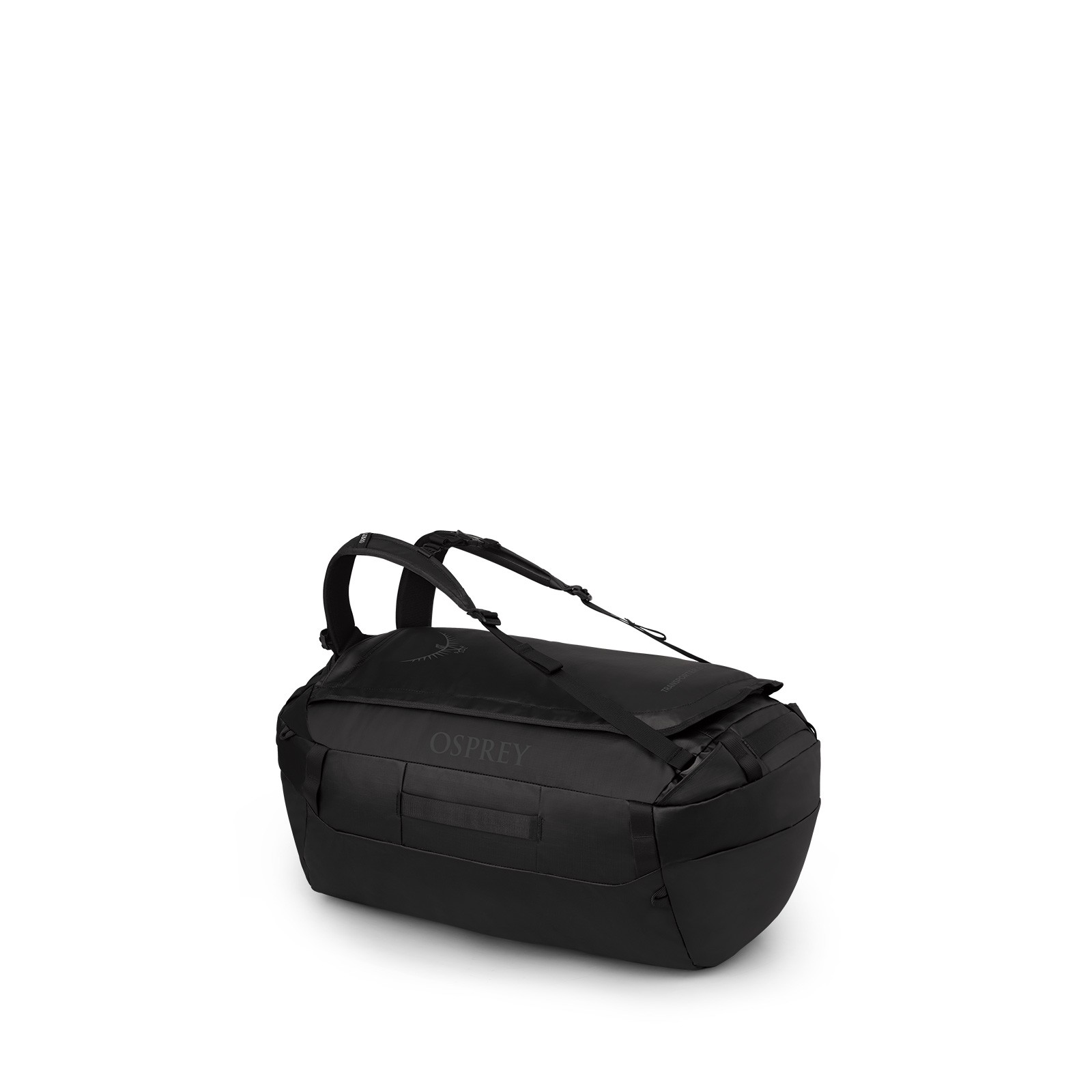
Osprey
A redesigned 65-liter expedition duffel with recycled NanoTough nylon, a protected YKK opening and a fully removable stowaway backpack harness.
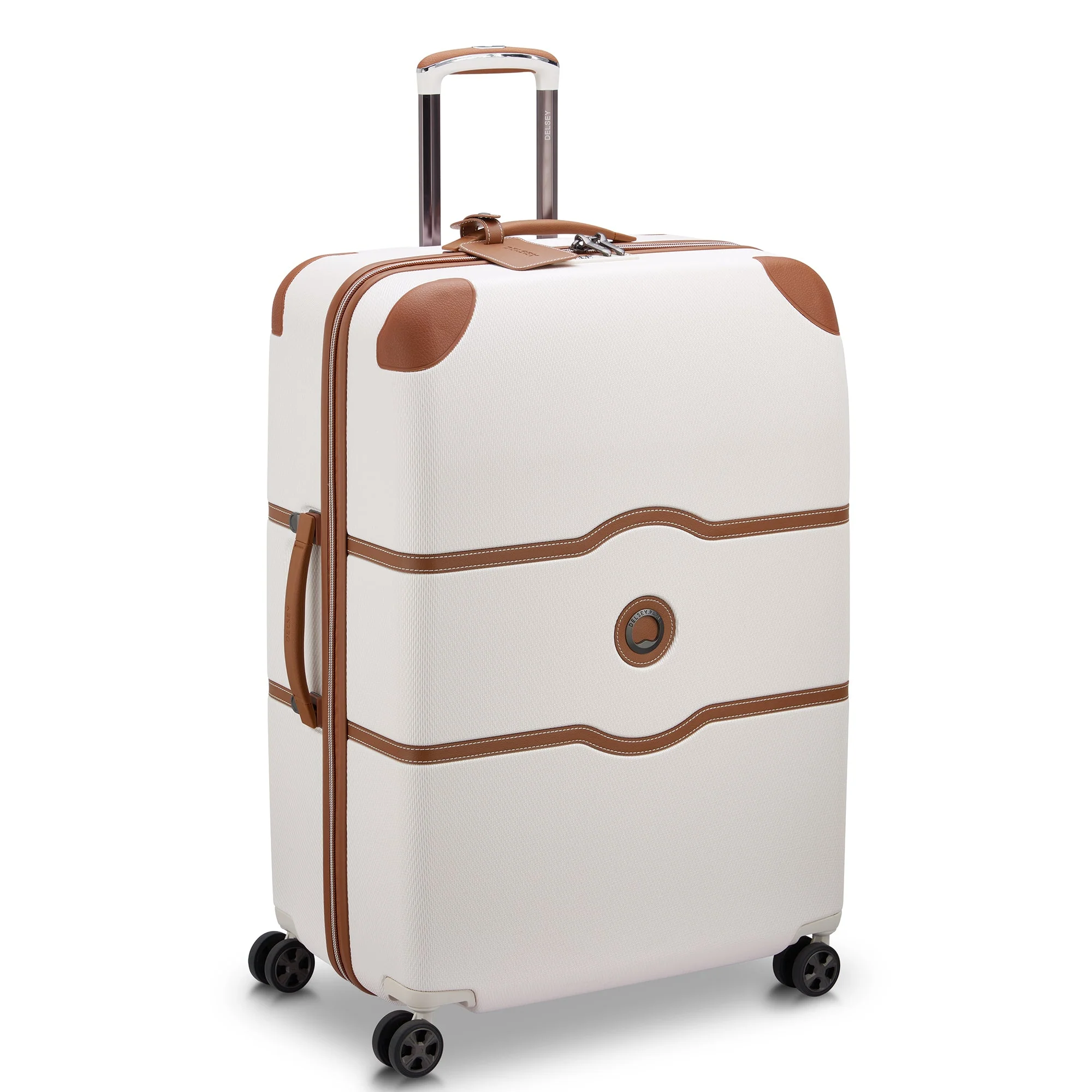
DELSEY PARIS
A 91-liter polycarbonate spinner with dual-density wheels, SECURITECH zipper, TSA lock and a washable organized interior.
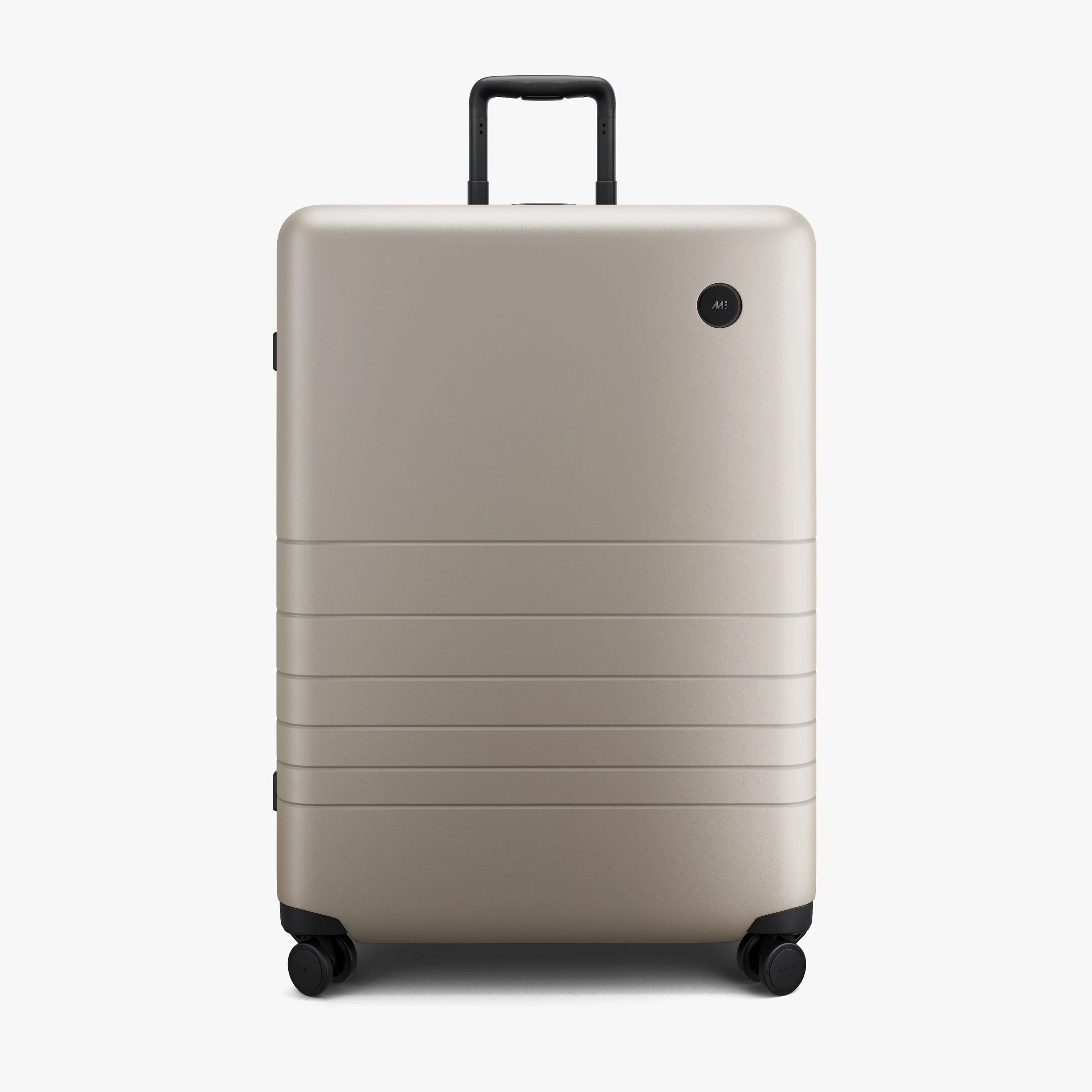
Monos
A 97.3-liter partially recycled polycarbonate spinner with YKK reverse-coil zippers, four-height handle and limited lifetime warranty.
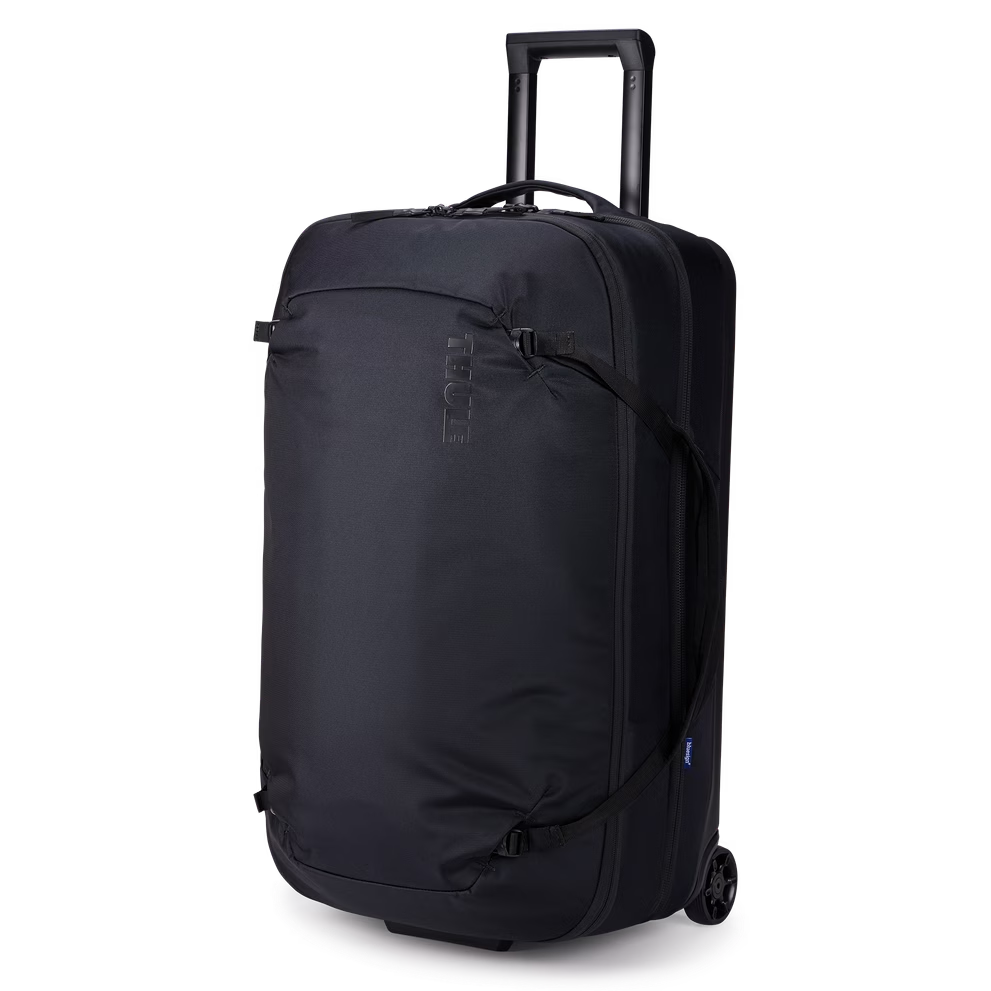
Thule
A 90-liter bluesign-certified 800D wheeled duffel with YKK zippers, a molded polycarbonate back and adaptable divided interior.
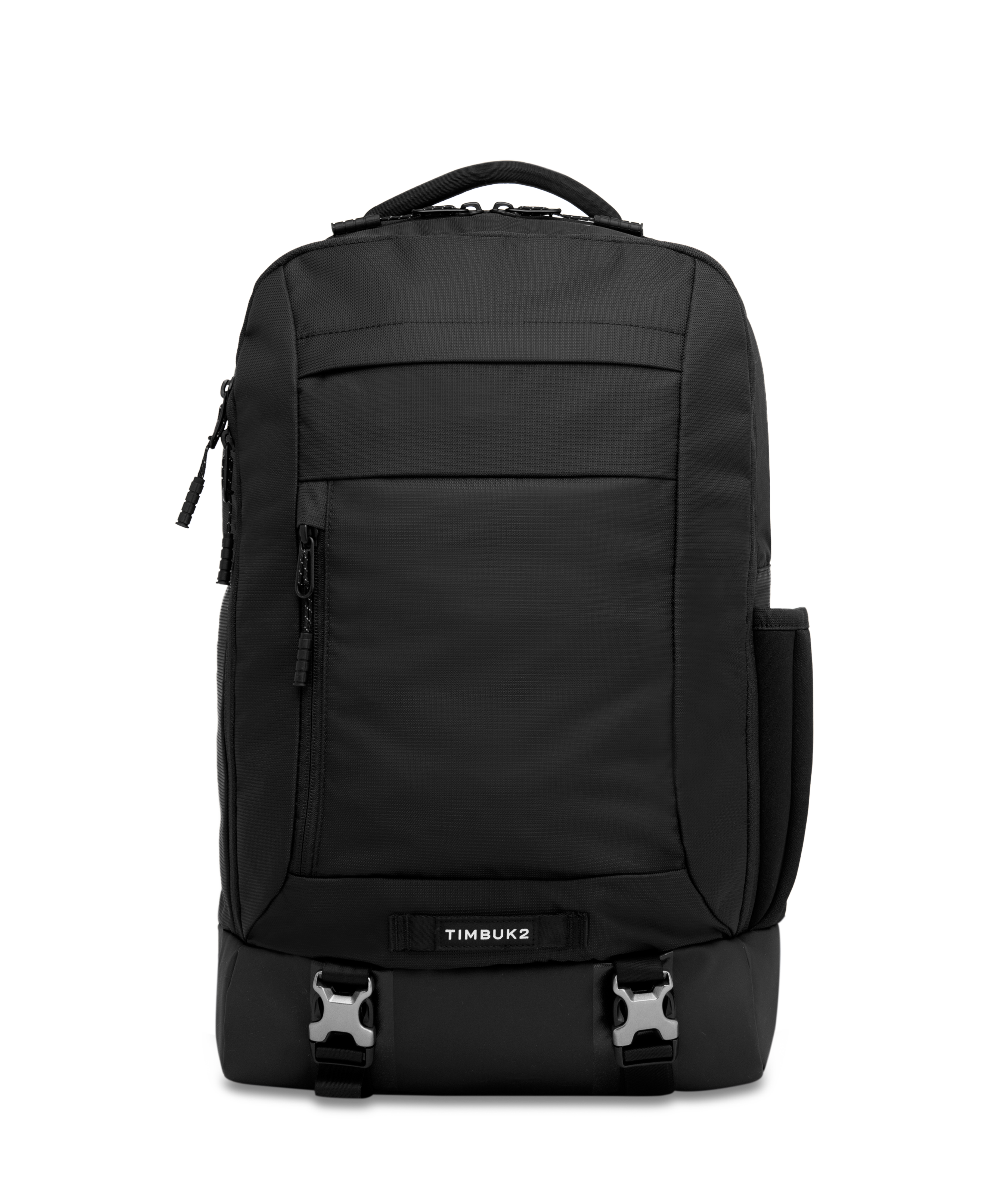
Timbuk2
A 28-liter recycled-material work pack with rear-access 17-inch laptop storage, internal organization and a waterproof bottom boot.
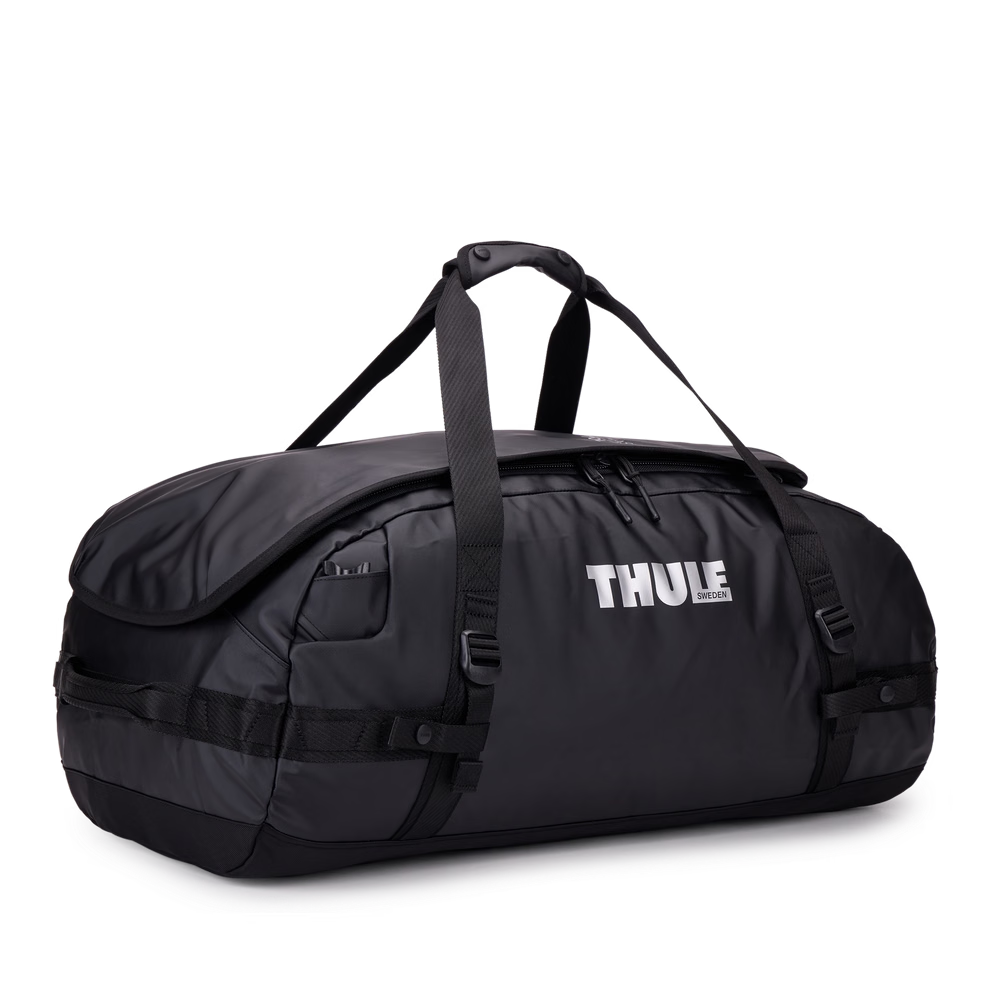
Thule
A 70-liter recycled 900D duffel with a padded base, wide-mouth opening and backpack straps that tuck away when not needed.
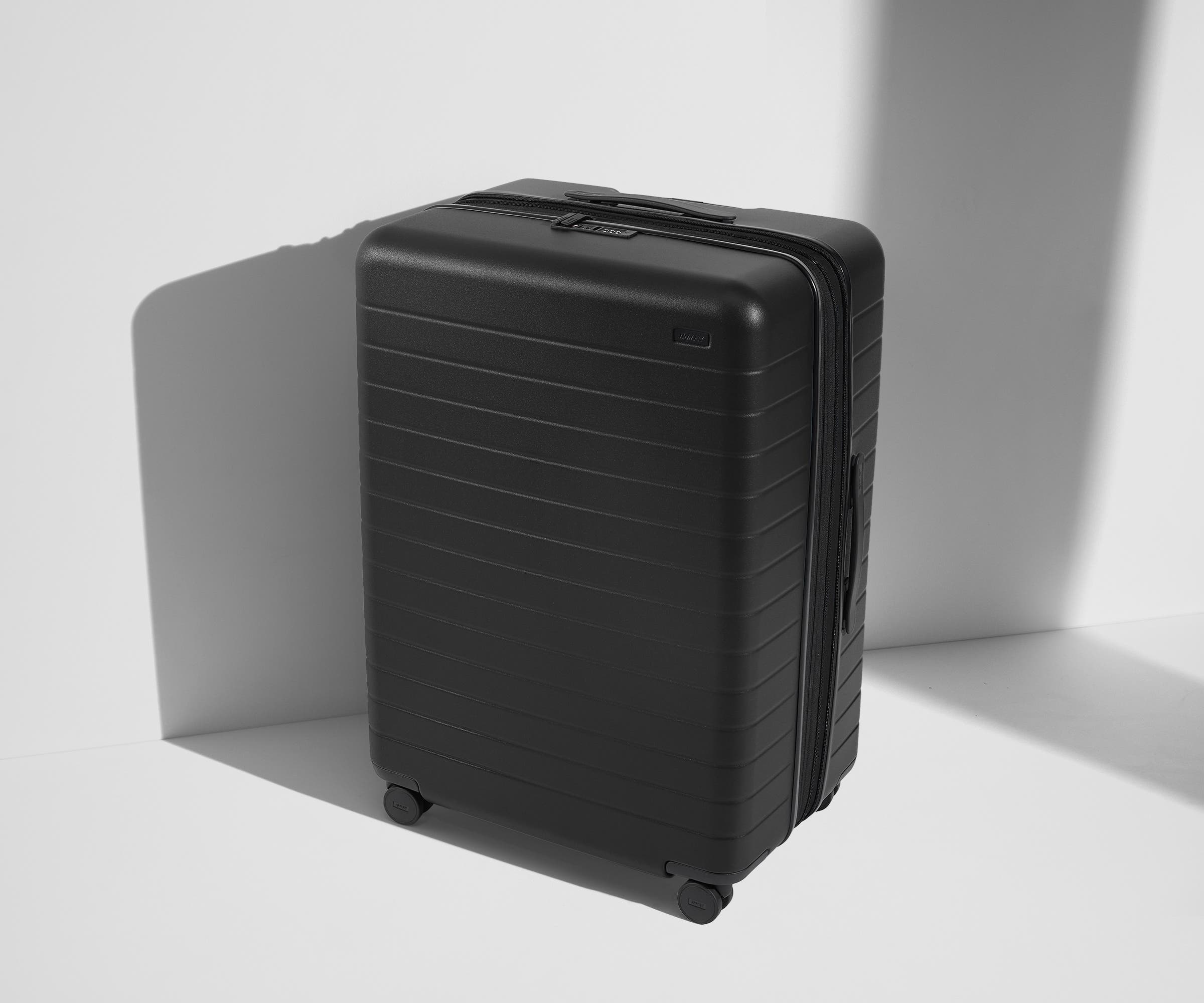
Away
A 104-to-115-liter expandable polycarbonate spinner with compression panels, 360-degree wheels and lifetime repair support.
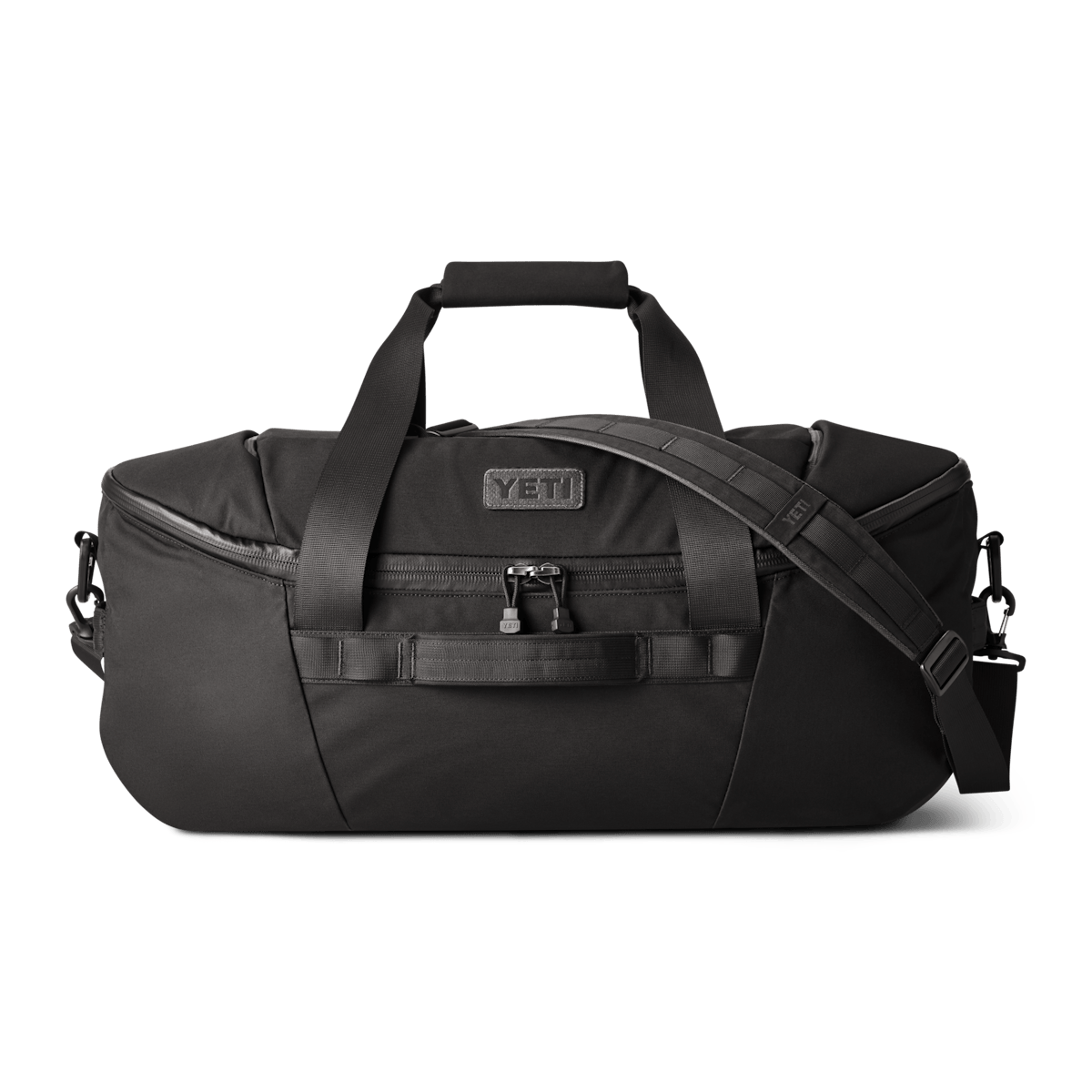
YETI
A structured 60-liter travel duffel in water- and abrasion-resistant 700D TuffSkin nylon with folding dividers and a PU-coated base.
6 products
Budget-conscious selections offering the best value and reliability for essential needs.
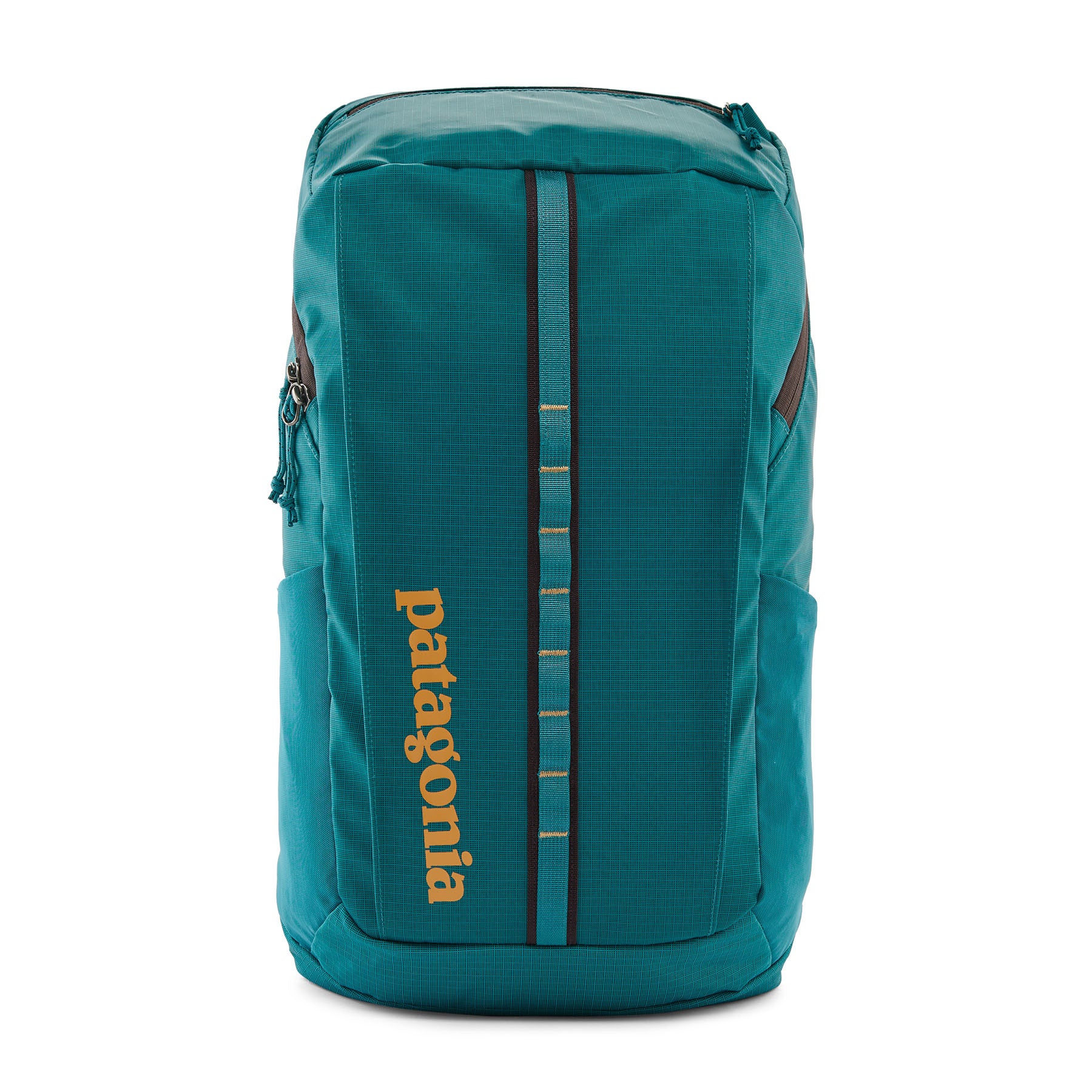
Patagonia
A 25-liter recycled ripstop daypack with recycled TPU-film laminate, dual bottle pockets, a 15-inch laptop sleeve and luggage pass-through.
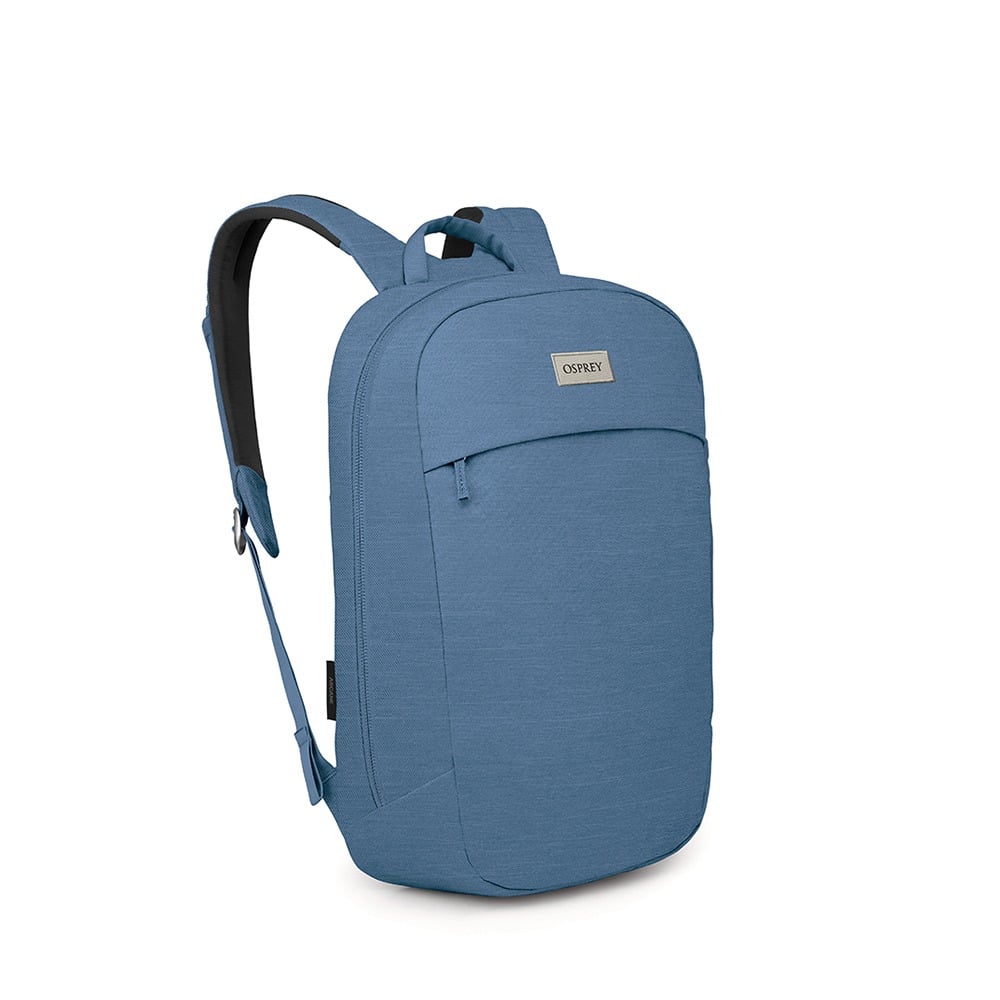
Osprey
A 21-liter recycled-polyester commuter pack with a J-zip opening, 16-inch laptop sleeve and quick-release aluminum security hook.

Eagle Creek
An expandable 60-to-67-liter recycled duffel with a seamless bathtub bottom, lockable #10 zipper and tuck-away backpack straps.
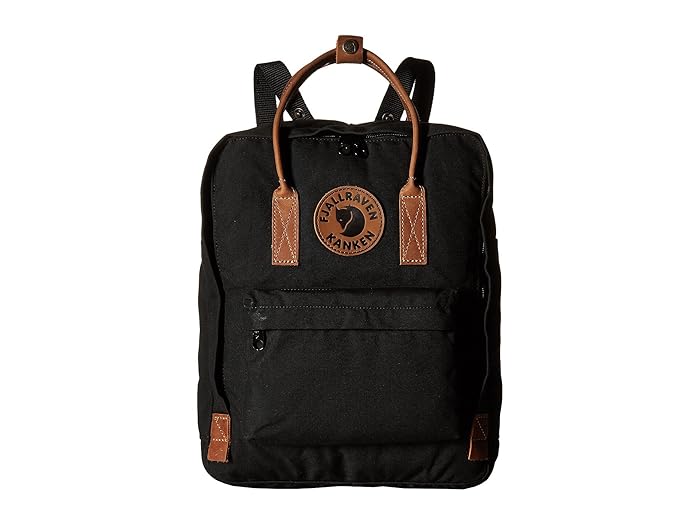
Fjällräven
A 16-liter double-waxed G-1000 HeavyDuty Kånken with leather details, a removable seat pad and Greenland Wax renewability.
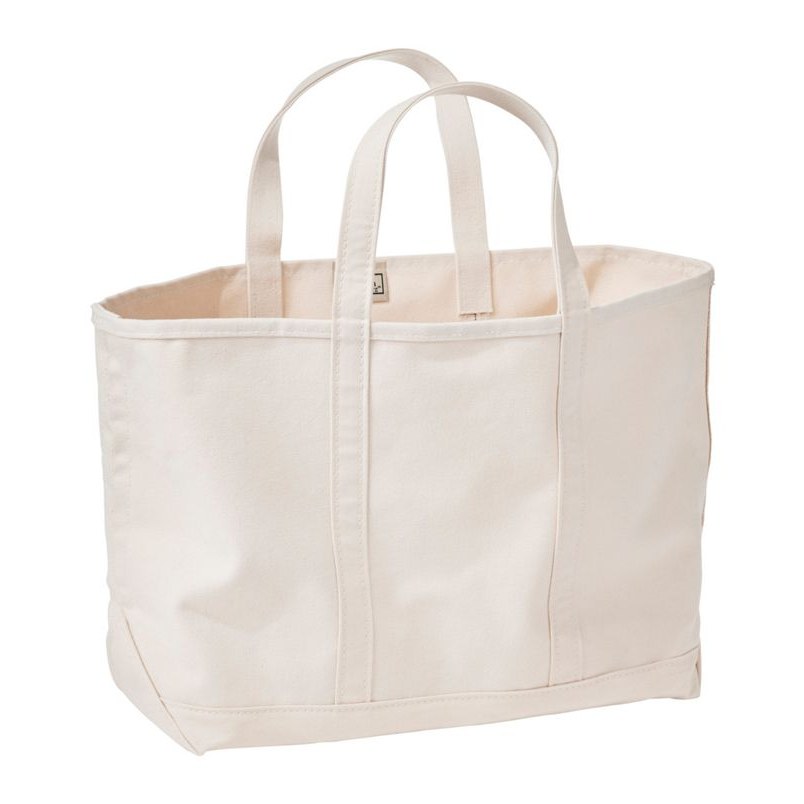
L.L.Bean
A Maine-made 35-liter open tote in 24-ounce cotton canvas with a double-layer base, nylon-stitched seams and handles tested to 500 pounds.

Peak Design
A 35-liter carry-on duffel in recycled 600D Versa Shell with an extra-long #10 UltraZip, configurable Cord Hook straps and a waterproof 900D bottom liner.
Buying guide
Start with what the bag must carry, how far you will carry or roll it, and the tightest transport limit you regularly face. Check the packed dimensions and weight rather than relying on a label such as “carry-on.” IATA says allowances remain airline-specific and can vary by cabin and aircraft; its common carry-on reference includes wheels and handles. A smaller bag that reliably fits your routine also leaves less room for chronic overpacking.
Try a backpack with the weight you expect to carry, not while it is empty. Set the back length first, place the hip belt over the top of the hip bones, then adjust shoulder, sternum, and stabilizer straps without restricting breathing. Deuter’s fitting guidance says the waist belt should bear the main load and the shoulder-strap anchor points should sit between the shoulder blades. Walk, bend, and reach to check for slipping, pressure, chafing, or a load that pulls backward.
Look past pocket count and inspect the parts that transmit force: carry-handle attachments, shoulder-strap anchors, hip-belt wings, wheel housings, zipper ends, and seam terminations. Reinforcement is most useful where webbing or hardware meets the bag. Then confirm whether damaged high-wear parts can actually be replaced. Bellroy publishes separate instructions for wheels, telescopic handles, locks, grab handles, and packing cells on supported luggage, while Rab documents buckle and fabric repairs for packs.
Before buying, load the bag and operate every zipper around corners, lift it repeatedly by each handle, extend and twist the telescoping handle gently, and roll luggage over more than a polished shop floor if permitted. Check that buckles match common webbing widths and that wheels or handles are attached in a serviceable way. Replaceability should be verified for the exact model: a brand’s repair program does not prove that every part on every bag is stocked indefinitely.
Follow the maker’s care label because fabrics, coatings, frames, and leather need different treatment. Empty grit and debris after trips, clean mud gently rather than peeling it from fabric, and dry the bag fully away from direct heat before storage. Rab recommends cold water, technical soap, air-drying away from sunlight and radiators, and no machine washing or tumble drying for its packs. Inspect small tears, loose stitching, buckles, wheels, and zipper operation early, when repair is usually simpler.
FAQ
Check the operating airline’s current allowance for every segment before buying, because cabin limits vary by airline, cabin class, and aircraft. Compare the bag’s published external dimensions with the allowance, including wheels and handles, and check its empty weight against any weight cap. IATA notes that 56 × 45 × 25 cm (22 × 18 × 10 in) is a common reference rather than a universal rule, and a compliant bag may still be gate-checked when cabin space is limited.
Treat the battery design as a purchase criterion, not an incidental feature. FAA guidance says battery-equipped luggage generally must travel in the cabin unless the battery is removed; removed batteries must follow the rules for spare batteries. Only very small installed batteries within the FAA’s stated thresholds are permitted in checked baggage. A removable, clearly rated battery is therefore easier to manage if a carry-on is checked at the gate, but travelers should still confirm the airline’s current policy.
Fit the pack to torso or back length rather than relying only on overall height. Deuter measures back length from the seventh cervical vertebra to the upper edge of the iliac crest and notes that people of similar height can have different back lengths. With a loaded pack, position the hip fins over the top of the hip bones, keep the shoulder straps supportive without overtightening, and check that the sternum strap does not restrict breathing. Try the intended load before committing when possible.
Inspect whether wheels, handles, zipper pulls, buckles, straps, and high-load attachment points can be reached and replaced without destroying adjacent material. Then verify the maker’s actual support: parts availability, repair instructions, service locations, shipping costs, and exclusions. Briggs & Riley, for example, describes do-it-yourself repair kits and a repair network, while warning that discontinued parts or colors may prevent an exact match. Use that level of detail as a comparison point rather than assuming that a repair promise guarantees identical parts forever.
No. Read the written terms before purchase and identify the duration, covered parts, remedy, claim process, shipping or labor charges, and exclusions for wear, misuse, cosmetic damage, or carrier damage. The FTC explains that warranties do not necessarily cover every situation and that “full” and “limited” are distinct legal labels. A maker may offer broad functional repairs yet exclude stains, odors, theft, or cosmetic wear, as Briggs & Riley’s published guarantee illustrates. Keep the receipt and a copy of the terms that applied when you bought the bag.
Follow the care label and maker instructions because coatings, frames, adhesives, and wheeled chassis can require different treatment. Osprey’s pack-care guidance calls for mild soapy warm water with a sponge or soft brush, avoidance of harsh chemicals, and air-drying in a ventilated place out of direct sunlight. It also says not to immerse its wheeled travel packs, instead wiping the chassis and spot-cleaning the fabric. Empty pockets, remove grit, let the bag dry completely, and store it uncompressed in a dry place.
Honoring the visionaries whose work paved the way for the products we rely on today.
Developed the first commercial rolling suitcase by filing the rolling-luggage patent in 1970 and receiving the wheeled-suitcase patent in 1972. His four-wheel design addressed the practical problem of moving luggage during the growth of air travel.
Invented the two-wheel upright suitcase with a long handle in 1987 while working as a US pilot. After crew members used the design, he commercialized it, founded Travelpro, and marketed it under the Rollaboard trademark; the format was initially designed for carry-on use and later adapted to checked luggage.
Founded Shwayder Trunk Manufacturing Company in Denver in 1910 and led it for decades. The company introduced a suitcase called Samsonite in 1939 and changed its name to Samsonite Corporation in 1965, documenting a long-running transition from trunk maker to luggage company.
Research last refreshed
Theodore L. Bailey and William M. McDermott · 1952
This U.S. Army review surveys physiological and military studies of carried loads, then identifies unresolved questions about tolerable weight, load position, freedom of movement, and pack design. It provides historical context for judging backpack fit and carrying systems rather than prescribing a modern consumer limit.
R. F. Goldman and P. F. Iampietro · 1962
The study varied walking speed, grade, and carried load from 10 to 30 kg to estimate their contributions to energy use. Its authors concluded, tentatively and within the tested ranges, that added body mass and carried mass had broadly similar energy costs during graded walking.
R. G. Soule and R. F. Goldman · 1969
This Journal of Applied Physiology paper examined oxygen consumption and exertion when loads were placed on the head, in the hands, or on the feet. It is useful background for understanding why load location and distribution matter, while its tested methods should not be treated as a universal backpack-fit rule.