7.5/10
Durable buying guide
Choose hand-tool and wrench sets by the fastener sizes, access, and jobs you expect. Compare complete size ranges, swing arc, handle length, fastener-contact design, visible markings, storage, materials, and warranty terms instead of relying on piece count alone.
2 products
Superior features, extended warranties, and high-end materials for enhanced performance.
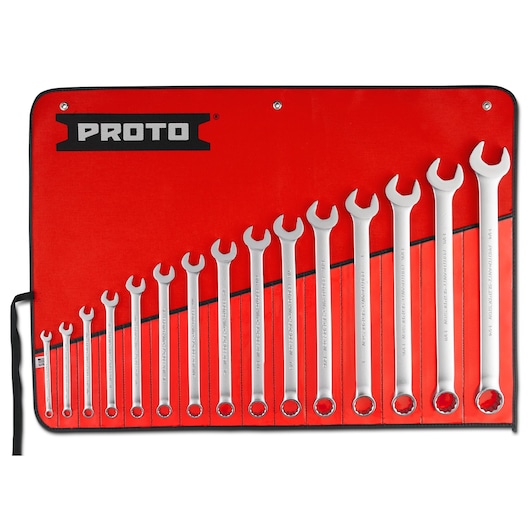
Proto
A 15-piece US-made SAE satin wrench set with TorquePlus 12-point boxes, anti-slip open ends and a heavy textile roll.
5 products
A balanced blend of performance, quality, and price for the discerning user.
Wera
An 11-piece metric non-ratcheting combination-wrench set with 7.5-degree open ends, 15-degree return access and a Wera 2go-compatible pouch.

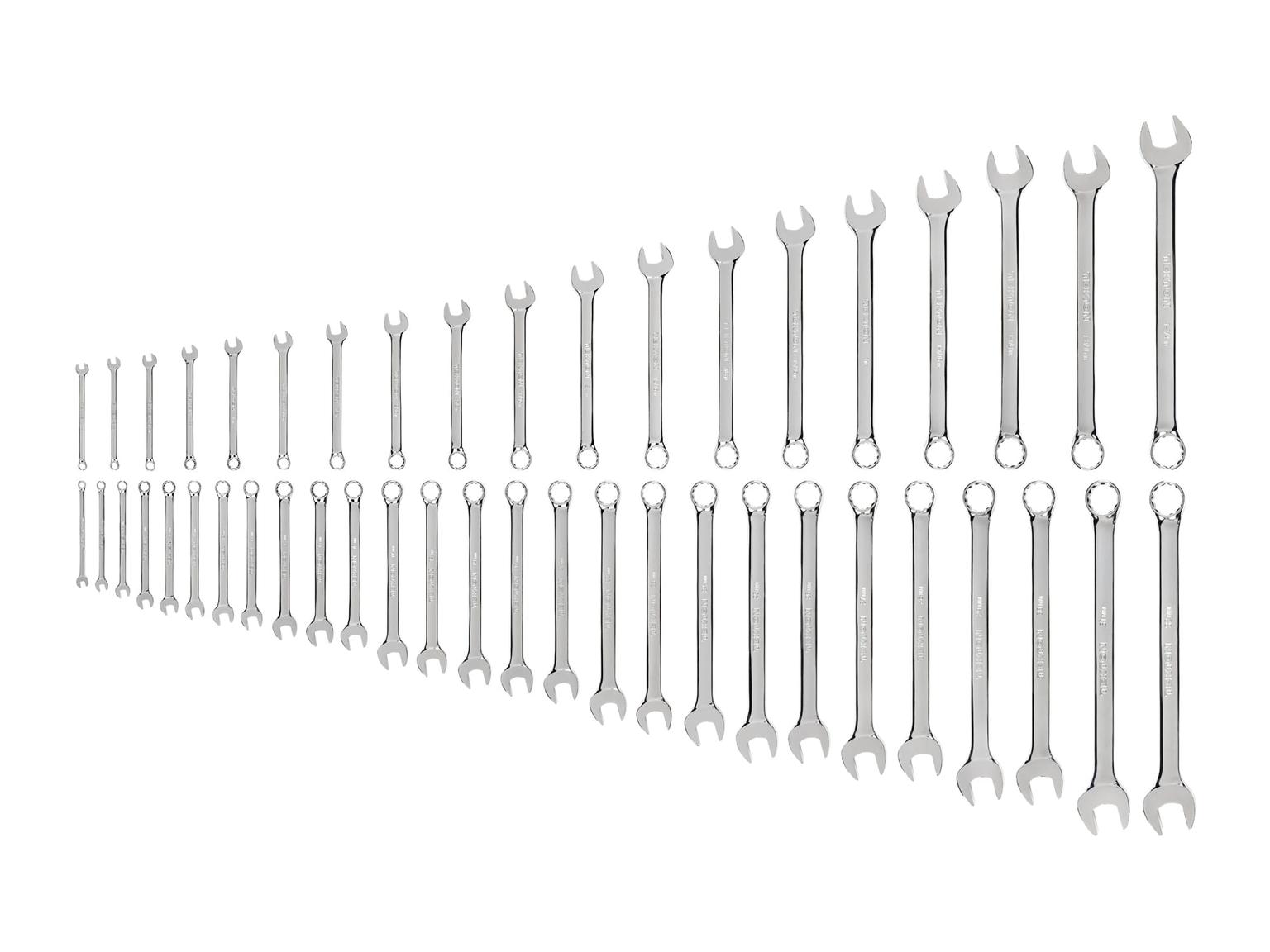
Tekton
A no-skip 46-piece SAE and metric combination-wrench set with angled open ends, 12-point boxes and Tekton's always-guaranteed support.
Wiha
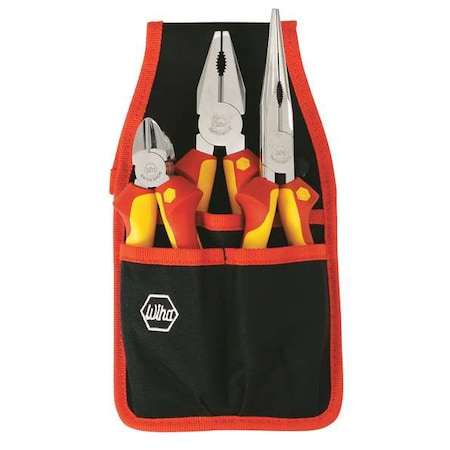
A three-piece VDE insulated plier set, individually tested at 10,000 VAC and rated for work up to 1,000 VAC or 1,500 VDC.
5 products
Budget-conscious selections offering the best value and reliability for essential needs.
Knipex
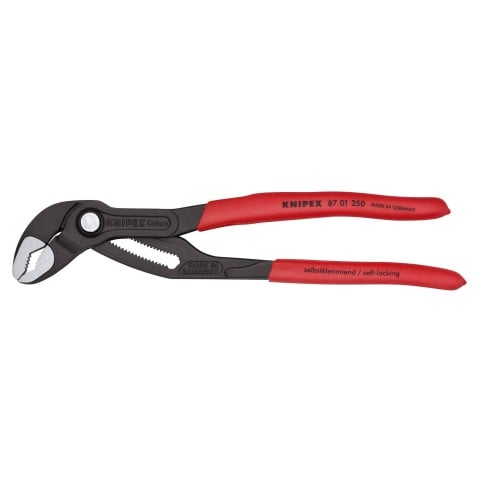
German-made 10-inch water-pump pliers with push-button sizing, 25 positions, a self-locking jaw and replaceable adjustment hardware.
Knipex
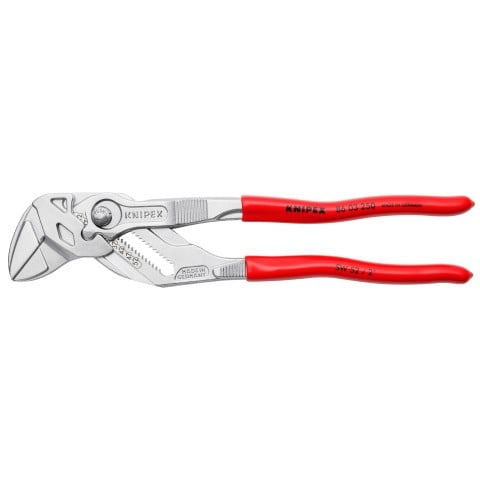
A smooth-jaw, parallel-action 10-inch pliers wrench with push-button adjustment, scale markings and more than 10:1 leverage.
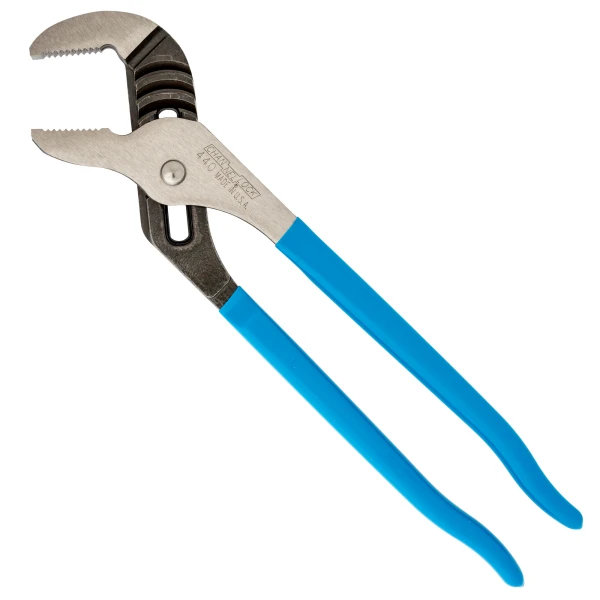
Channellock
Classic 12-inch American-made tongue-and-groove pliers with a 2.25-inch capacity, Permalock joint and laser-hardened teeth.
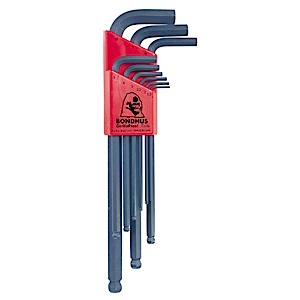
Bondhus
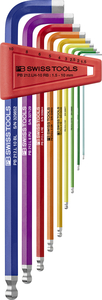
A nine-piece long-arm metric hex-key set with ball ends, ProGuard corrosion protection, Protanium steel and a color-coded holder.

Engineer
Japanese 160-millimeter screw-extraction pliers with vertical and horizontal jaw serrations, a return spring and an integrated wire cutter.
Shop by brand
Buying guide
Start by listing the fasteners you service: metric or SAE, hex or internal-hex, shallow or recessed, and the drive sizes and extensions needed to reach them. Do not treat near-size metric and SAE tools as interchangeable. CCOHS notes that fixed wrenches fit specific sizes and says choosing the correct type and jaw size helps prevent slippage, injury, and equipment damage. A focused set that covers the real size range, plus the necessary deep sockets or extensions, is more useful than a high piece count padded with duplicates or bits you will not use.
Check that an open end seats flat and fully on a fastener, that an adjustable jaw does not creep open, and that a ratchet engages positively before heavy pressure is applied. Head thickness, handle length, swing arc, backdrag, socket retention, and marking legibility matter most in the spaces where you work. Handle shape is not one-size-fits-all: CCOHS recommends selecting tools that keep the wrist neutral and explains that grip diameter, handle length, friction, task direction, and glove use all affect comfort and control. When possible, handle the tools with your usual gloves before committing to a large set.
Before buying, confirm that the maker sells individual missing sizes and service parts for the exact ratchet model; a broad warranty is less useful if one lost socket forces replacement of a whole set. Rebuildability is a concrete longevity feature, not merely a material claim. For example, Tekton sells a model-specific ratchet service kit, provides rebuild and lubrication guidance, and identifies the compatible ratchets. Availability can change, so verify the current parts catalog and save model numbers and receipts. Removable rails, ordinary trays, or modular organizers also keep the tools usable if a molded case hinge fails.
Durability depends on retiring unsafe tools rather than forcing them through one more job. OSHA says wrenches with jaws sprung enough to slip must not be used. CCOHS likewise advises discarding spread-jaw or damaged-point wrenches, using a slow steady pull, keeping tools clean and oiled, and avoiding makeshift shims, hammer blows, or pipe extensions added for leverage. Inspect jaws, box ends, sockets, ratchet engagement, handles, and plating before use. Use penetrating oil, the correct breaker bar, or specified torque equipment instead of extending a standard wrench, and follow the maker's lubrication instructions for the exact mechanism.
FAQ
Start with the fasteners you actually service: metric for metric heads and SAE for inch heads, adding the other system only when your equipment requires it. Do not treat a close-looking size as automatically interchangeable. Wright Tool advises choosing the closest proper fit because excess play reduces torque transfer and can round corners; CCOHS likewise says to select the correct jaw size to avoid slippage.
No. Count the useful sizes, drive tools, extensions, and access pieces rather than every bit or adapter. A smaller set that matches your fasteners and leaves room to replace one piece can be the better long-term system. Fit and access matter: Wright Tool emphasizes close wrench fit, while GearWrench's own ratchet specifications show how head profile, swing arc, handle length, and flex positions change access independently of piece count.
They mainly affect how little handle movement is needed and whether the tool fits around an obstruction. For example, GearWrench specifies 120 engagement positions and a 3-degree swing arc for one 120XP ratchet, plus a low-profile locking flex head. Treat those as model-specific specifications, not proof that every high-tooth ratchet is stronger; compare access, backdrag, direction control, head dimensions, and published standards together.
Stop using a wrench with spread jaws, damaged box points, a bent handle, or wear that permits slippage. OSHA specifically prohibits using adjustable, pipe, end, and socket wrenches when sprung jaws slip. CCOHS also advises discarding damaged wrenches, checking adjustable-wrench knurls, jaws, and pins, and first applying light pressure to confirm that a ratchet pawl is engaged before loading it.
Sometimes, but verify support for the exact model before buying. Tekton sells a service kit for specified 90-tooth ratchets, provides disassembly and lubrication guidance, and cautions that too much grease can hurt performance. Its warranty page also states that replacement parts ship in the United States and Canada. This is useful evidence of renewability for those listed tools, not a promise that every brand or ratchet is rebuildable.
Do not assume so. Electrical work calls for tools whose insulation, voltage rating, and applicable test standard are explicit, along with the required training and work practices. As one concrete example, Wiha states that its listed slimBits are individually tested to IEC 60900 and intended for live parts up to 1,000 V AC; that claim applies to the identified insulated system, not to ordinary sockets, pliers, or chrome-finished wrenches.
Honoring the visionaries whose work paved the way for the products we rely on today.
Loring Coes invented the screw-type wrench commonly known as the monkey wrench. Wikipedia records that earlier adjustable wrenches required two hands to set, while Coes's design could be adjusted with one hand; his patent was granted on April 16, 1841, and his company manufactured the wrench.
Daniel Chapman Stillson developed the modern adjustable pipe wrench while working as a machinist at the J. J. Walworth Company. The source records that he received U.S. patent 95,744 on September 13, 1870; the Stillson pattern remains a distinct reference point in pipe-wrench design.
Johan Petter Johansson is associated with the Bahco/Johansson improvement to the worm-on-rack adjustable wrench. The source states that Bahco attributes the improvement to Johansson and that he received a Swedish patent for it in 1892, helping establish the form widely recognized as an adjustable wrench.
Research last refreshed
Charles O. Bechtol · 1954
Bechtol describes an adjustable-spacing grip dynamometer and explains why handle spacing matters when measuring people with different hand sizes. The work provides an early empirical basis for treating handle geometry as a fit variable when comparing wrenches, pliers, and other force-driven hand tools.
J. R. Napier · 1956
Napier analyzes hand movement anatomically and functionally, distinguishing precision grip from power grip. That distinction is directly useful for hand-tool assessment: positioning a fastener may demand precision, while applying load through a wrench or plier handle usually depends on a secure power grip.
Alfred B. Swanson, Ivan B. Matev, and Gerrit de Groot · 1970
Swanson, Matev, and de Groot report a study of strength in functional adaptations of the normal hand, including baseline grip and pinch measurements from one hundred healthy participants. The paper helps frame hand-tool leverage and handle selection around measured human capability rather than piece count or appearance alone.