7.5/10
Premium15 yr life
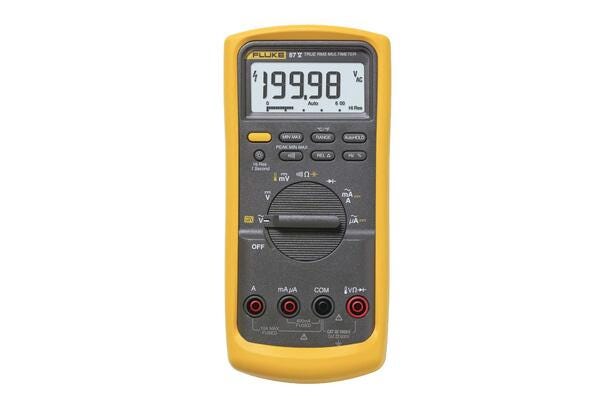
87V Industrial True-RMS Multimeter
Fluke
A lifetime-warranted industrial True-RMS meter with VFD filtering, 250 µs peak capture and CAT III 1000 V/CAT IV 600 V protection.
- Repair
- 4.9/10
- TCO
- 7.4/10
$485.00
Durable buying guide
Multimeters and electrical testers are safety-critical tools. Choose a meter and leads rated for the circuit’s voltage and IEC measurement category, then weigh independent certification, overload protection, probe condition, readable instructions, and access to calibration or repair support.
6 products
Superior features, extended warranties, and high-end materials for enhanced performance.
Fluke
A lifetime-warranted industrial True-RMS meter with VFD filtering, 250 µs peak capture and CAT III 1000 V/CAT IV 600 V protection.
Fluke
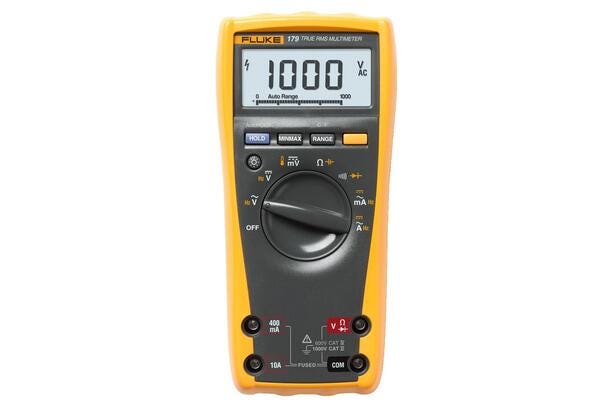
A lifetime-warranted general-purpose True-RMS meter with 0.09% basic DC accuracy, CAT IV 600 V protection and an included temperature probe.
5 products
A balanced blend of performance, quality, and price for the discerning user.
Fluke
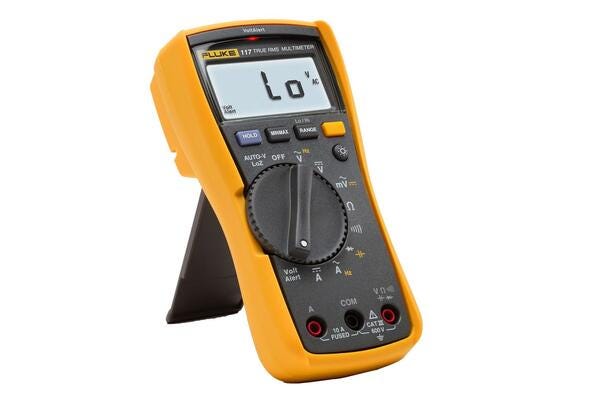
A compact CAT III 600 V electrician's meter combining True-RMS readings, VoltAlert non-contact detection, AutoVolt and LoZ ghost-voltage rejection.

Brymen
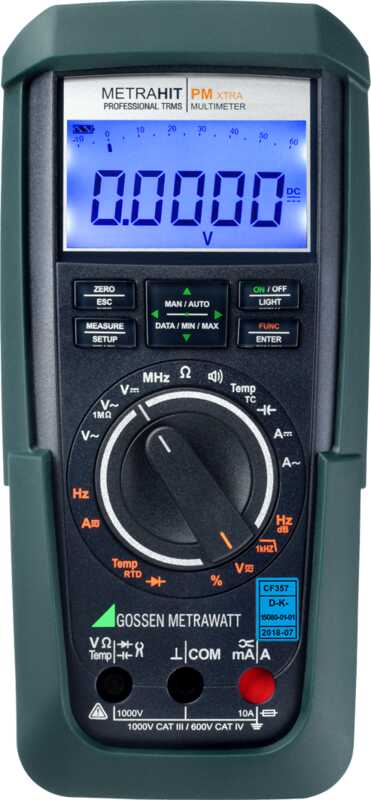
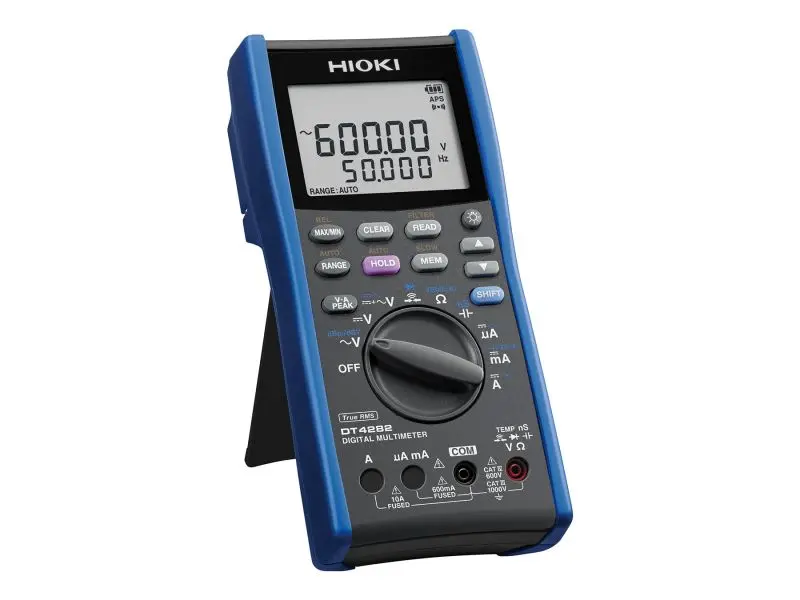
A 500,000-count CAT IV 1000 V meter with 0.02% basic DC accuracy, dual display, AC+DC True-RMS, VFD filtering and dual-temperature inputs.
Brymen
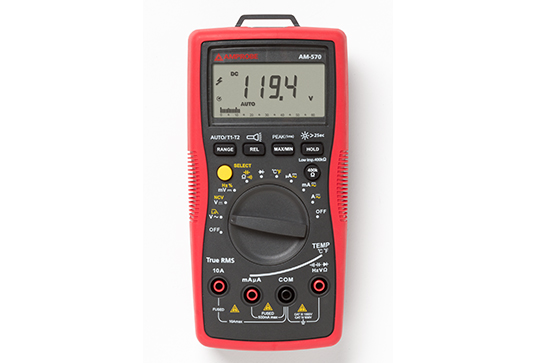
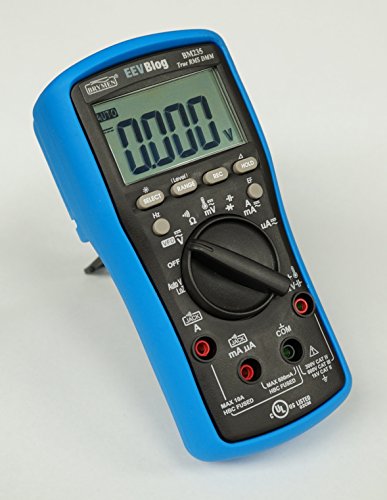
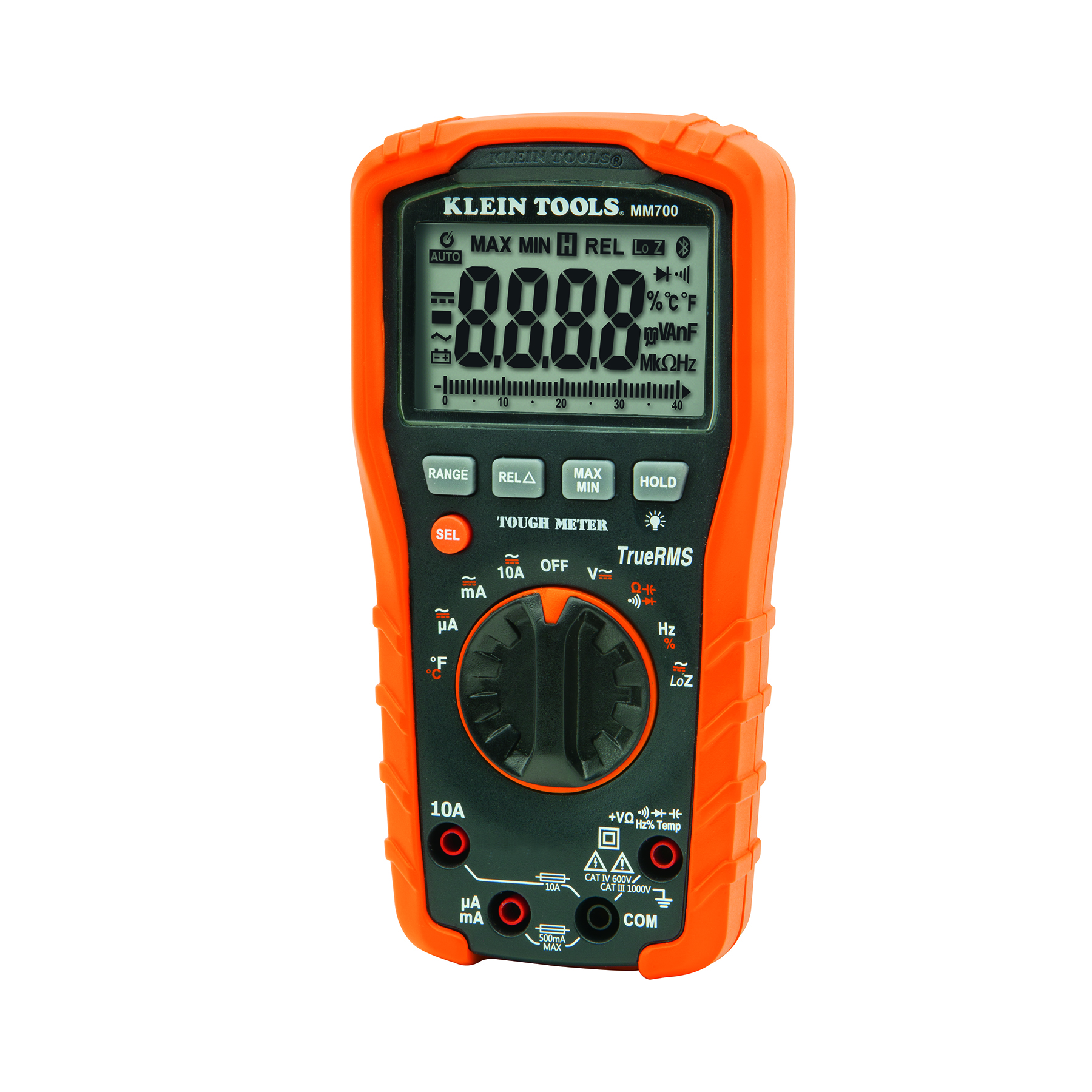
A compact 6,000-count True-RMS meter with LoZ AutoV, VFD voltage/frequency, dual-sensitivity field detection and CAT IV 300 V protection.
UNI-T
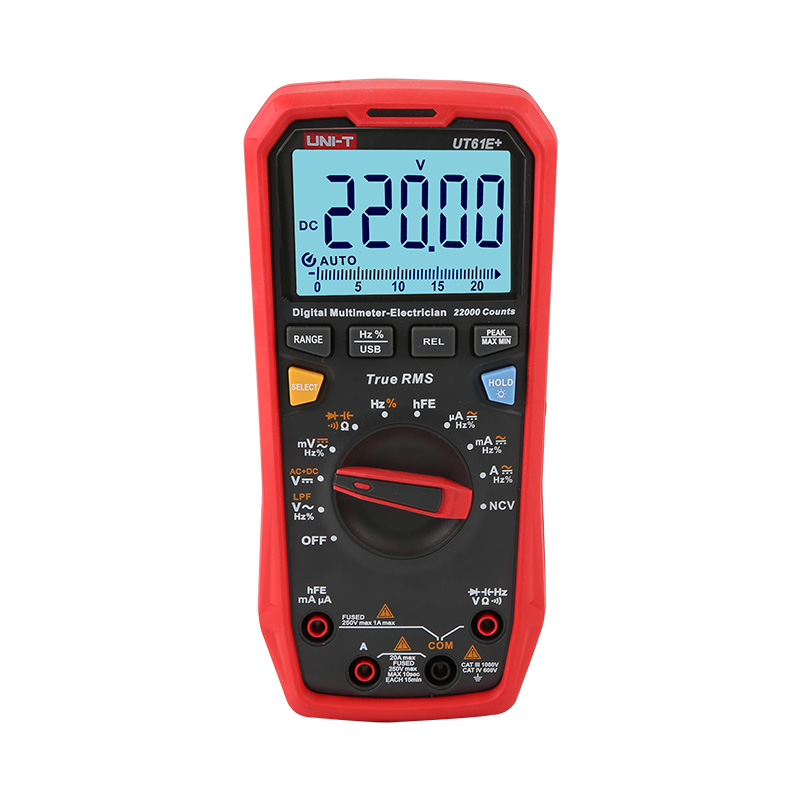
A 22,000-count True-RMS meter with 0.05% basic DC accuracy, 10 kHz AC bandwidth, USB logging and CAT III 1000 V/CAT IV 600 V protection.
1 products
Budget-conscious selections offering the best value and reliability for essential needs.
Extech
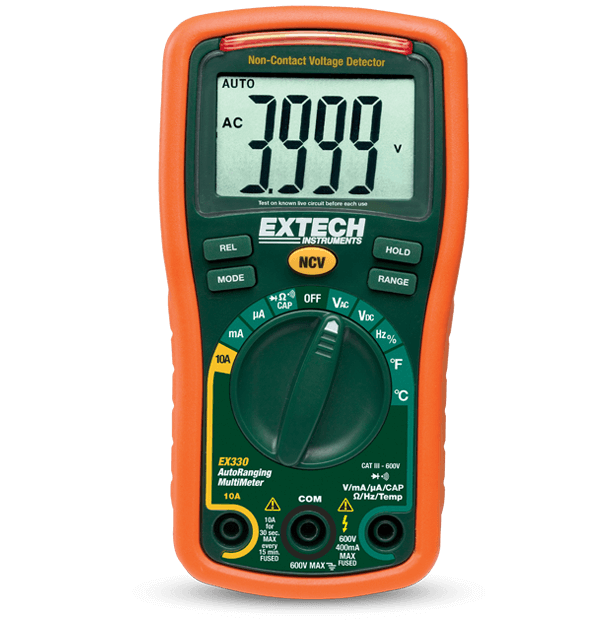
A compact 4,000-count autoranging meter with temperature and non-contact voltage detection, but average-responding AC rather than True RMS.
Shop by brand
Buying guide
Begin with where the tester will connect, not with display count or feature count. OSHA requires test instruments and accessories to be rated for the circuit and designed for the environment. For mains work, match both the measurement category and voltage: CAT II covers receptacle-connected loads, CAT III covers distribution and fixed-installation circuits, and CAT IV reaches the service entrance and outdoor conductors. Choose for the highest-energy location you may actually encounter, and leave unfamiliar energized work to a qualified person.
The meter, probes, sleeves, plugs, jacks, and fuses form one protection system. Look for clearly marked CAT and voltage ratings, leads rated for the same environment, shrouded connections, finger guards, and independent safety-verification marks. Do not assume a printed category alone proves construction quality. Before buying, confirm that the maker identifies exact replacement leads and fuses and provides an accessible manual; substituting an ordinary fuse or lower-rated lead can defeat the protection you paid for.
Buy functions that fit the job and understand their limits. A clamp meter can measure current without opening a power circuit, while a conventional current measurement may require placing the meter in series; OSHA's tester guidance notes that opening and reconnecting a power circuit can be dangerous. A noncontact voltage detector is useful for screening, but it can miss conductors inside metal conduit and should not be treated as proof that equipment is de-energized. Favor clear controls and procedures over a long list of rarely used modes.
Durability is only useful while the safety system remains intact. Inspect the case, display, rotary switch, jacks, plugs, probes, insulation, and accessories before each use. OSHA says damaged test equipment or leads must be removed from service until made safe. Then check operation on a known source or proving unit before relying on a reading; the Hioki manual also calls for checking lead continuity, known values, and fuse resistance. Quarantine equipment that is cracked, wet, dropped, or gives unstable checks rather than testing your luck on an energized circuit.
For long ownership, verify that manuals, specified fuses, leads, batteries, repair routes, and calibration service are available before purchase. Store the tester within the maker's temperature and humidity limits and away from water, corrosive chemicals, heavy dust, and damaging vibration. If decisions depend on accuracy, schedule calibration from the instrument's history, stability, use, environment, and required confidence rather than assuming one universal interval. NIST notes that recalibration detects uncertainty growth and that documented intervals support metrological traceability.
FAQ
No. Match the instrument and every accessory to the circuit, expected transient exposure, and operating environment—not merely the largest displayed voltage. OSHA requires test instruments, equipment, and accessories to be rated for the circuits and equipment to which they will be connected and designed for the environment in which they will be used. Treat that suitability as a threshold requirement before comparing features.
Inspect the meter body, leads, cables, probes, connectors, insulation, and strain relief for visible defects or damage before use. OSHA says an item with damage that might expose someone to injury must be removed from service until repairs and testing make it safe. A carrying case or organized storage can reduce abrasion and sharp bends, but storage does not replace a pre-use inspection.
Do not treat a convenience indication as a complete safe-work procedure. OSHA’s de-energization rules require qualified persons to use test equipment to verify that circuit elements and equipment parts are de-energized and to check for induced voltage or unrelated backfeed. Live-part testing also calls for practices appropriate to the hazard. If you are not qualified for the work, stop and use a qualified electrician.
No. Display count mainly describes how finely a meter can show a value; usable accuracy still depends on the stated specification, range, signal, and conditions. For AC work, waveform shape matters too. National Instruments explains that higher crest factors make accurate AC measurement harder and that a true-RMS meter’s specification includes crest-factor limits and possible added error for non-sinusoidal waveforms. Read the full accuracy table, not just the headline count.
Traceability is more than a sticker or an unsupported claim that a meter was “checked.” NIST describes metrological traceability as an unbroken chain of calibrations to specified reference standards, with measurement uncertainty documented through that chain. If measurements drive acceptance, safety, or compliance decisions, ask what results and uncertainties the certificate reports, which standards and procedures were used, and whether the scope fits your ranges.
There is no single interval that fits every meter and use. NIST guidance says calibration intervals should be established and appropriate to preserve traceability over time and use; its interval-setting practice considers calibration history, measurement-assurance data, uncertainty needs, and evidence of stability. Start with the maker’s recommendation, then shorten or justify extending the interval from documented risk and performance data rather than convenience alone.
Honoring the visionaries whose work paved the way for the products we rely on today.
In 1827, Georg Ohm published the relationship between potential difference, current, and resistance now known as Ohm's law. That relationship gives electrical measurement a clear framework for interpreting voltage, current, and resistance readings, and the SI unit of resistance, the ohm, bears his name.
Alessandro Volta improved the electrophorus, studied electrical capacitance, and invented the voltaic pile in 1799. The pile produced a steady electric current and enabled repeatable experiments with electrical potential; the SI unit of electric potential, the volt, is named in his honor.
André-Marie Ampère helped establish classical electromagnetism by studying the forces between current-carrying conductors and formulating Ampère's law. His 1826 treatise developed electrodynamics as a field, and the SI unit of electric current, the ampere, is named after him.
Research last refreshed
T. F. Leedy, K. J. Lentner, O. B. Laug, and B. A. Beil · 1988
This NIST report develops repeatable electrical-performance tests for battery-powered hand-held digital multimeters, covering input impedance, protection, DC/AC voltage and current, resistance, frequency, accuracy, response, burden voltage, and uncertainty. It directly supports evaluating meter capability and calibration-related performance.
Zixuan Yu, Tingting Huang, Kun Zhou, Bo Peng, and Yuepu Zhao · 2019
This peer-reviewed ICSRS 2018 paper models degradation and residual life of digital multimeters exposed to dynamic marine temperature, humidity, and salinity. It uses measurement errors across DCV, DC, ACV, AC, and resistance ranges as performance signals, directly addressing meter reliability and longevity.
Fluke · 2019
This Fluke technical guide explains multimeter CAT II–IV ratings, voltage selection, IP codes, independent verification, inspection of leads and cases, proving-unit checks, and precautions for arc-flash and shock hazards. It directly informs safe selection and maintenance of electrical testers.