7.7/10
Premium12 yr life
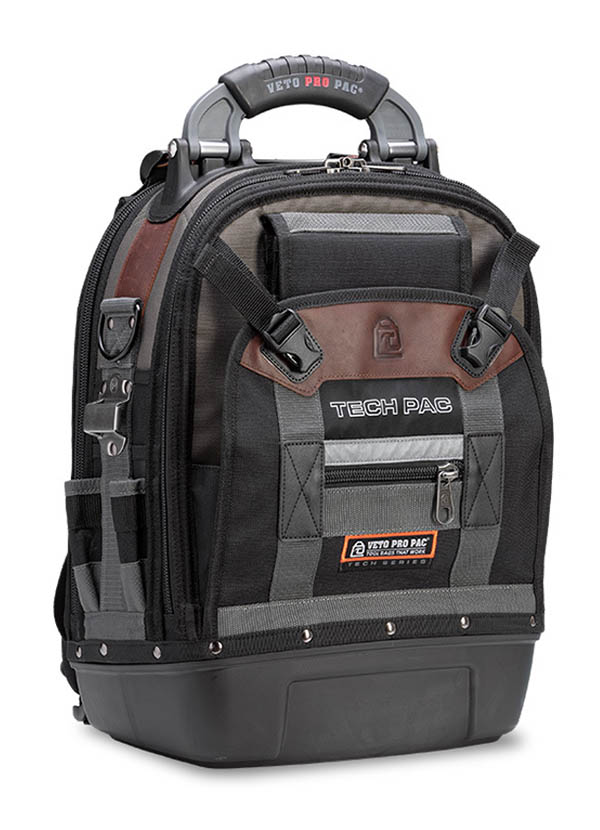
TECH PAC Backpack Tool Bag VPP10070
Veto Pro Pac
A 24 L technician backpack with 46 pockets, two vertical storage bays, a waterproof molded base and a five-year defect warranty.
- Repair
- 7.2/10
- TCO
- 7.9/10
$314.99
Durable buying guide
Tool storage and organizers include portable cases, modular rolling boxes, drawers, parts organizers, and bags. Compare load capacity, seals, latches, interior layout, wheel and handle design, and module compatibility for workshop, vehicle, or jobsite use.
1 products
Superior features, extended warranties, and high-end materials for enhanced performance.
Veto Pro Pac
A 24 L technician backpack with 46 pockets, two vertical storage bays, a waterproof molded base and a five-year defect warranty.
8 products
A balanced blend of performance, quality, and price for the discerning user.

Festool
A 15.9 L T-LOC case that couples to earlier Systainer generations and Festool transport equipment while carrying up to 44.09 lb.
Milwaukee
The original 250 lb-capacity PACKOUT rolling base with 9 in wheels, IP65 sealing and a lifetime limited warranty, now discontinued.
DeWalt
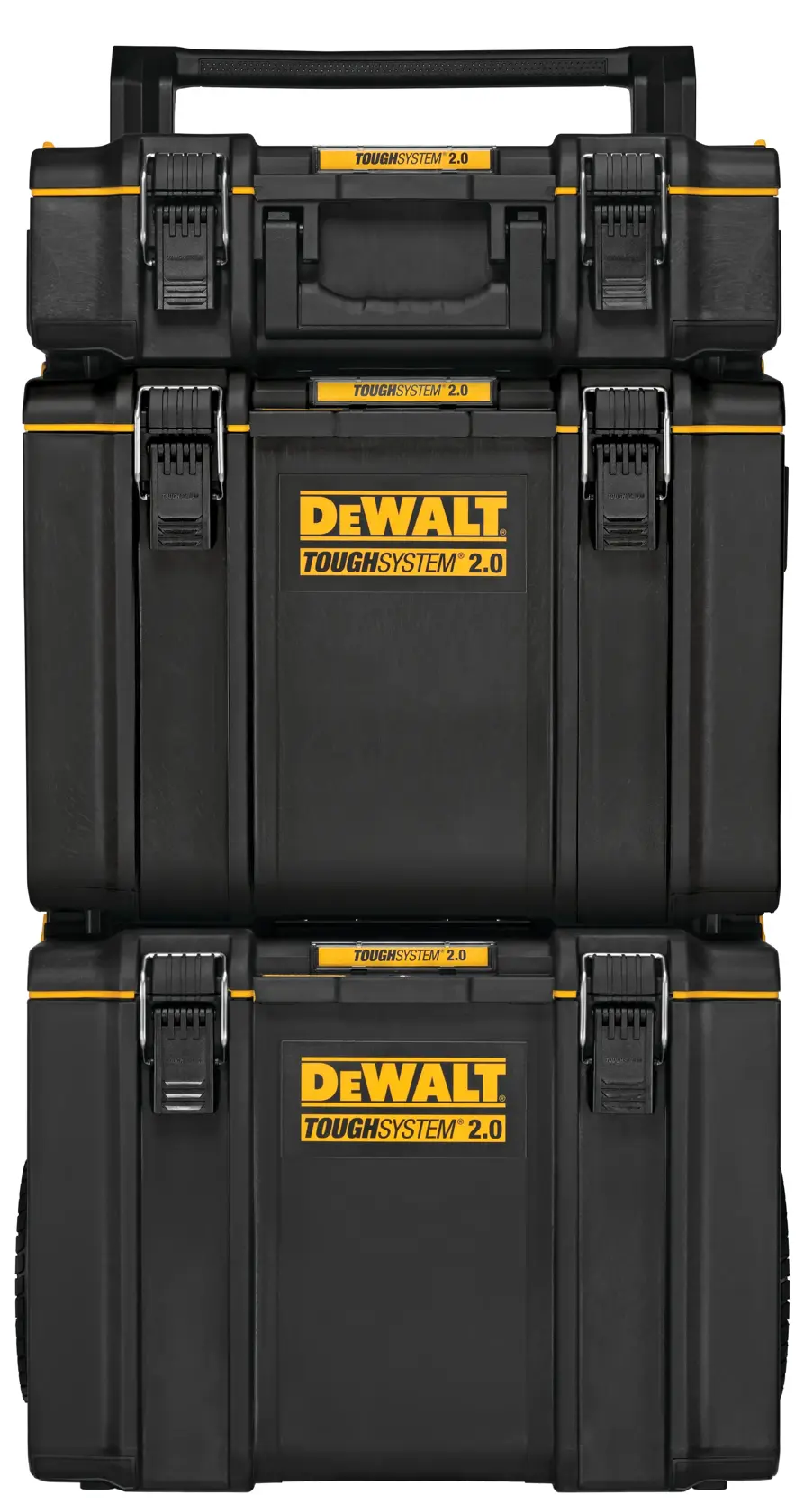
A three-box, 250 lb rolling tower with one-hand auto-connect latches, IP65 protection and backward compatibility with original TOUGHSYSTEM.
Bosch
A hybrid L-BOXX with conventional top access plus a front bay for optional i-BOXX drawers and organizers.

Ridgid
A 15.2 gal IP65 rolling box with detachable cart, 9 in wheels and compatibility across RIDGID Pro Gear generations 1.0 and 2.0.
Makita
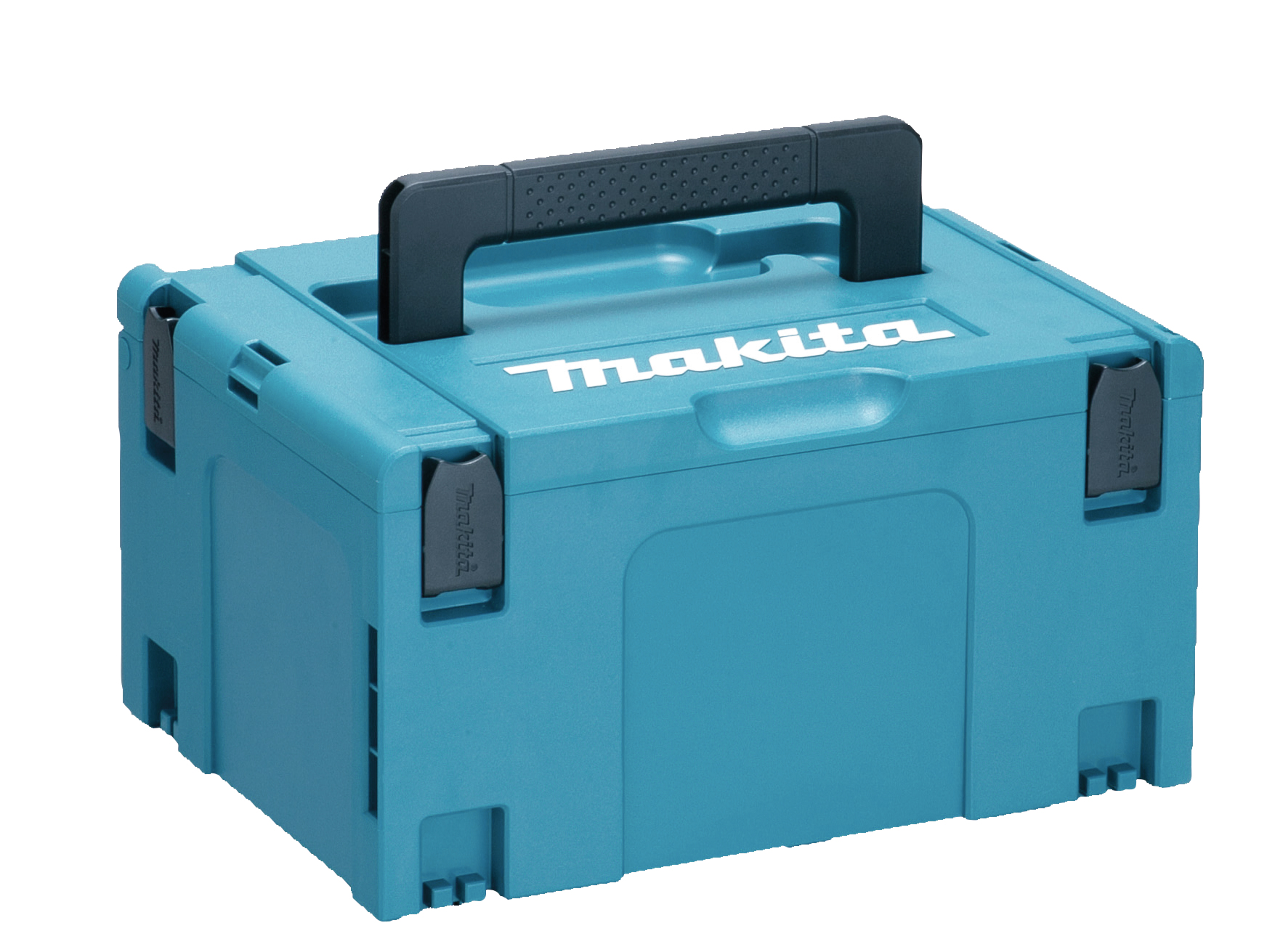
A 215 mm-high stackable MAKPAC shell with the shared system footprint and four connector latches.
Klein Tools
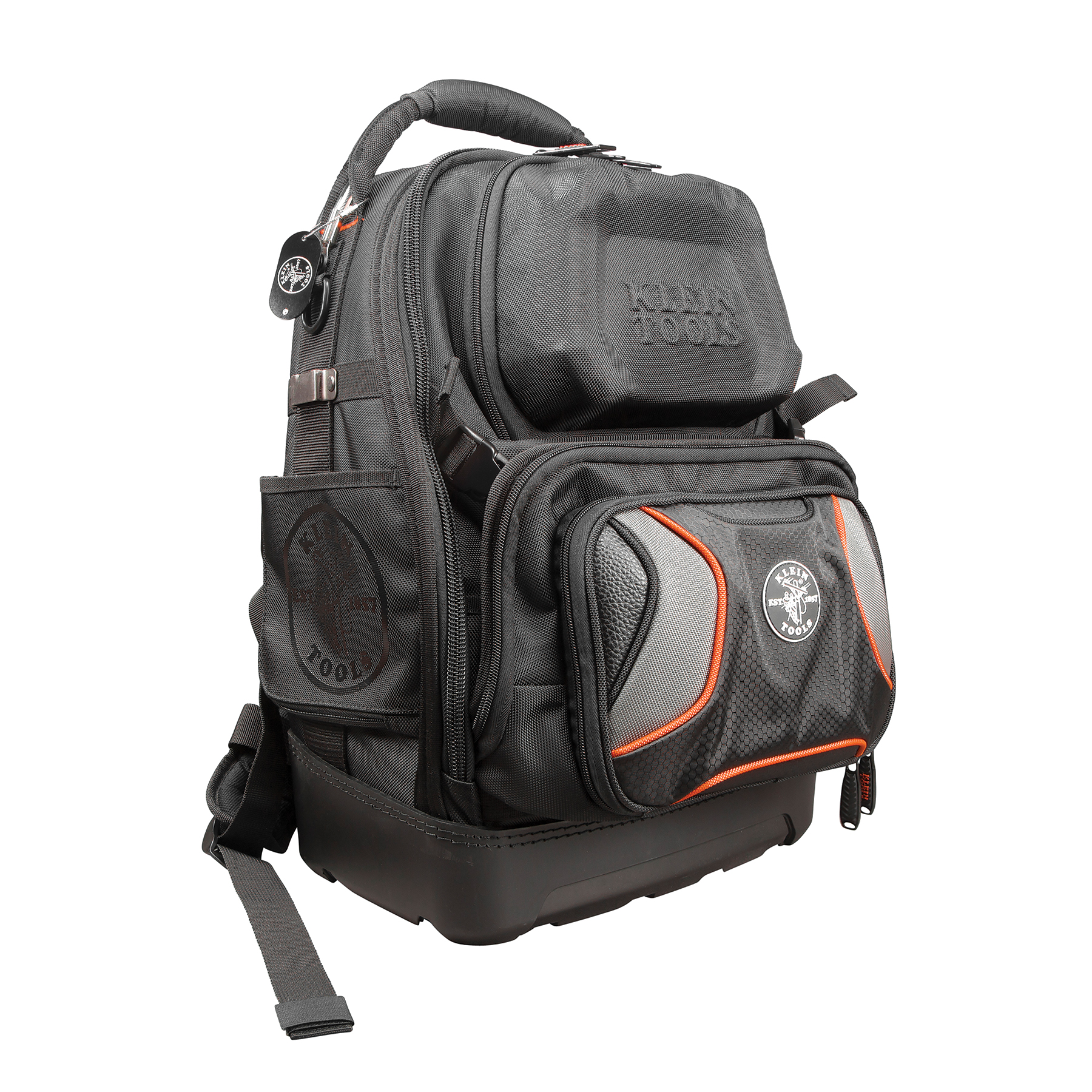
A 48-pocket tool backpack with removable 11-pocket caddy, 1680d body, cable-reinforced handle and molded waterproof bottom.
Pelican
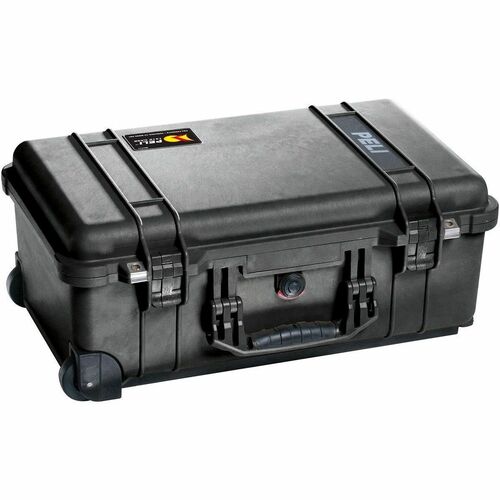
An IP67 rolling Protector case with customizable foam, stainless-bearing wheels, pressure valve and Pelican's limited lifetime guarantee.
3 products
Budget-conscious selections offering the best value and reliability for essential needs.

Stanley
A 9.2 gal structural-foam toolbox with metal latches, IP53 protection, half tray and a lid V-groove for supporting stock.
Sortimo
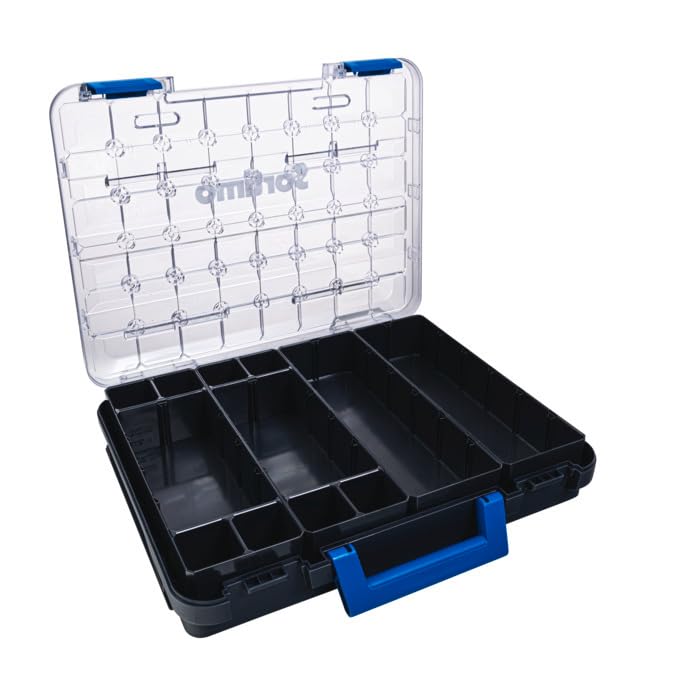
A clear-lid, 23-bin small-parts case that couples to T-BOXX 120 and integrates with Sortimo van and WorkMo systems.
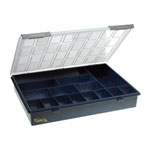
Raaco
A lightweight recyclable-polypropylene organizer with 15 fixed compartments, clear hinged lid and two sliding locks.
Buying guide
Inventory the tools you will store, then record the longest dimensions and the combined working weight, including trays and future additions. Check both the overall system rating and any per-box, drawer, lid, or connected-stack limit rather than assuming one number covers every configuration. Manufacturer data can be quite specific: Festool lists separate internal dimensions, load capacity, connected load capacity, and lid load for one Systainer model, while Milwaukee gives its rolling box a 250 lb capacity. Leave useful headroom instead of designing around the published maximum.
Map where the storage will live and how it will move: doorway widths, stairs, vehicle clearance, floor transitions, turning space, handle height, and the route from storage to the work. Put dense tools low and frequently used items between roughly knee and shoulder height when the layout allows. NIOSH describes orderly elevated storage as a way to reduce floor-level lifting and tripping hazards, while OSHA recommends reducing load weight, using lifting devices for heavy objects, and eliminating excessive reach. Test the loaded system, not an empty display unit.
Feature count matters less than how load paths are built. Examine hinge pins, latch engagement, corner reinforcement, wheel and axle mounts, extension-handle play, drawer-slide attachment, lock points, and whether stacked modules positively interlock. With the expected load aboard, check for racking, caster deflection, accidental unlatching, and instability on thresholds or slopes. OSHA's construction-storage rule says tiered materials must be secured against sliding, falling, or collapse and that safe floor-load limits must not be exceeded. DeWalt's tower page usefully identifies metal front latches and auto-connect side latches—examples of details worth verifying on any system.
Match enclosure protection to the real environment: indoor dust, open-truck rain, damp basements, metal chips, oils, solvents, or daily jobsite impacts. Look for a defined rating and inspect the gasket path, lid stiffness, hinge side, drain points, and latch pressure. DeWalt states that its three-box tower is dust- and water-resistant with an IP65 rating; Milwaukee says an IP65-rated weather seal protects its rolling box from rain and jobsite debris. Those statements do not by themselves answer every use case, such as immersion, condensation, or chemical compatibility, so seek separate evidence when those hazards matter.
Long service life depends on what happens after a wheel, latch, insert, key, or divider is lost. Before buying deeply into a modular platform, confirm current compatibility, identify the exact model numbers, download manuals or parts lists, and check whether commonly damaged hardware is sold separately. DeWalt states that its TOUGHSYSTEM 2.0 tower is backward-compatible with TOUGHSYSTEM products; Festool says current Systainers connect with previous generations and provides a spare-parts catalog that can be searched by tool number. Treat those as model-specific evidence, and save receipts and documentation in case availability changes.
FAQ
List every tool, measure the longest and tallest items, and estimate the loaded weight rather than comparing only empty-case dimensions. Check the rating for each box, drawer, shelf, handle, and rolling base; a system-wide claim should not be assumed from one component. For example, Milwaukee specifies a 250 lb capacity for model 48-22-8426, so treat that figure as model-specific and leave room for future tools.
Choose around the work pattern. Drawers give direct access to frequently used bench tools; portable boxes suit tools that travel; divided organizers keep small fasteners visible. NIOSH notes that orderly storage near the work area can reduce trip hazards and place materials between knee and shoulder height for easier lifting. A mixed system can work well when heavy tools stay low and daily-use items remain easy to reach.
Do not assume they are. Compatibility depends on the exact rail, latch, cleat, adapter, and generation. Milwaukee says its 48-22-8426 connects with all PACKOUT components, while DeWalt describes TOUGHSYSTEM 2.0 products and a specific adapter within its own lineup. Verify both model numbers on the maker's current compatibility list before buying, especially when a loaded stack will be rolled or lifted.
Match protection to exposure rather than treating every gasket as waterproofing. Milwaukee describes an IP65-rated weather seal on one rolling box, but that rating belongs to that model and does not transfer to an entire stack. The Canadian Conservation Institute explains that iron corrodes with water and oxygen and that salt, dust, and pollutants can promote corrosion at lower humidity. Put tools away clean and dry, inspect seals, and avoid persistently damp storage.
Use a level surface, keep the heaviest tools low, stay within every component rating, and secure stacked units with the intended interfaces. OSHA requires stored material to remain stable and secure against sliding or collapse and requires aisles to remain clear. NIOSH also favors orderly storage near the work area and between knee and shoulder height for easier lifting. Recheck stability whenever the layout or load changes.
Look for replaceable casters, slides, hinges, latches, locks, handles, dividers, and seals, plus exploded diagrams and a parts-ordering route. Festool's US service site provides an online spare-parts catalog, illustrating the kind of support worth confirming before purchase. Ask whether parts are sold for the exact model and how long support is expected; a warranty alone does not guarantee that wear components will remain available.
Honoring the visionaries whose work paved the way for the products we rely on today.
Henry O. Studley (1838–1925) made the wall-hung Studley Tool Chest while working as an organ and piano maker. Wikipedia records that it holds 218 tools in about 40 by 20 inches of wall space when closed, making it a documented historical example of dense, purpose-built tool organization.
Harry Gerstner built his first tool chest while working as a pattern-maker, then founded H. Gerstner & Sons in 1906 after seeing demand for the design. The company history says he designed chests around “a place for everything and everything in its place,” documenting an early maker focused on dedicated precision-tool storage.
Festool’s company history dates the Systainer to 1993 and says it was created to protect machines, ease transport, and create order. The same history records the SYS T-LOC lock/open/connect system in 2010 and Systainer³ in 2020, showing how the platform evolved into modular tool storage.
Research last refreshed
Frank B. Gilbreth · 1911
Gilbreth treats tools as a core variable in work design, connecting standard sizes and patterns, condition, and selection to repeatable motions. The discussion supports organized storage that keeps the correct, serviceable tool identifiable and available rather than relying on improvised or worn equipment.
Frank B. Gilbreth and Lillian M. Gilbreth · 1916
The authors explicitly examine the placement of tools and devices. They recommend a standardized resting place for each tool and discuss returning equipment mechanically, arguing that shorter retrieval distances and fewer repeated placement decisions reduce physical and mental fatigue.
Frank B. Gilbreth and Lillian M. Gilbreth · 1917
This collection describes recording workers, surroundings, equipment, and tools, including diagrams of equipment locations, to reveal wasted effort. Its measurement-led approach provides an early basis for evaluating storage layouts by access, position, and their effect on unnecessary motion.