8.1/10
Luxury40 yr life
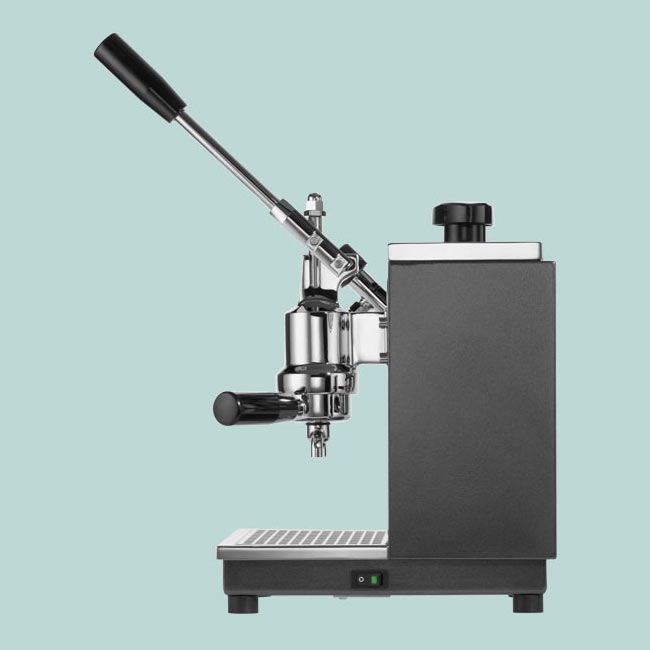
Cremina Lever Espresso Machine, 120 V
Olympia Express
A compact Swiss direct-lever machine with a stainless boiler, chromed-brass group and three-year factory warranty.
- Repair
- 8.7/10
- TCO
- 7.3/10
$4305.00
Durable buying guide
Manual espresso machines use a lever or other mechanical system to create extraction pressure, making the operator part of the brew workflow. Compare boiler or hot-water setup, pressure feedback, basket and portafilter design, durable materials, cleaning, and spare-parts access; some models work without electricity.
2 products
Higher-priced options whose materials, features, service, and tradeoffs still need evidence-based comparison.
Olympia Express
A compact Swiss direct-lever machine with a stainless boiler, chromed-brass group and three-year factory warranty.

Elektra
An Italian spring-lever machine with a 1.8 L boiler, brass piston, steam system and current U.S. service support.
4 products
Superior features, extended warranties, and high-end materials for enhanced performance.
La Pavoni
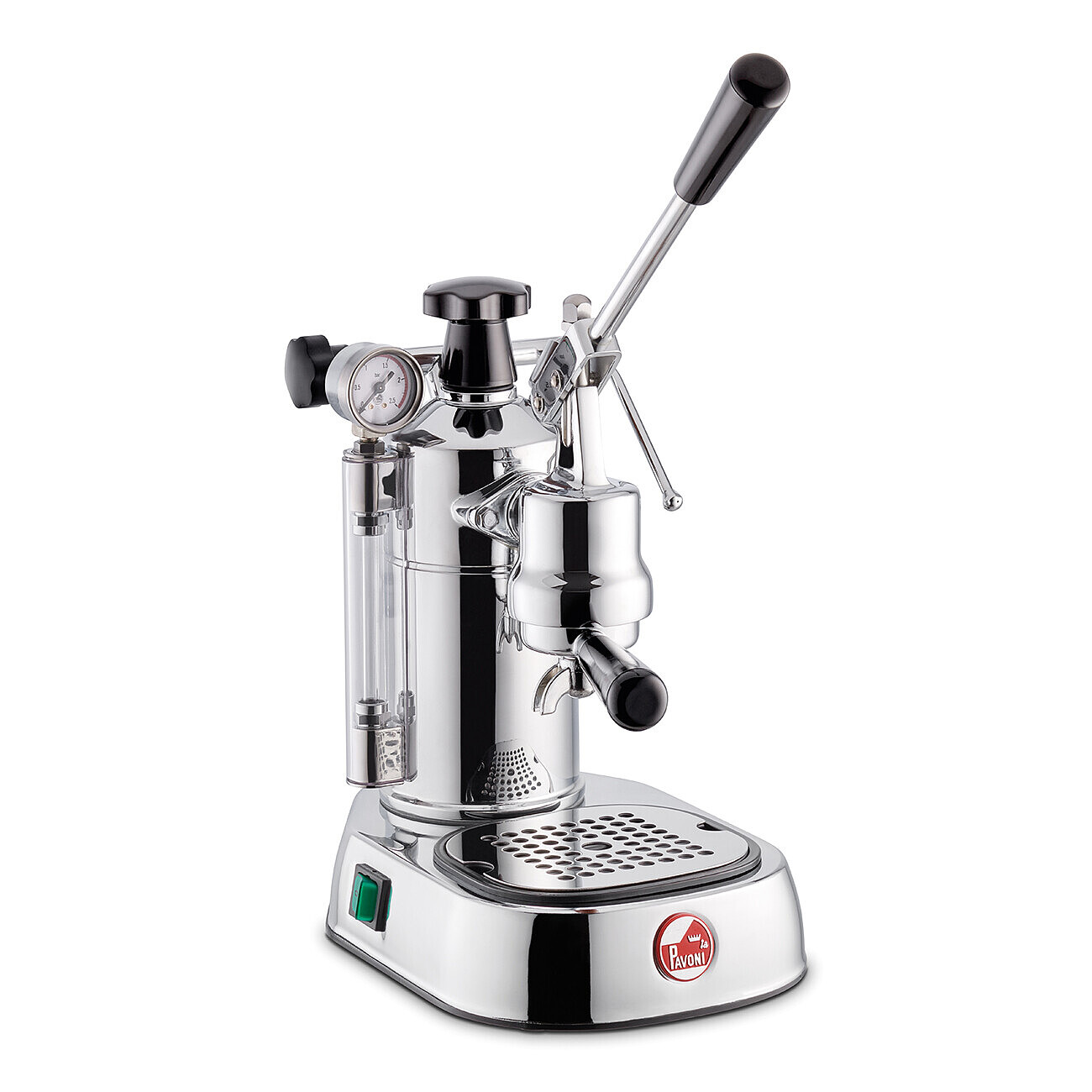
A 16-cup direct-lever machine with a brass boiler, boiler-pressure gauge, steam system and published parts diagrams.
La Pavoni
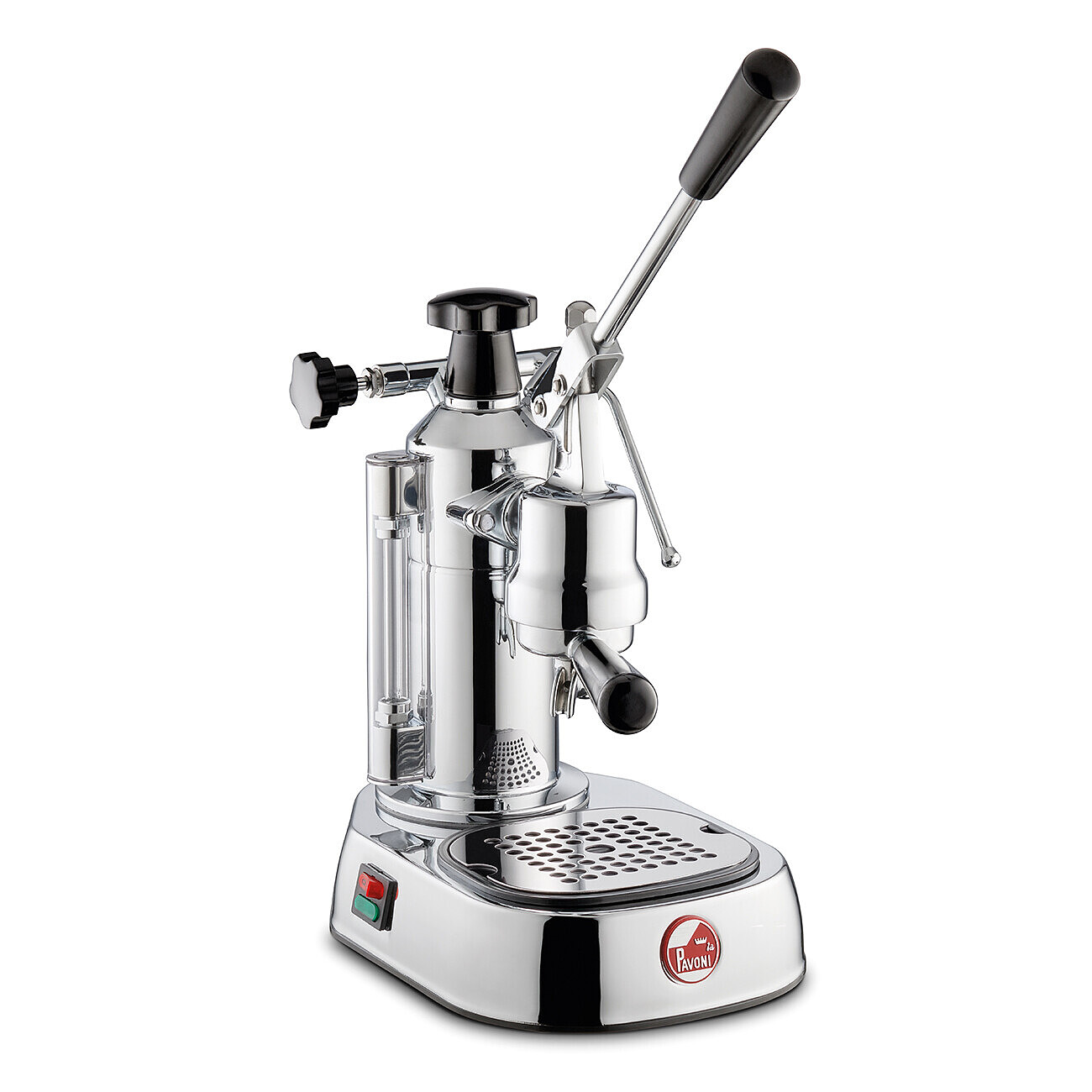
A direct-lever Italian espresso machine with a brass boiler, steam wand and a fully documented spare-parts breakdown.
Flair Espresso
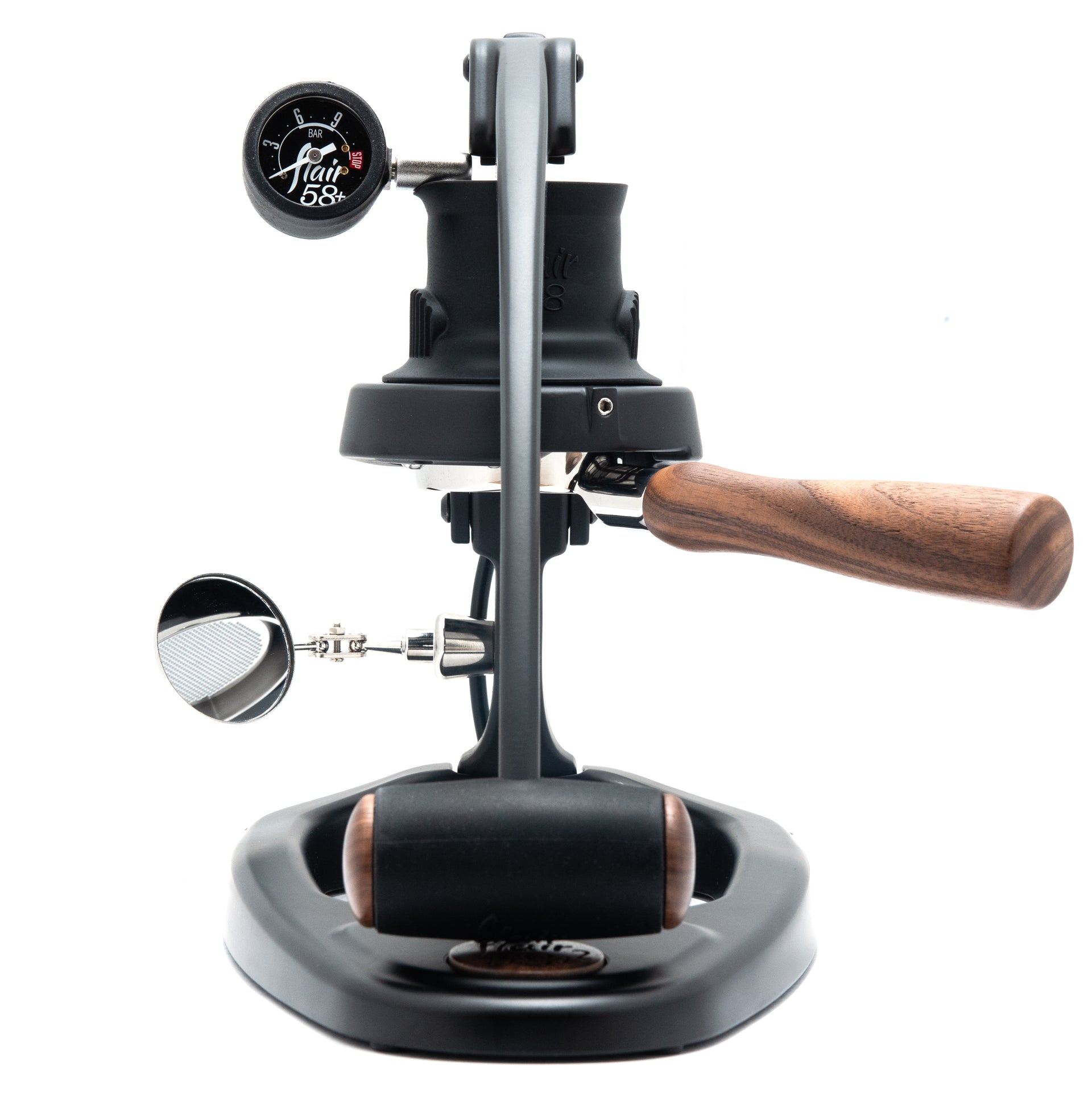
Flair's current flagship lever maker with a 58 mm portafilter, stainless brew path and integrated three-level preheat.
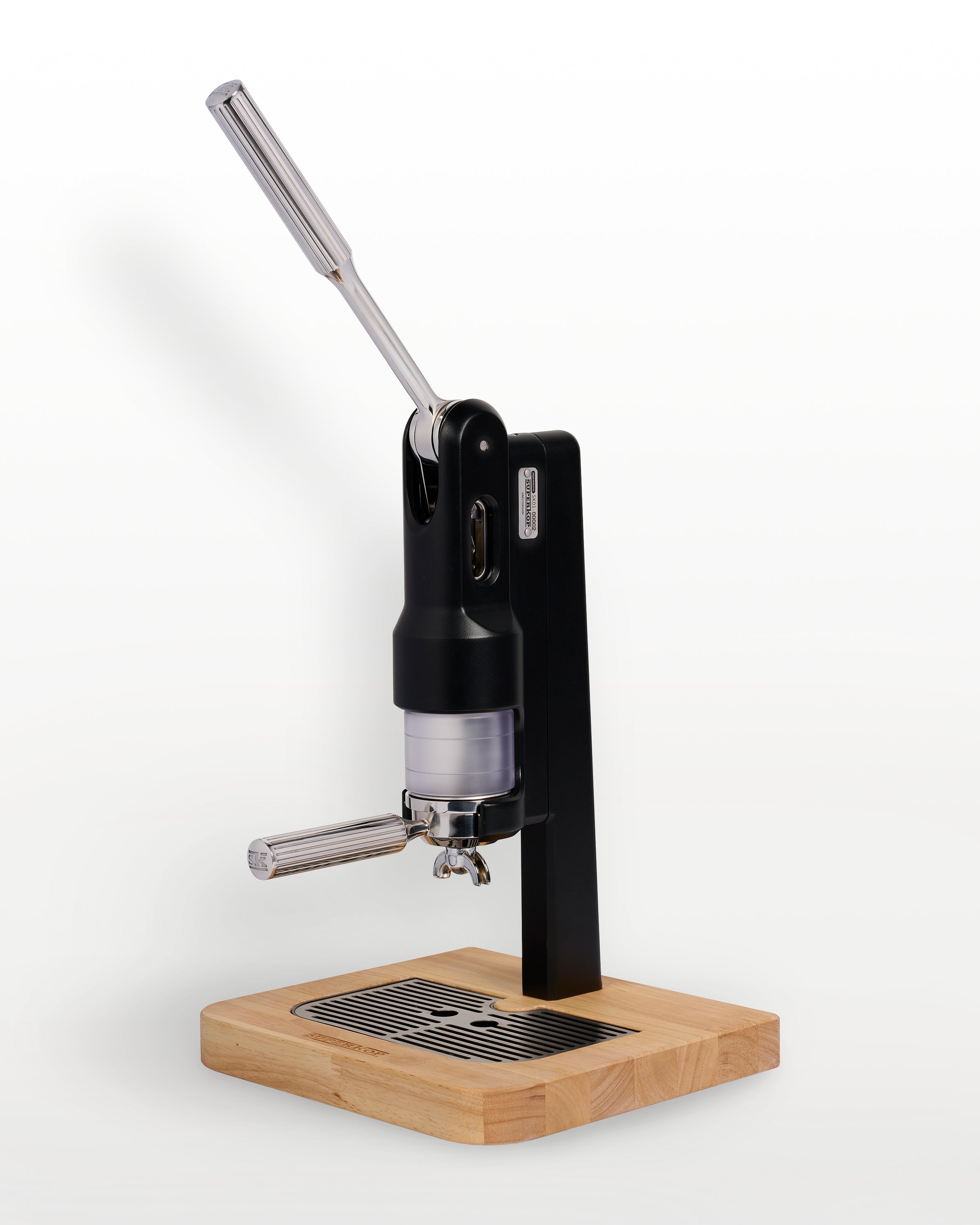
Superkop
A repair-oriented Dutch manual lever machine with a 58 mm portafilter, stainless mechanism and no electricity.
6 products
A balanced blend of performance, quality, and price for the discerning user.

Cafelat
A hand-built pressure-gauge lever maker with a stainless brew path, 58 mm-class basket and extensive original spares.
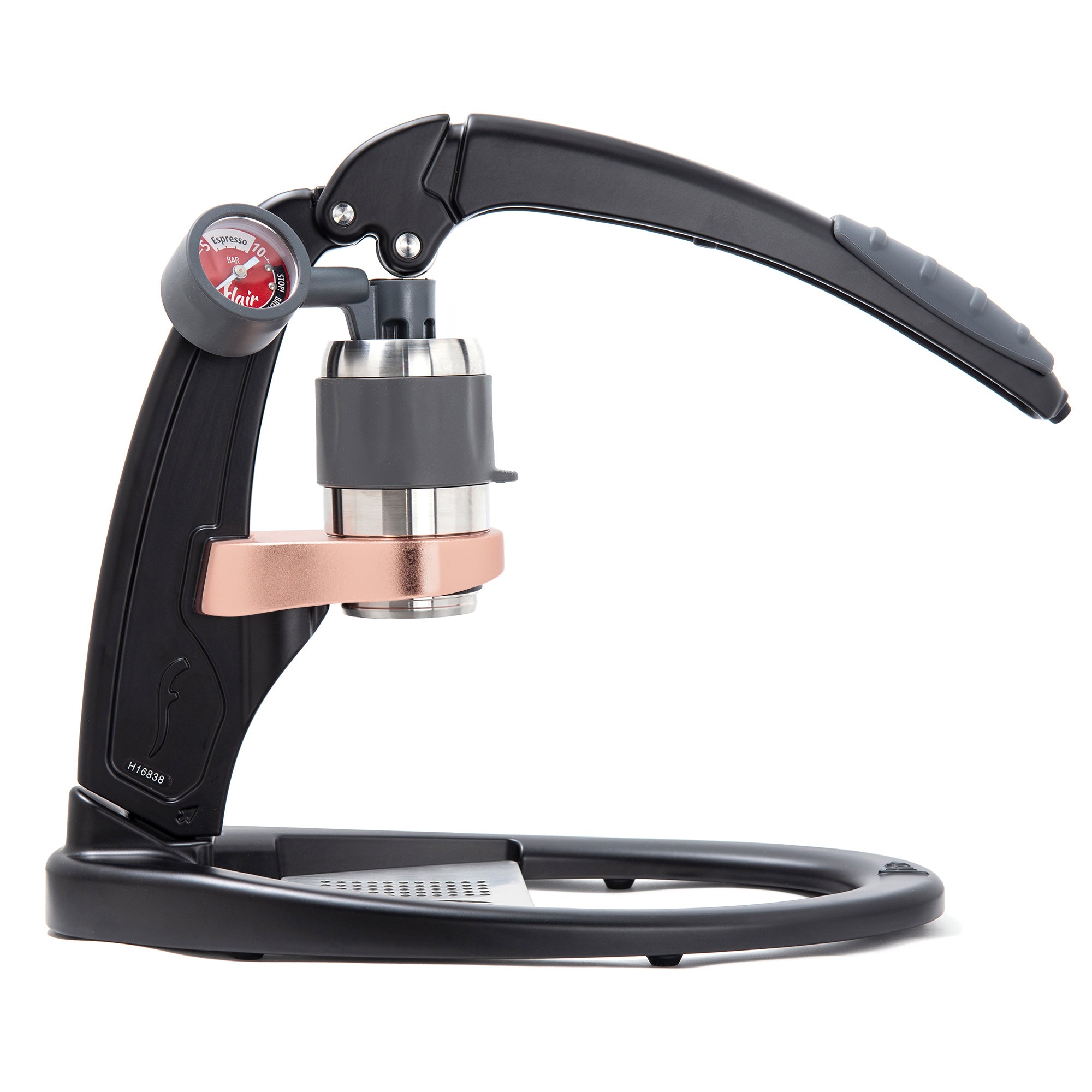
Flair Espresso
A portable all-manual press with a pressure gauge, detachable stainless brew head and included carrying case.
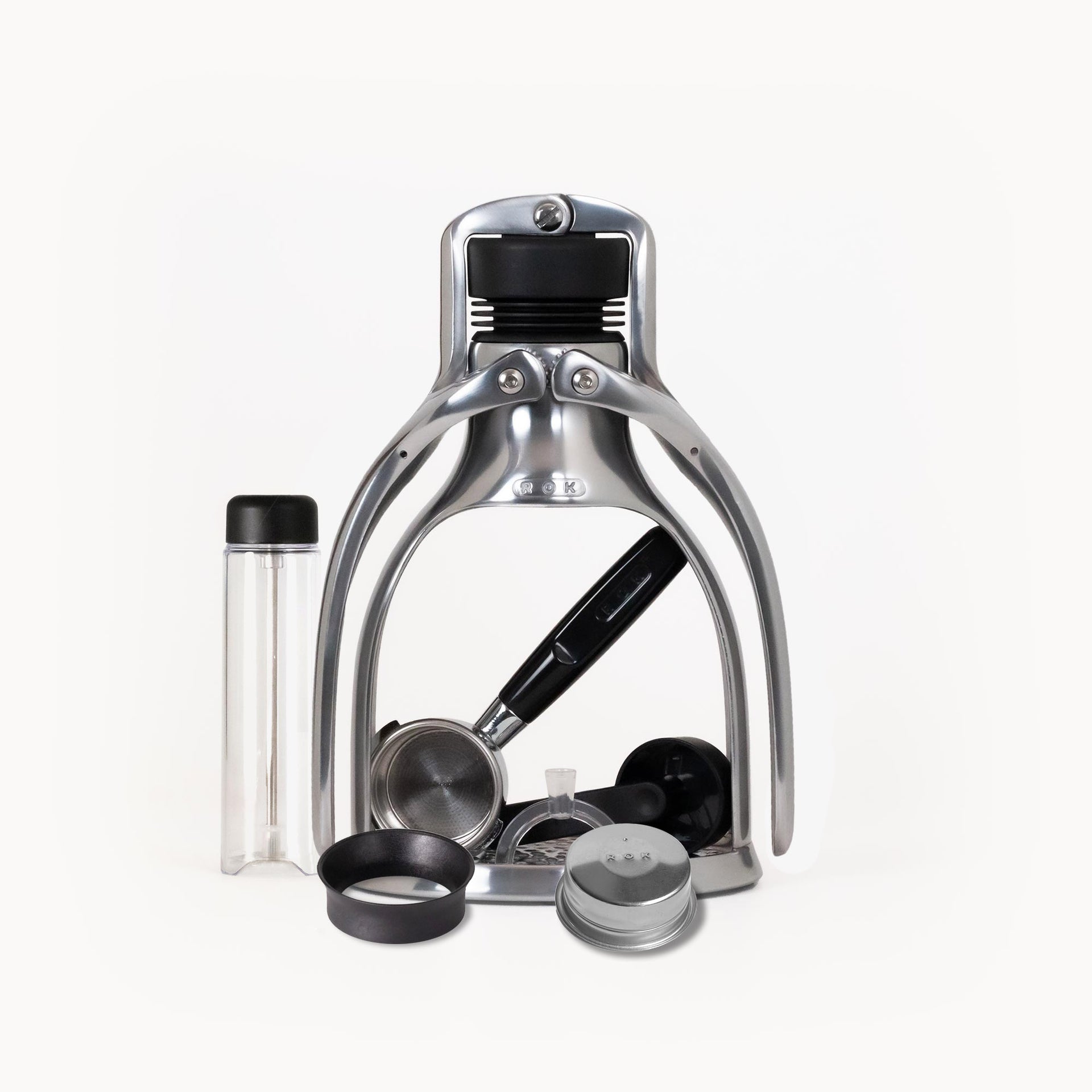
ROK Coffee
A twin-arm non-electric espresso press with standard and forgiving baskets, milk frother and a ten-year warranty.
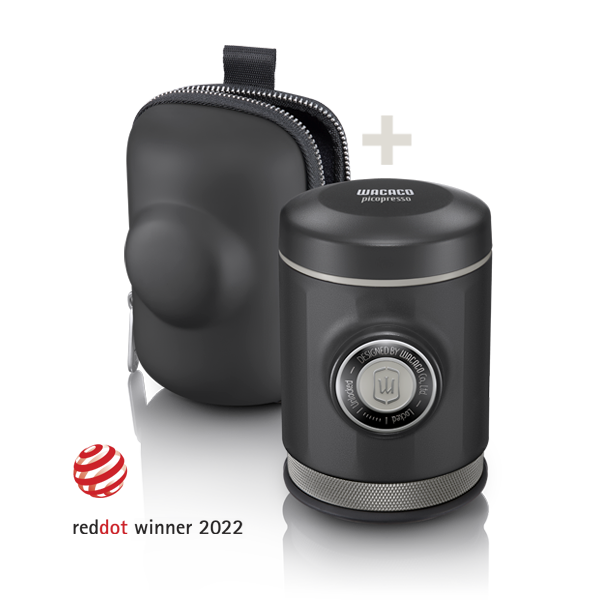
Wacaco
A palm-sized manual pump brewer with a 52 mm stainless basket, bottomless outlet and two-year warranty.
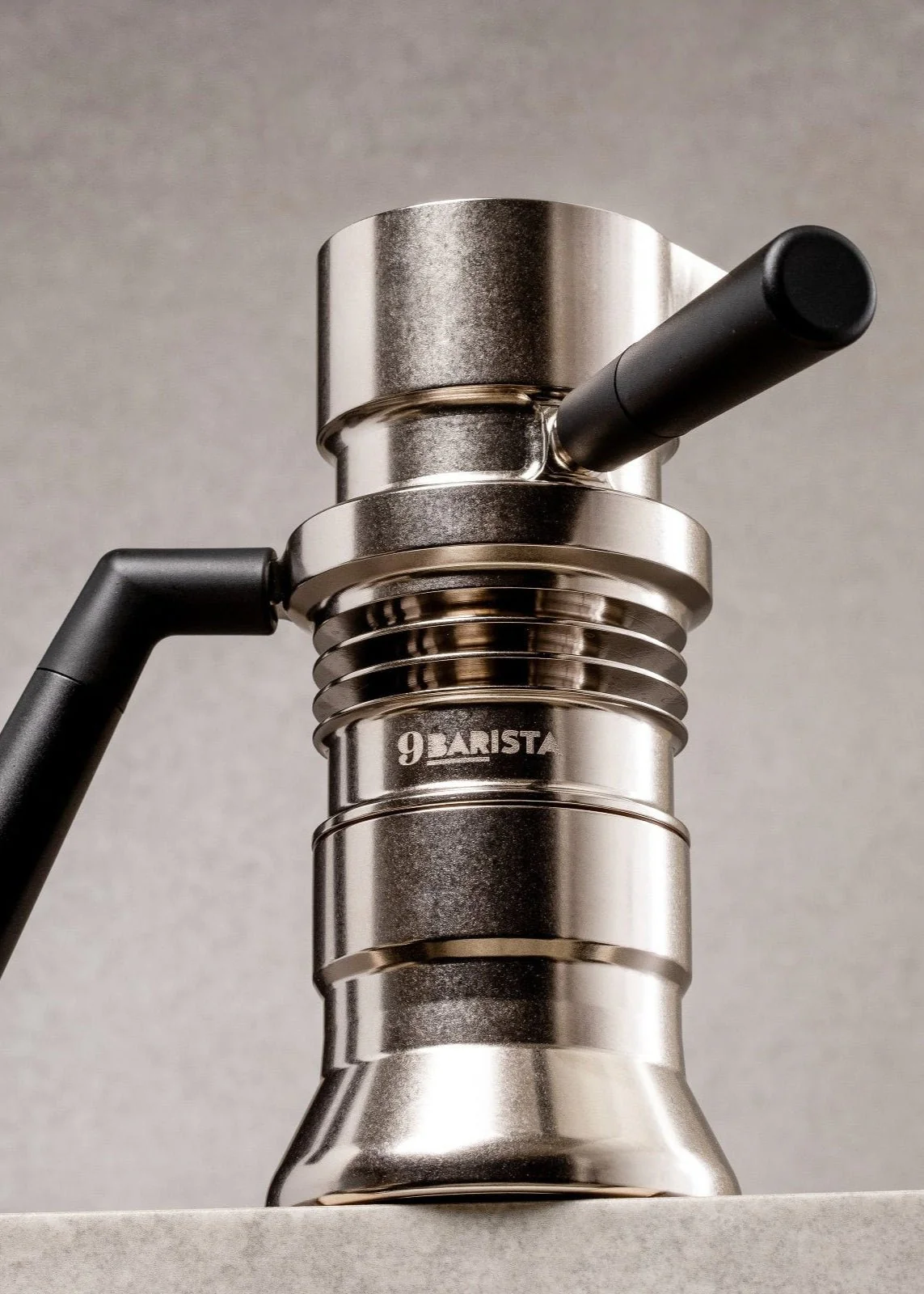
9Barista
A Cambridge-made twin-boiler stovetop machine that brews at 9 bar and 93°C without pumps or electronics.

Aram Soulcraft
A Brazilian hand-crank espresso system with steel support, pressure gauge, multiple baskets and replaceable standard seals.
Shop by brand
Buying guide
Start by identifying how the machine creates and controls pressure. A direct-lever example such as Flair's 58 Plus 2 leaves the brewer in charge of the brew variables and supplies a pressure gauge; a stovetop design such as 9Barista uses a twin-boiler system intended to regulate extraction at 9 bar and about 93°C. Those are different ownership experiences, not interchangeable spec-sheet claims. Decide whether you want tactile pressure control or a more repeatable regulated path, then verify the feedback, operating sequence, and failure points for the exact model.
Use numbers to test whether a machine fits your recipe and pace. Flair lists a 16–20 g dose, 90 ml water capacity, up to 55 ml yield, and three preheat settings on the 58 Plus 2. 9Barista describes roughly 5–8 minutes from cold and about 30 seconds per extraction once hot. Compare those figures with your drink size, consecutive-shot expectations, warm-up tolerance, and milk workflow. A machine that makes one excellent shot but forces an awkward reset may be a poor long-term fit for a household making several drinks.
Treat serviceability as a design feature. Check the exact brew-path material, basket format, seals, valves, pivots, and any heater or pressure components; then look for model-specific manuals, safety documentation, and a live spare-parts trail. Flair identifies a stainless-steel brew path, a 58 mm portafilter system, multiple baskets, and replacement accessories. 9Barista says its design has one moving part and that spare parts are sold directly and intended to be replaceable. These are useful signals, but confirm that the parts cover the actual revision you are buying.
Map the machine's heat source and safety routine onto the place where it will live. 9Barista runs from a gas, electric, ceramic, or camping stove, works with induction through an adaptor, and needs no plug; Flair's integrated preheat controller instead adds powered thermal management. For either approach, read the exact manual and safety guide before purchase, identify hot surfaces and the cool-down or cleaning sequence, and check warranty terms. Both makers advertise five-year coverage on the cited models, but warranty length does not replace accessible instructions and parts.
FAQ
A non-pressurized basket makes the coffee puck responsible for creating resistance, so grind size, dose, distribution, and tamping all become tightly coupled. Small grind changes can materially change flow and pressure; a burr grinder with enough adjustment points is useful. A pressurized basket is more forgiving of pre-ground or less precisely ground coffee, but gives you less direct control over extraction.
Freshness matters because roasted coffee gradually loses carbon dioxide and aroma, while grinding exposes more surface area to oxidation. Flair recommends using coffee roasted within days or weeks rather than months, and grinding immediately before extraction. Treat freshness as part of your dialing-in baseline: if the beans are much older, a grind or dose change may be compensating for a moving target rather than improving the machine's settings.
Use the machine's pressure and time feedback together rather than chasing a single gauge number. Flair's brewing guidance says a typical shot may run about 35–45 seconds at 6–9 bar, while light roasts may benefit from an 8–15 second pre-infusion. Record grind, dose, yield, pressure, and time, then change one variable at a time so the lever's feedback remains interpretable.
Ask for the exact model code and check whether the manufacturer publishes a manual and an exploded spare-parts list for that model, not merely a generic product page. La Pavoni's technical-documentation index pairs model codes with manuals and parts lists, while Olympia Express directs owners to its shop or local partners for the correct replacement part. Confirm that this documentation and support route apply to the US market and to the specific generation you are considering.
Do not assume that a generic descaling recipe or backflushing routine is safe for every manual design. First identify the exact machine and read its manufacturer procedure, including the required chemical, concentration, rinse steps, and any cool-down or pressure-release instructions. The 9Barista knowledge base publishes a dedicated descaling procedure, and La Pavoni provides model-specific manuals; those are safer references than treating all boilers, valves, plated parts, and water paths alike.
On a non-pressurized manual machine, start by checking the controllable puck variables: grind fineness, dose, distribution, tamp, and coffee freshness. Those variables determine resistance and can produce slow flow, channeling, or a shot that never reaches the intended pressure even when the hardware is sound. If the symptom persists after a consistent recipe, use the maker's model-specific troubleshooting and parts documentation before disassembling a heated brewer or replacing a valve or seal.
Honoring the visionaries whose work paved the way for the products we rely on today.
La Pavoni introduced the Europiccola in 1961, a compact direct-lever home espresso machine, and the larger Professional in 1974. The Europiccola became the company's signature model, with an estimated 500,000 sold by 2005, documenting sustained domestic adoption of lever extraction.
During postwar development of piston-driven espresso machines, Cimbali replaced the spring mechanism with hydraulics and marketed the resulting coffee as cimbalino. That is a documented engineering contribution to the lever-and-piston branch of manual espresso-machine design.
Pier Teresio Arduino of Victoria Arduino drove marketing efforts that helped make espresso machines symbols of domestic modernity in 1920s Italy; the same historical account records the company's attempts with air pumps and screw pistons. This connects category engineering to wider adoption.
Research last refreshed
Carla Severini; Antonio Derossi; Anna G. Fiore; Teresa De Pilli; Ofelia Alessandrino; Arcangela Del Mastro · 2015
This study models espresso volume and chemical attributes under variation in grinding grade, coffee dose, and pressure applied to the coffee cake. It finds grinding accounted for 87–96% of observed variance, directly informing manual machines where baristas control puck preparation.
Susana Andueza; Laura Maeztu; Lucía Pascual; Carmen Ibáñez; M Paz de Peña; Concepción Cid · 2003
This study tests espresso extraction water at 88, 92, 96, and 98 °C across Arabica and Robusta blends, measuring volatile, sensory, and physicochemical outcomes. It identifies about 92 °C as the preferred temperature, directly relevant to manual-machine thermal workflow.
Giulia Angeloni; Lorenzo Guerrini; Piernicola Masella; Andrea Dionisio; Riccardo Gatti; Alessandro Parenti · 2021
This study evaluates a stratified coffee-puck preparation method intended to reduce shot-to-shot flow variation. Across coffees and grinders, larger particles at the basket bottom and finer particles at the top produced more stable flow, directly informing manual machines’ grind, basket, and puck-preparation workflow.