7.2/10
Mid Segment20 yr life
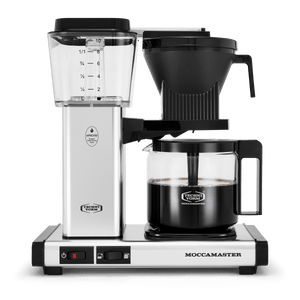
KBGV Coffee Maker (KBGV Select), Polished Silver
Moccamaster
A hand-built 40-ounce Dutch drip brewer with half/full selector, copper heating element and replaceable external parts.
- Repair
- 7.0/10
- TCO
- 8.4/10
$369.00
Durable buying guide
This category covers non-espresso brewers, from ceramic pour-over drippers to immersion and press devices. Compare flow path, filter format, capacity, materials, replaceable filters or seals, moving parts, and ease of cleaning. Hario’s V60 uses Arita-yaki ceramic; AeroPress uses polypropylene with a silicone seal.
4 products
A balanced blend of performance, quality, and price for the discerning user.
Moccamaster
A hand-built 40-ounce Dutch drip brewer with half/full selector, copper heating element and replaceable external parts.
Ratio
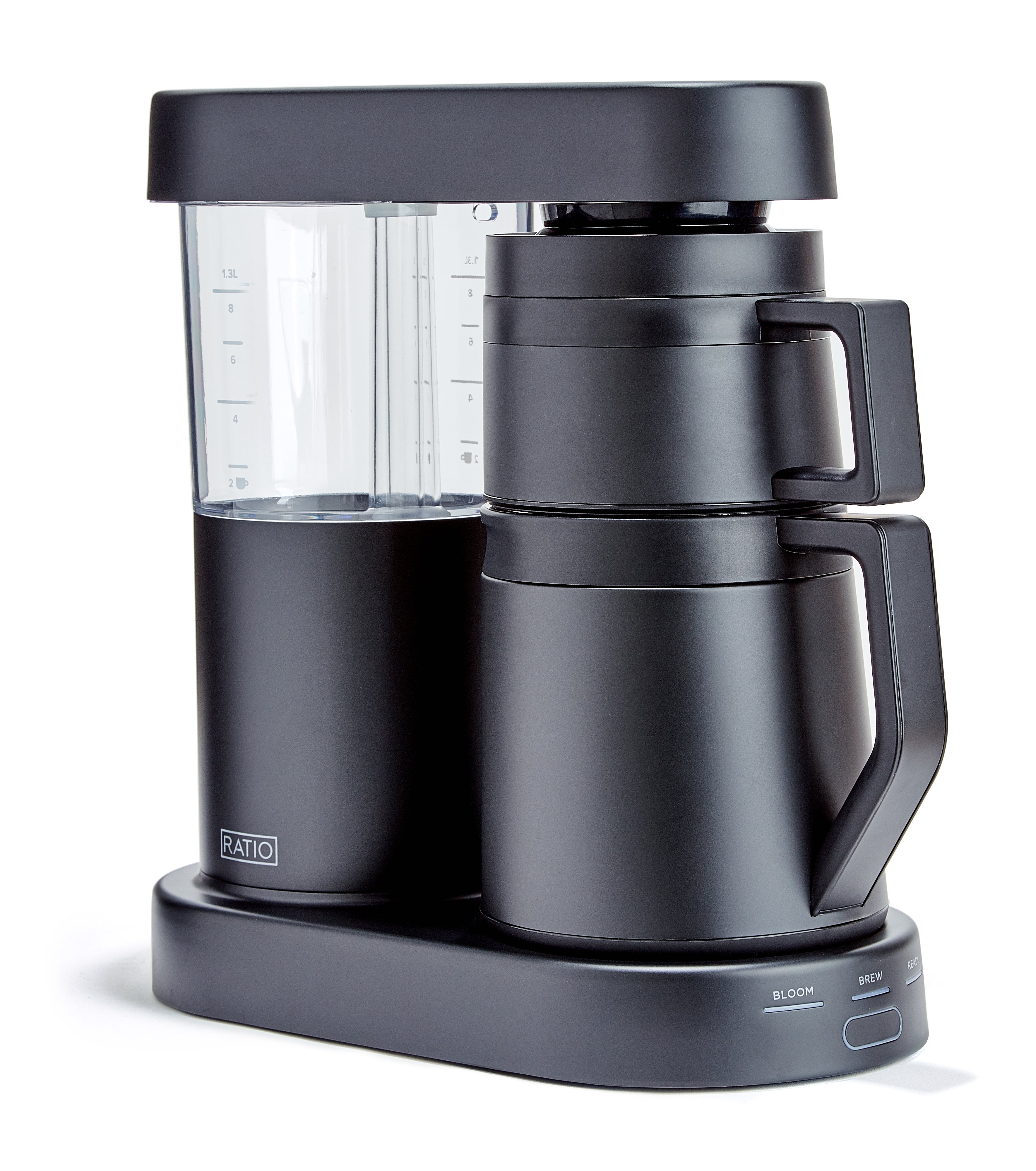
A one-button SCA-certified 40-ounce brewer with automated bloom, stainless thermal carafe and a metal-bodied heater platform.

Breville
A discontinued 60-ounce thermal brewer with six brew modes, PID temperature control and adjustable bloom and flow.
OXO
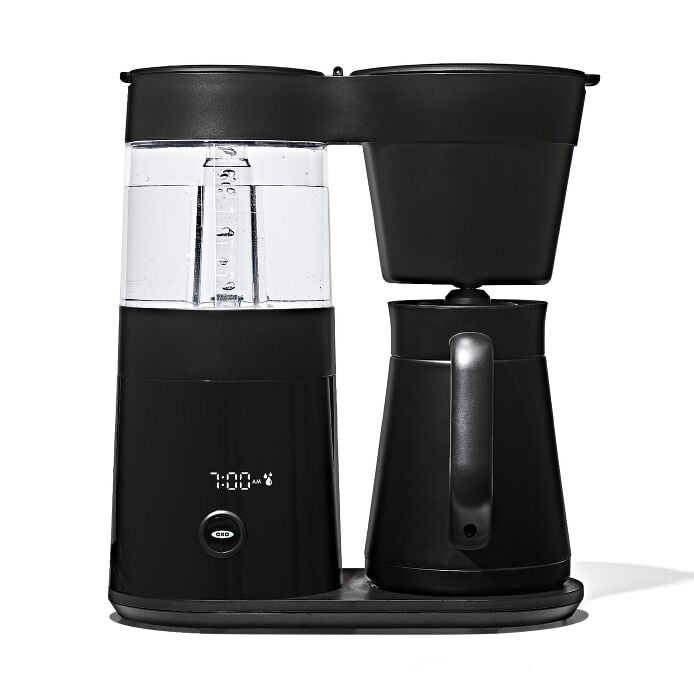
An SCA-recognized programmable thermal brewer with two-to-nine-cup cycle control, Rainmaker showerhead and freshness timer.
8 products
Budget-conscious selections offering the best value and reliability for essential needs.
CHEMEX
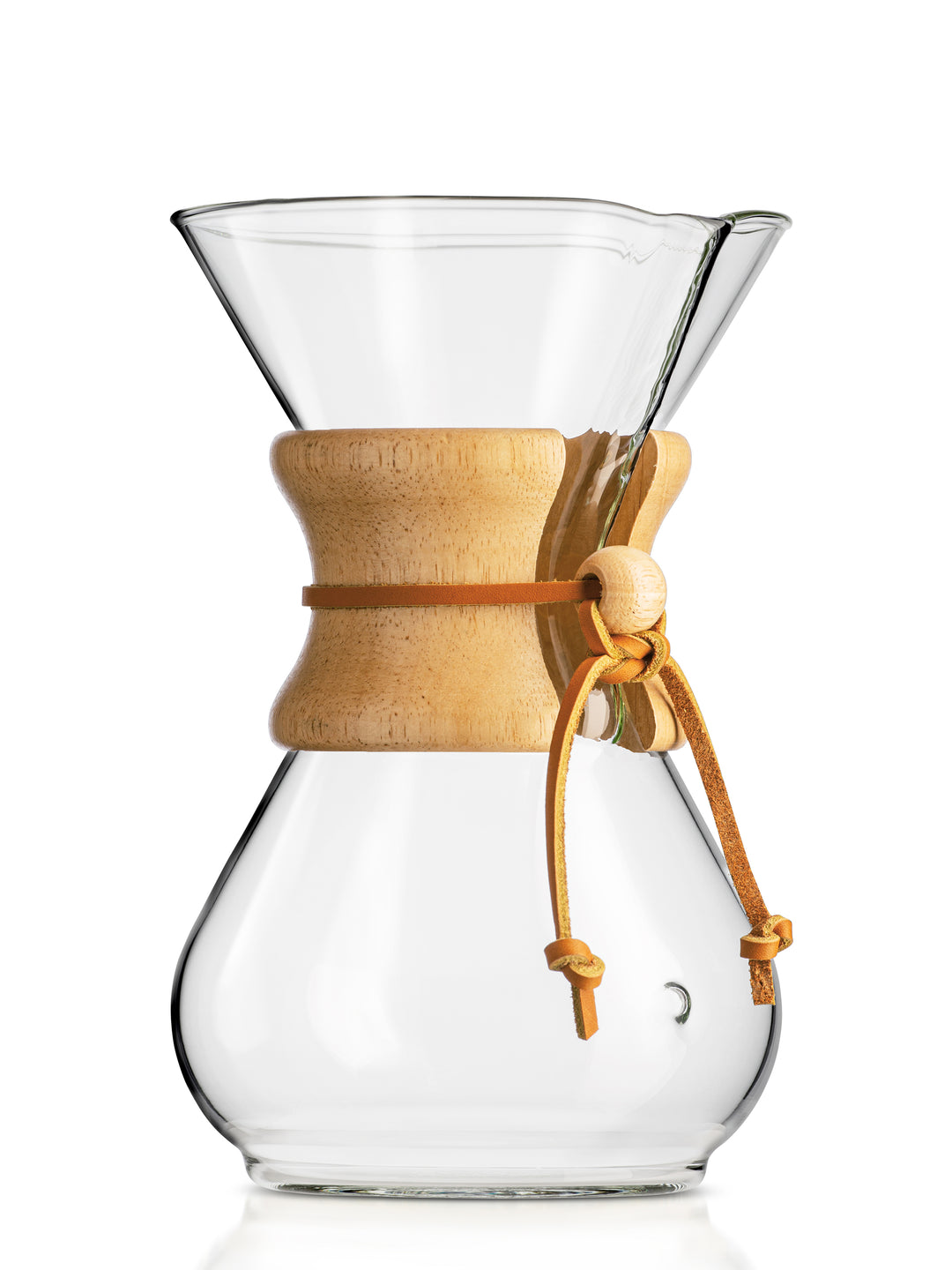
The iconic 30-ounce borosilicate-glass brewer with a wood collar, leather tie and thick bonded-paper filtration.
Hario
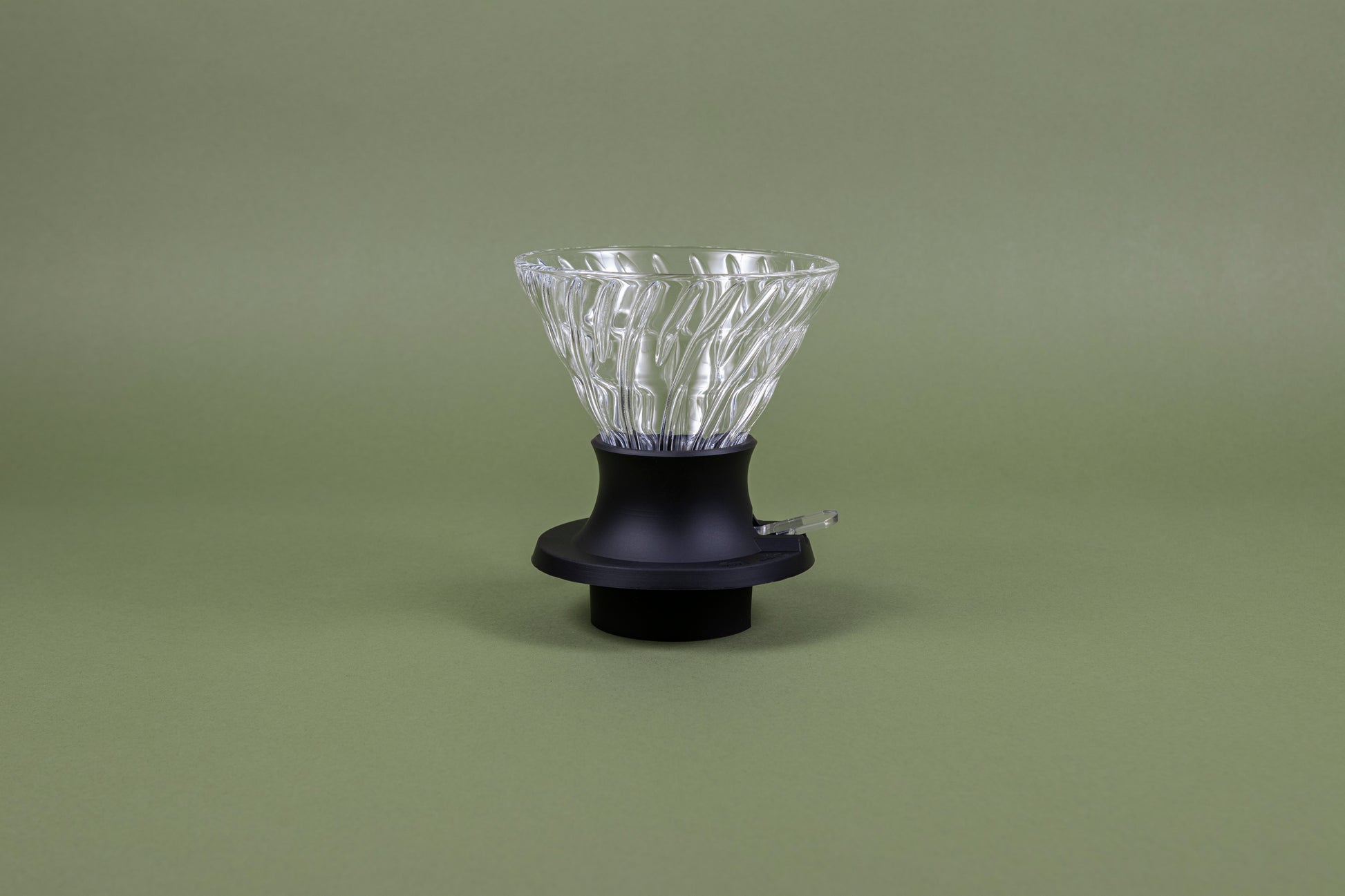
A 360 ml glass V60 that adds a silicone-base valve for full immersion, standard pour-over or hybrid recipes.
Hario
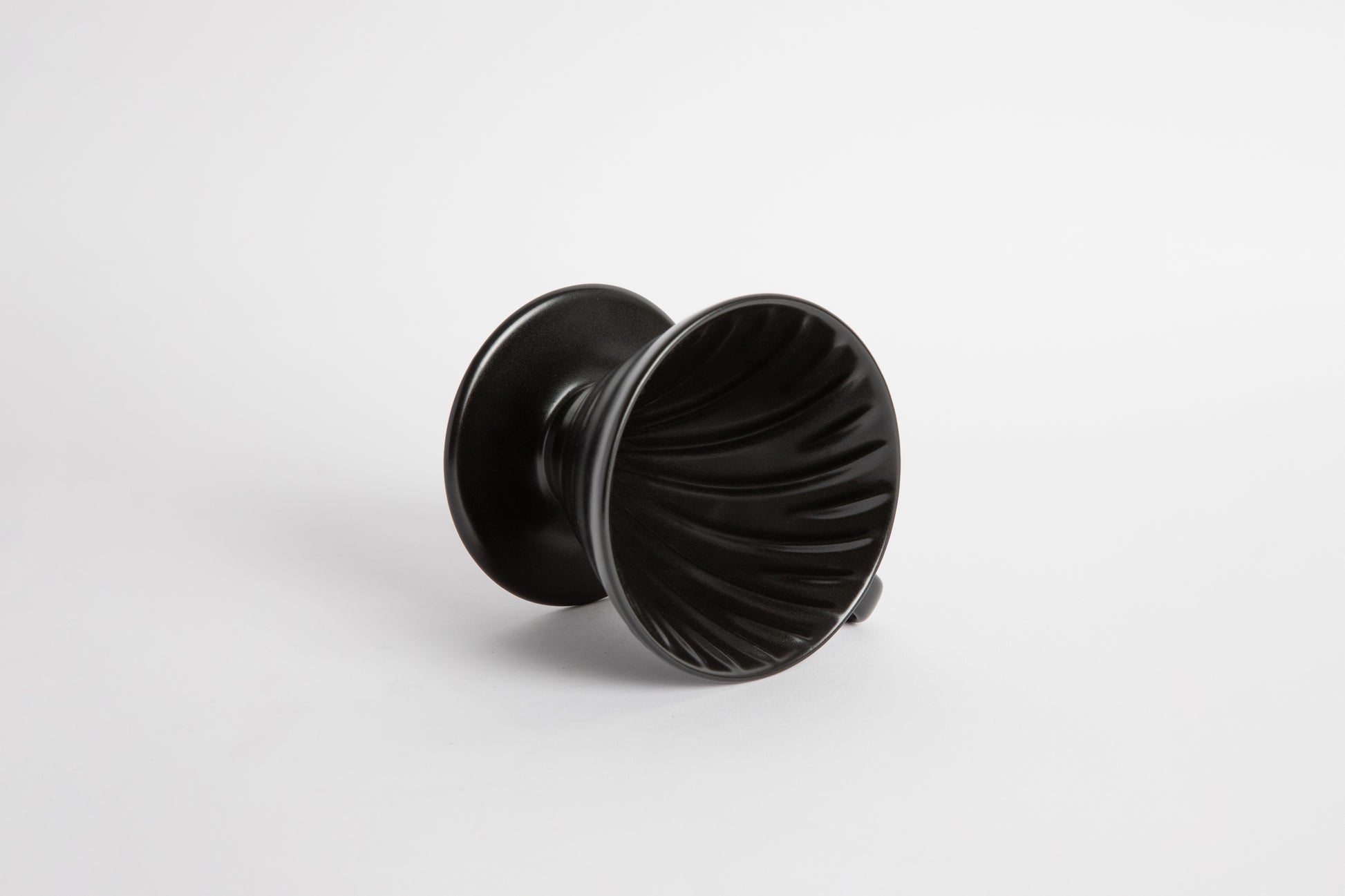
A Japanese porcelain V60 for one to four cups, built around a large outlet and spiral ribs for direct flow control.
AeroPress
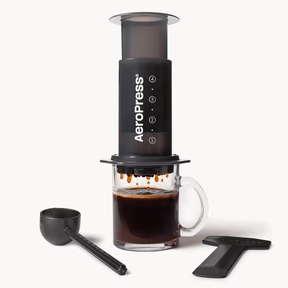
A compact 10-ounce manual brewer combining immersion, micro-filtration and gentle air pressure for one or two cups.
Kalita
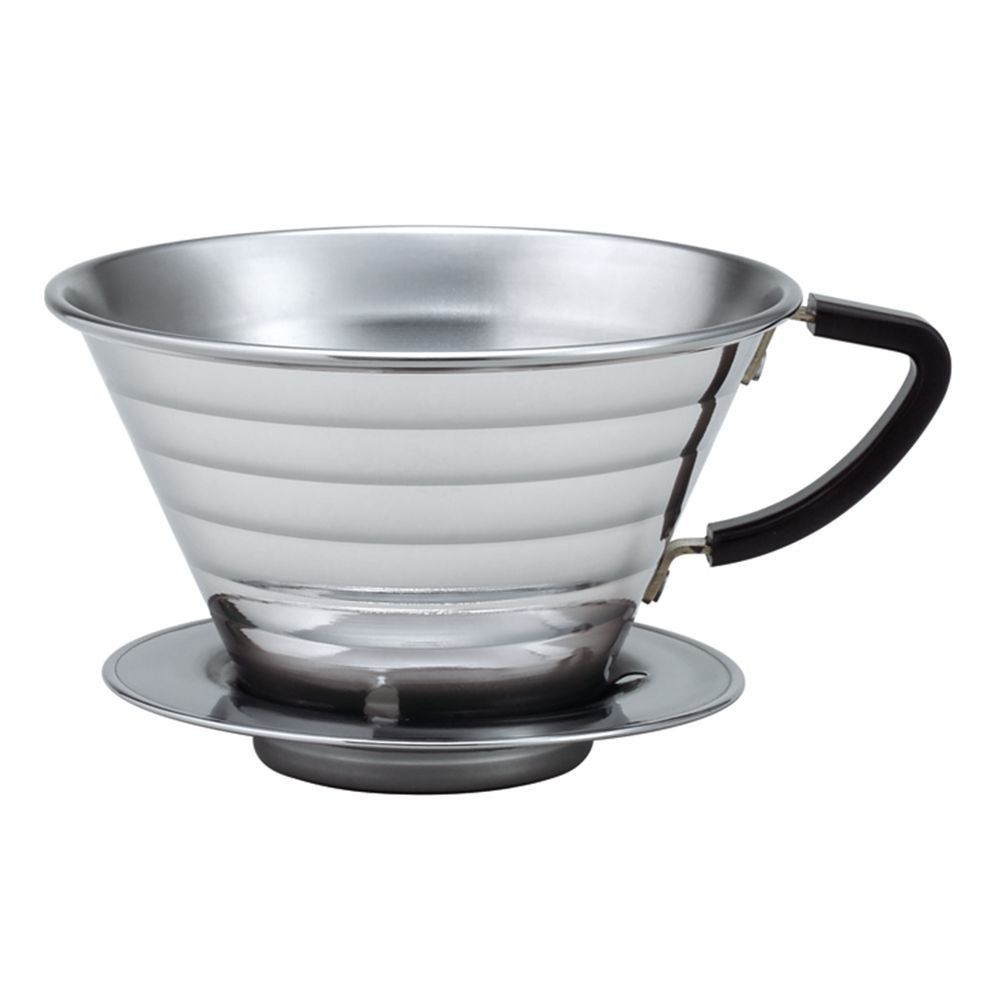
A Japanese stainless flat-bottom dripper with three drain holes and wave-sided papers for an even two-to-four-cup bed.
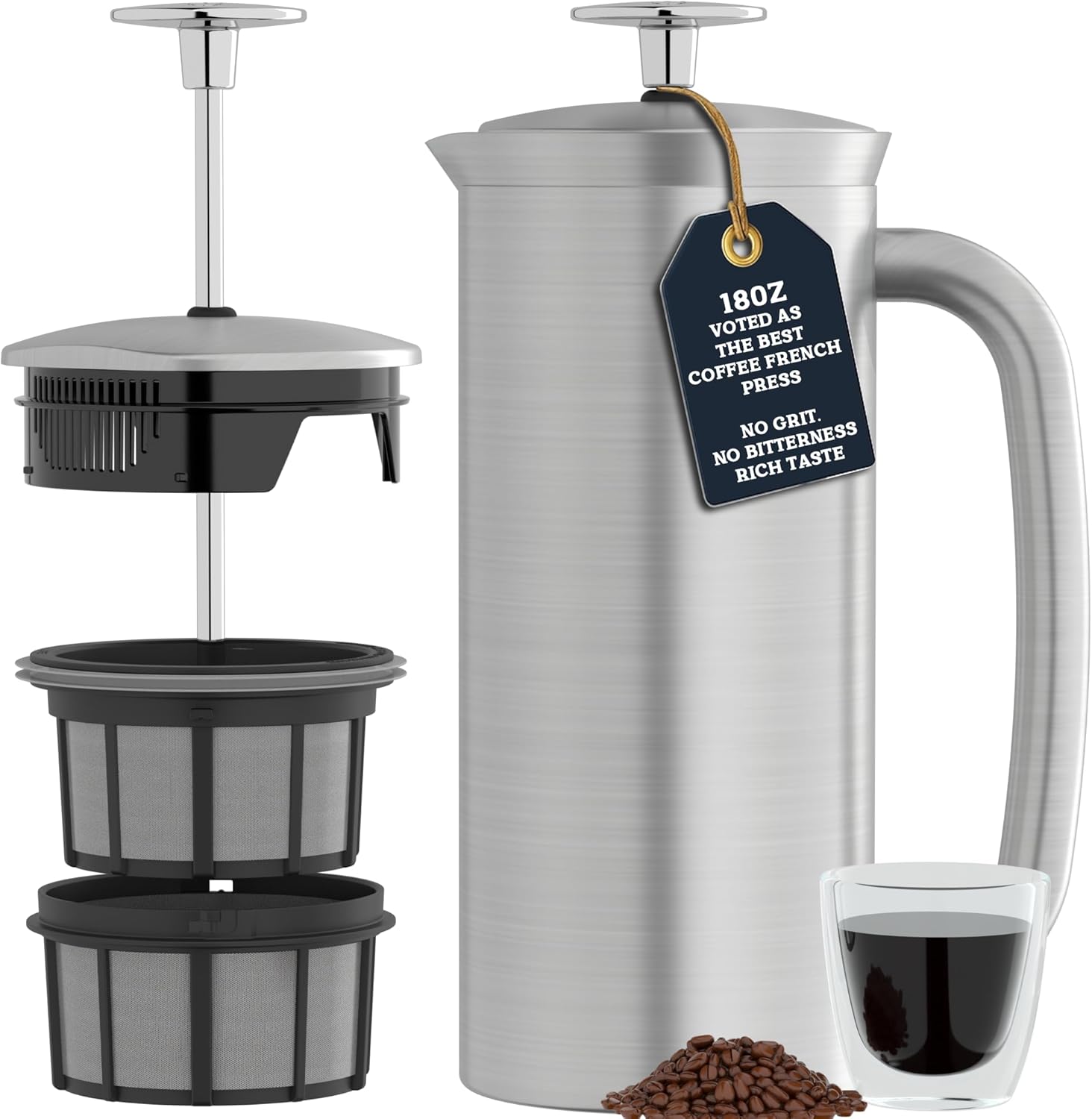
Espro
A double-wall stainless press with a sealed dual microfilter that sharply reduces fines and slows extraction after plunging.
![Stagg [XF] Pour-Over Dripper, Matte Black](/api/images/catalog/images/84a435f21a02acd67c59562b8312c0047c8423cec8be17df62bdaec158c3470a.png)
Fellow
A tall 20-ounce flat-bottom stainless dripper with vacuum insulation, steep walls and a ratio-marking aid.
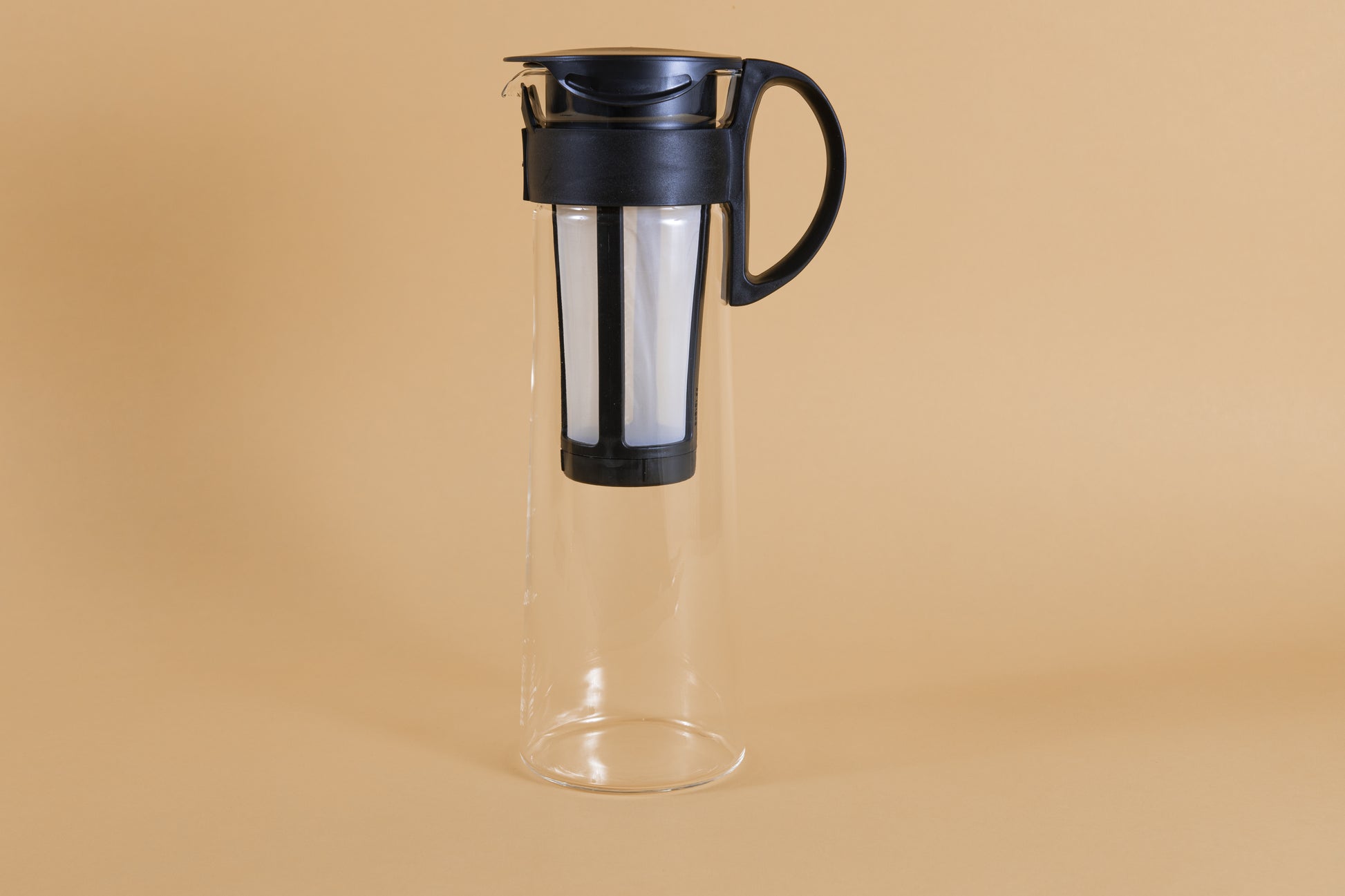
Hario
A one-liter Japanese borosilicate-glass cold brewer with removable fine-mesh basket and refrigerator-door proportions.
Buying guide
Start by mapping how water leaves the coffee bed. A cone, flat-bottom dripper, immersion brewer, and press brewer can all be sold as manual brewers, but they expose different failure points: outlet holes, filter-to-wall contact, valves, screens, or seals. Kalita's Wave 185 gives a concrete example: its 20-wave filter limits contact with the dripper and its flat bottom uses three small extraction holes. Before buying, check whether the flow path is visible and reachable for rinsing, and whether a clogged or distorted outlet can be replaced rather than forcing you to discard the body.
Treat the filter or screen as a core component, not a generic accessory. Kalita specifies that its Wave 185 paper is for the 185 dripper, serves 2–4 cups, comes in a 100-count pack, and should be stored away from dust and water. Use that model-specificity as a buying habit: record the brewer size, filter shape, thickness or material, and any special gasket or screen; price a normal year's supply and check an official restock path. A simple body with an obscure consumable is not a durable purchase if the consumable disappears.
Choose structure around where the brewer will live. HARIO presents the V60 concept in plastic, ceramic, heatproof glass, stainless steel, and copper, while Kalita describes its Wave 185 stainless model as small and compact. Use those options as a handling matrix: travelling brewers need resistance to knocks and a stable seat; protected counters can make ceramic or glass reasonable if you accept impact risk. Inspect the rim, handle, base, and seating ring, and favor surfaces you can visually check for cracks, warping, or trapped residue.
Do a maintenance rehearsal before committing. AeroPress's care guidance distinguishes models: most brewers may go on the dishwasher's top rack, while the Premium is hand-wash only; it also explains that the silicone seal can be removed, washed inside and out, and refitted. Apply the same test to any brewer: remove the basket, screen, seal, lid, valve, or carafe; identify where oils and fines hide; confirm cleaning needs no unusual tool; then locate separately sold wear parts. Never assume dishwasher safety transfers between models.
Use the first week to test the whole ownership loop rather than judging one cup. Confirm the stated filter fits without folding or bypass gaps, the brewer seats securely on its cup or server, the outlet drains evenly, and no seal leaks or retains coffee oils after cleaning. Repeat the same dose, grind, water temperature, agitation, and brew time three times, then inspect the filter support and contact surfaces for distortion. Keep the model and filter size with your notes so future parts orders do not silently switch variants.
FAQ
Treat the shape and outlet as operating characteristics, not decoration. Hario describes the V60’s cone as creating a deeper coffee bed and its spiral ridges plus unrestricted flow as allowing faster pours for a lighter body or slower pours for a heavier one. That means a high-control dripper rewards a steady kettle, grind, and pour; compare the learning curve and replacement routine with how you actually brew.
Neither category is automatically more repeatable: it depends on how much control you want to exercise. The SCA article describes brew temperature, grind, time, total dissolved solids, and extraction as interacting variables; AeroPress adds controlled immersion and pressing, while Hario’s V60 relies more directly on pour rate through its unrestricted flow path. Compare a brewer using the same coffee, dose, water, and timer before blaming the device.
Look for a maker-documented service path before treating wear as end of life. AeroPress says its food-grade silicone seal can be removed, washed inside and out, and refitted because it has no adhesive; it also says a stuck flow-control tab usually responds to rinsing and warm soapy water. For other brewer designs, confirm whether seals, valves, caps, and filter holders are sold separately and fit the exact model.
Do not generalize from one brewer to the whole category. AeroPress says most of its coffee makers are top-rack dishwasher-safe, with model-specific exceptions including Premium, while CHEMEX says to remove the wood collar and rawhide tie before dishwashing and warns that contact with other dishes can break the glass. Choose a brewer whose cleaning instructions fit your routine, and keep detachable collars, seals, and caps accounted for.
Match the exact format and generation rather than assuming a brand-wide accessory standard. AeroPress states that Steel uses standard-size AeroPress filters and accepts the standard-size Flow Control Cap, while CHEMEX distinguishes filter shapes by brewer family, including half-moon filters for its 3-cup and Funnex models. Before buying, record the model, size, and accessory part number; otherwise a durable body can still be stranded by an ill-fitting consumable.
No. AeroPress explains that its vacuum-insulated Steel chamber reduces heat transfer and keeps brew temperature more stable, but also notes that preheating raises starting temperature without greatly changing the rate of heat loss. The SCA’s review likewise treats temperature as one interacting brewing variable. A thermally stable brewer can improve consistency; it cannot replace a repeatable water temperature and brew process.
Honoring the visionaries whose work paved the way for the products we rely on today.
Benjamin Thompson (Count Rumford) developed a coffee drip-press pot and a percolating coffee pot roughly between 1810 and 1814. His work on the Bavarian coffee pot helped establish an early engineering approach to filter-based manual brewing.
François-Antoine-Henri Descroizilles is credited with inventing the French drip coffee pot in 1795. Manufactured by a metalsmith in Rouen, the device used a permanent perforated filter and helped define an early manual pour-over format.
Bishop Jean-Baptiste de Belloy popularized the French drip coffee pot in Paris from about 1800. The Cafetière du Belloy took its name from that association, although the surviving historical account distinguishes popularization from invention.
Milanese designer Attilio Calimani, working with Giulio Moneta, created a coffee press in 1928 with a spring-sealed filter and secured a United States patent in 1929. This design is a direct predecessor of the modern manual French press.
Faliero Bondanini developed a further French-press design and patented his own version in 1958. Martin SA manufactured it under the Melior brand, helping establish the durable plunger-and-mesh format used by later manual coffee presses.
Parisian tinsmith Joseph-Henry-Marie Laurens invented the first modern stove-heatable percolator in 1819. Its rising-water tube created a continuous brewing cycle and became a foundational design for manual coffee pots that recirculate water through grounds.
Research last refreshed
Mackenzie E Batali, William D Ristenpart, Jean-Xavier Guinard · 2020
Batali, Ristenpart, and Guinard experimentally drip-brewed coffee at 87, 90, and 93 °C while controlling total dissolved solids and extraction yield. Sensory differences tracked TDS and extraction more than temperature, informing how drip-brewer design and settings affect results.
Jiexin Liang, Ka Chun Chan, William D Ristenpart · 2021
Liang, Chan, and Ristenpart derive and test a pseudo-equilibrium model for full-immersion brewing. Across brew ratios, grind sizes, roast levels, and 80–99 °C water, brew ratio controlled equilibrium strength while extraction stayed near 21%, directly informing immersion brewer use.
Monika Sijko-Szpańska, Iwona Mystkowska, Aleksandra Dmitrowicz · 2025
Sijko-Szpańska, Mystkowska, and Dmitrowicz compare Espresso, Simple Infusion, French Press, and V60 across 18 coffees. Chemical analyses found brewing method and species changed caffeine, phenolics, and minerals; V60 produced distinctive calcium, iron, sodium and antioxidant-related results.
Zachary R. Lindsey, Joshua R. Williams, James S. Burgess, Nathan T. Moore, Pierce M. Splichal · 2024
Lindsey et al. studied 30 combinations of coffee variety, roast degree, and brew time using an AeroPress filter brewer, measuring extraction yield and caffeine by refractometry and HPLC. Darker roasts generally gave lower caffeine at fixed brewing conditions, linking filter-device recipes to brew composition.