8.0/10
Mid Segment26 yr life
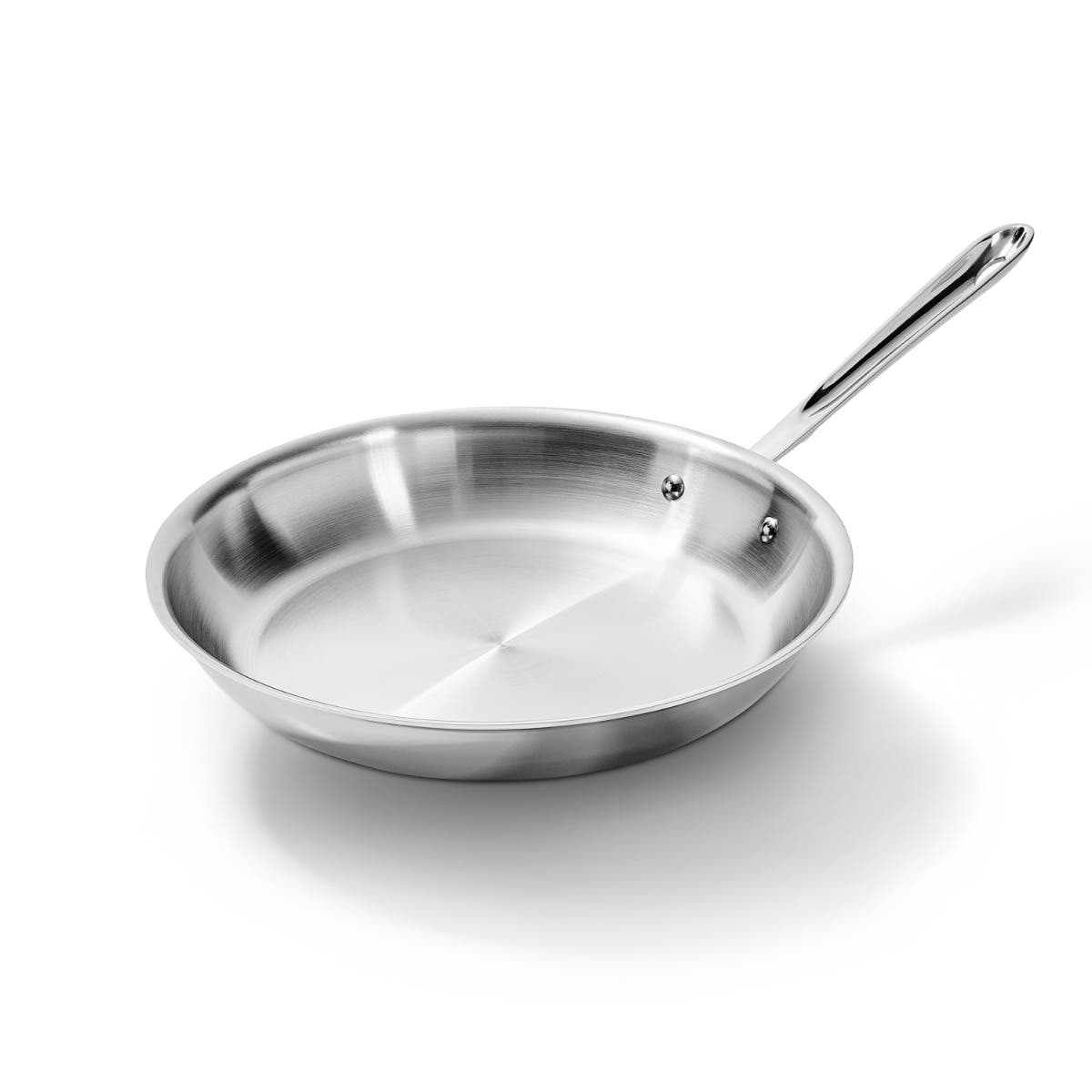
D3® Stainless 3-Ply Bonded Cookware Fry Pan, 12 Inch
All-Clad
A responsive, fully bonded tri-ply stainless skillet with a roomy 12-inch rim and a polished, uncoated cooking surface.
- Repair
- 7.0/10
- TCO
- 8.5/10
$159.99
Durable buying guide
Stainless-steel fry and sauté pans combine a durable cooking surface with a heat-conductive core for searing, browning, and everyday stovetop work. Compare diameter, wall profile, weight, handle design, induction and oven compatibility, and required care.
11 products
A balanced blend of performance, quality, and price for the discerning user.
All-Clad
A responsive, fully bonded tri-ply stainless skillet with a roomy 12-inch rim and a polished, uncoated cooking surface.
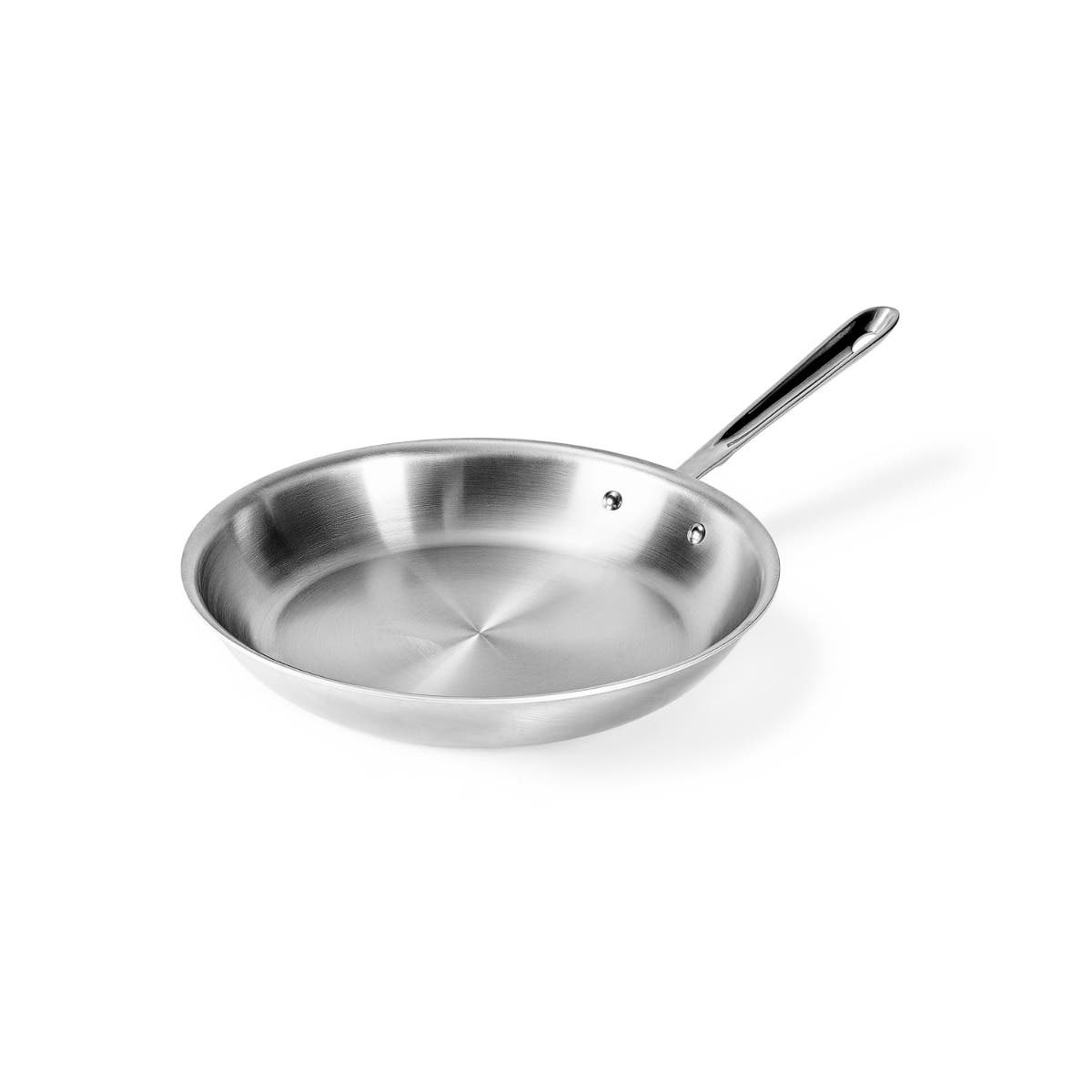
All-Clad
A brushed 12-inch stainless fry pan with five bonded layers engineered for steadier heat and reduced hot spots.
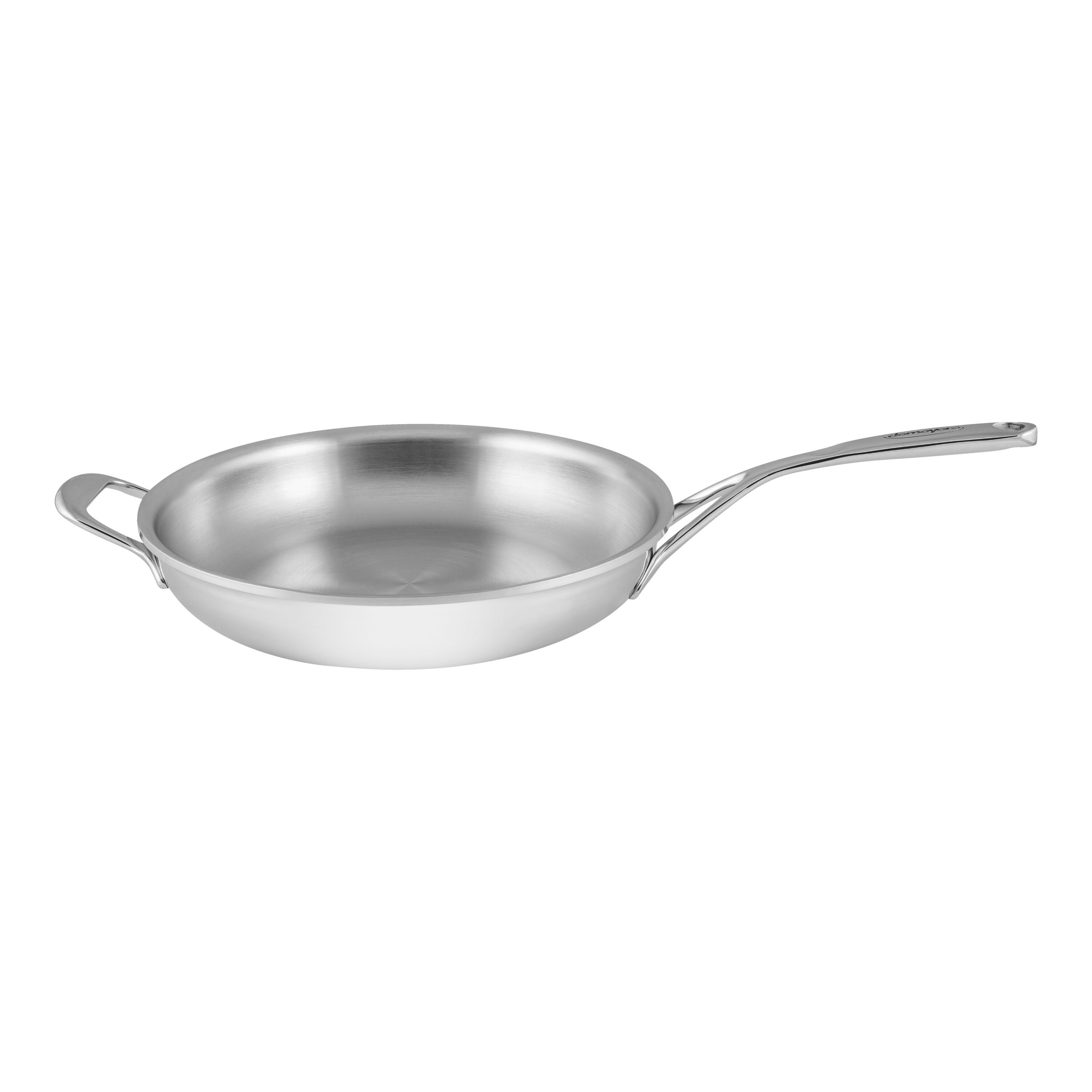
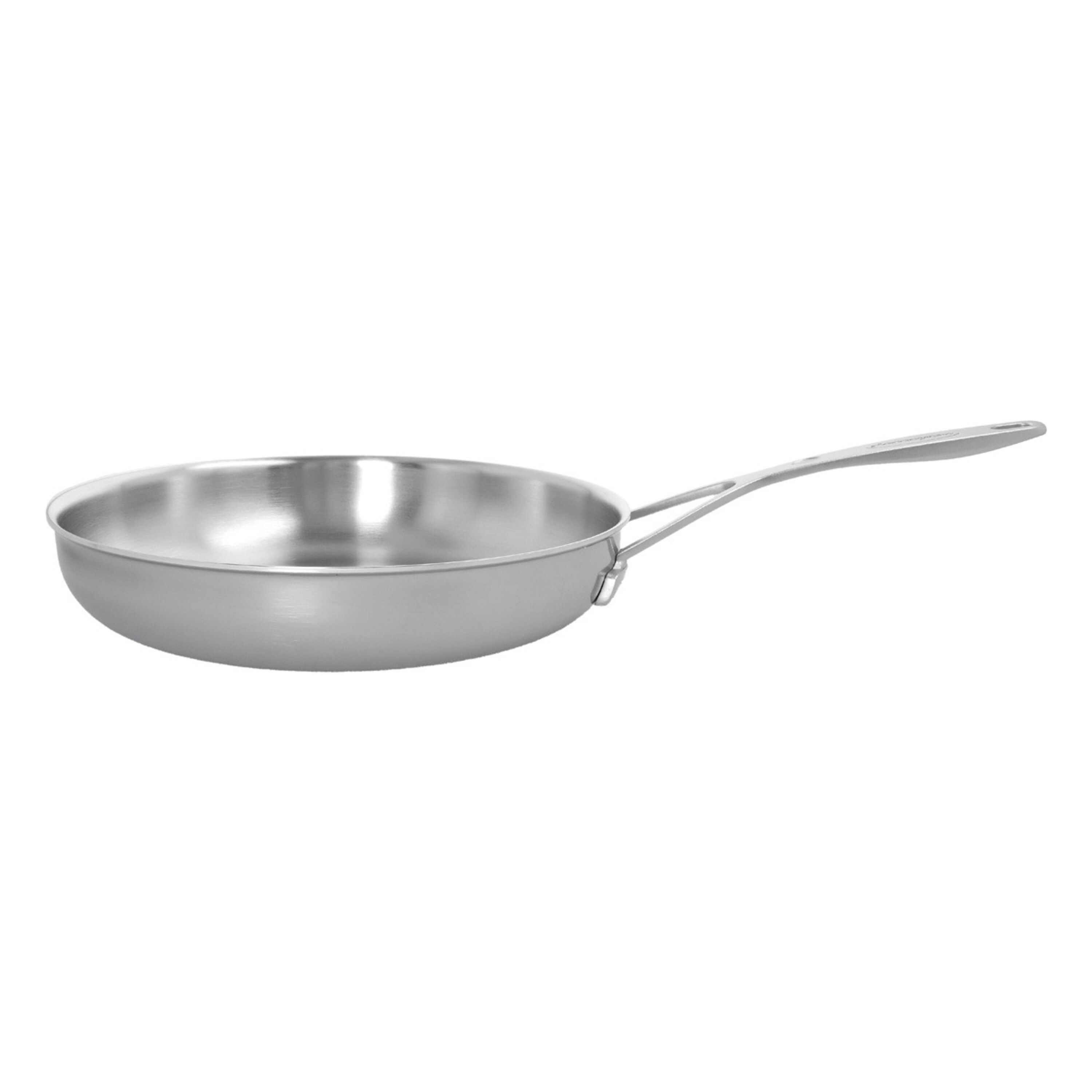
Demeyere
A Belgian 11-inch, five-ply stainless fry pan with a thick aluminum core, Silvinox finish, and welded handle.
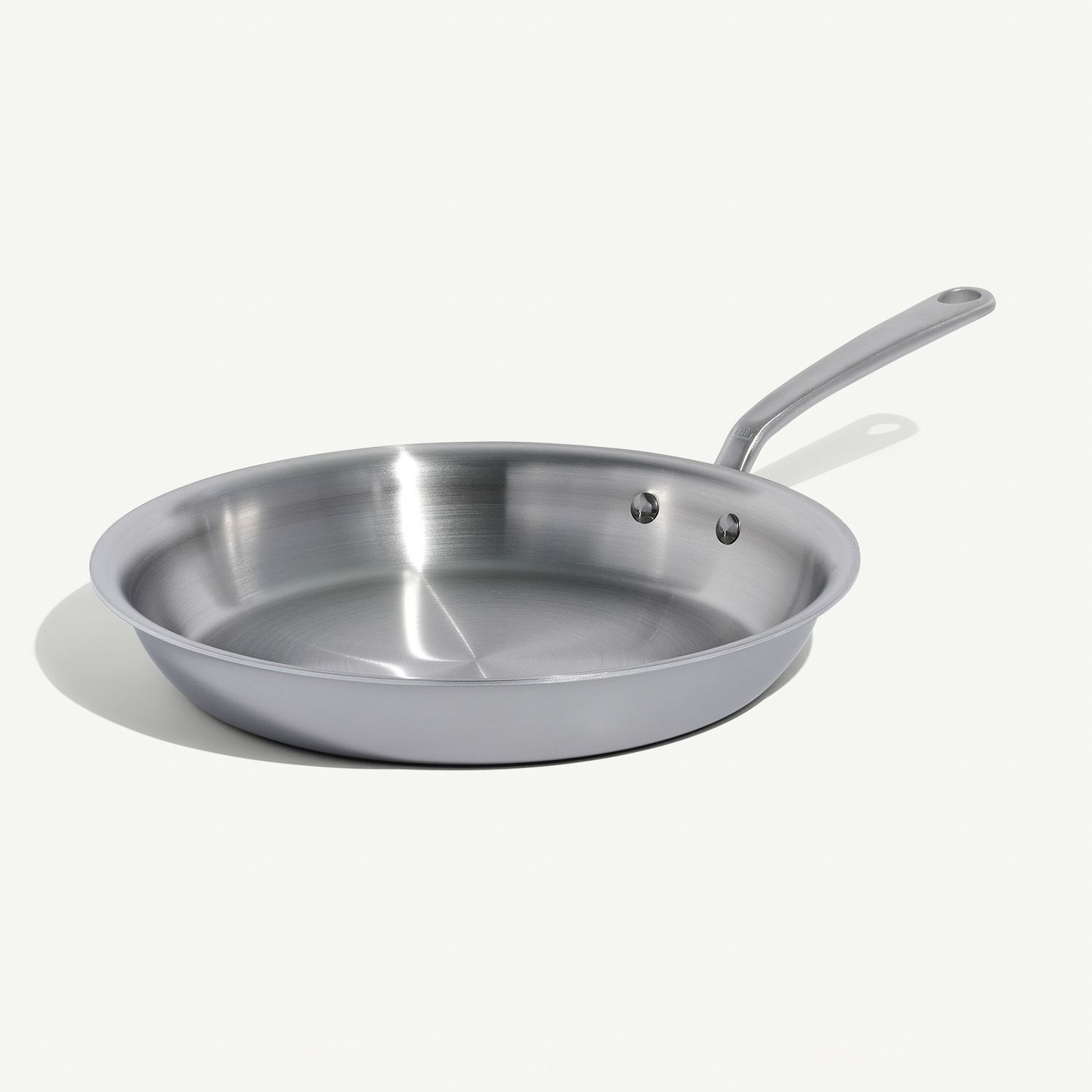
Made In
A 12-inch, 2.7 mm five-ply stainless fry pan with a broad 9.5-inch cooking surface and hollow stay-cool handle.
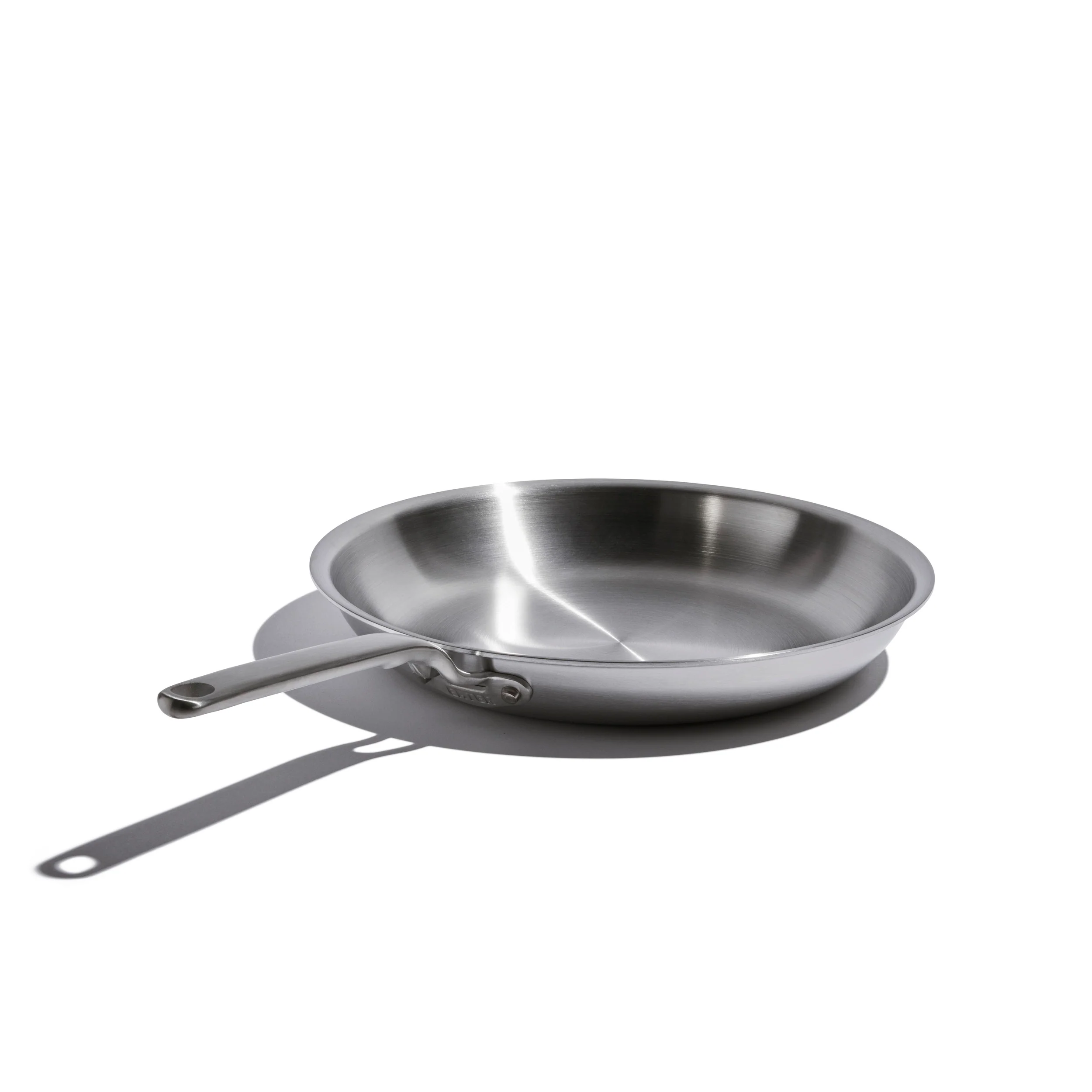
Heritage Steel
A US-manufactured, five-ply 12-inch fry pan with an 18/10 stainless surface, three-layer aluminum core, and brushed exterior.
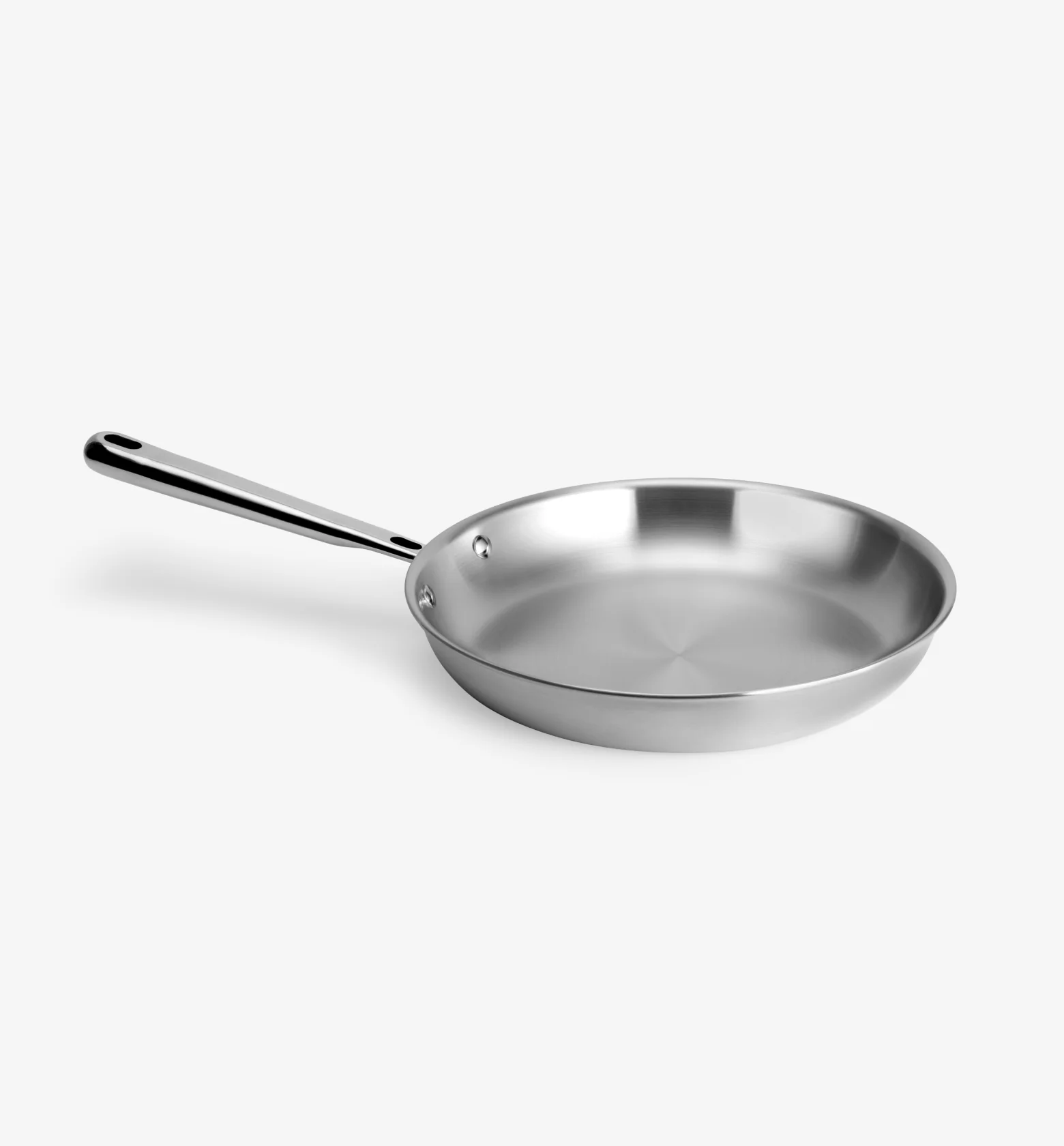
Misen
A 3.0 mm, five-ply 12-inch stainless skillet with a larger-than-nominal 12.4-inch rim and ergonomic stay-cool handle.
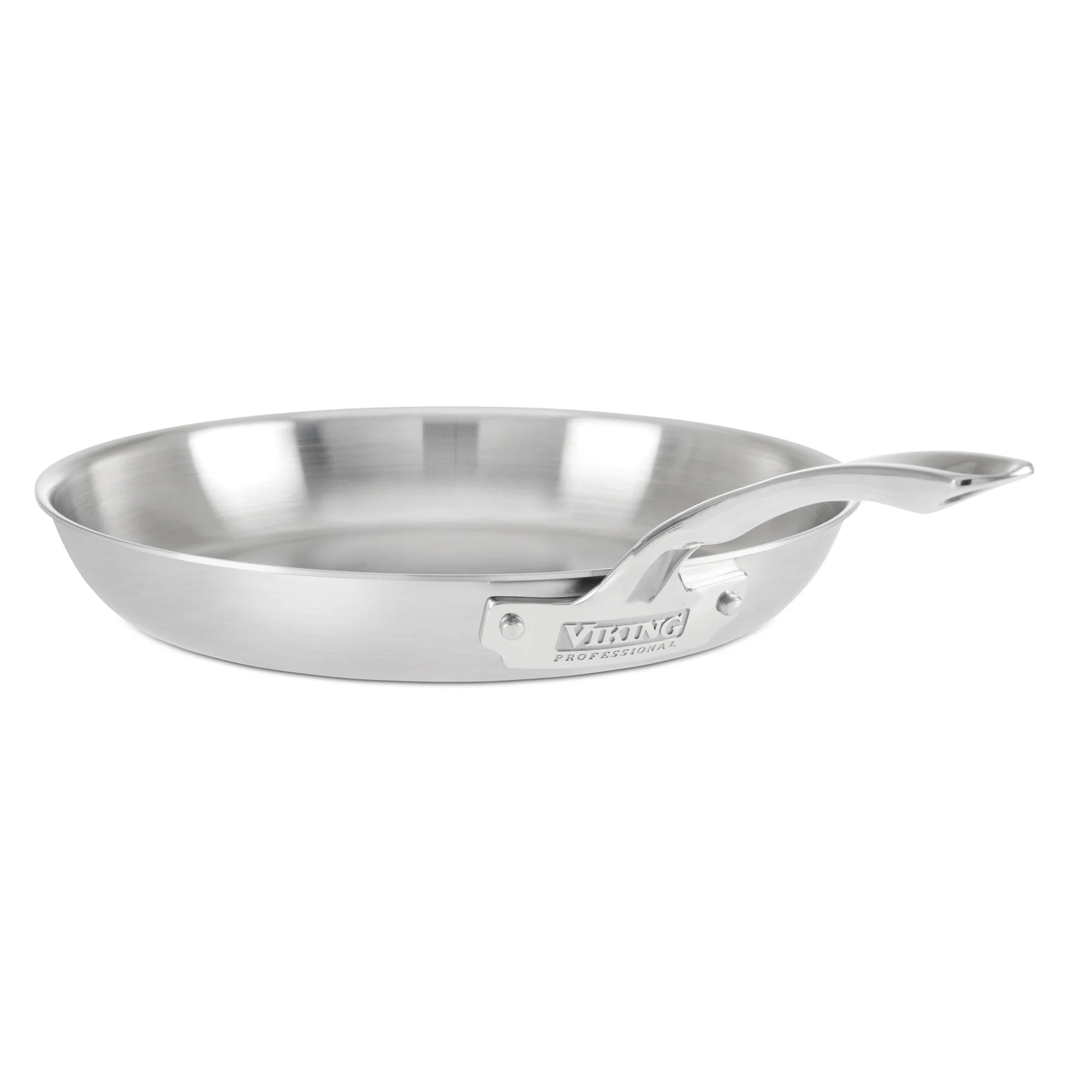
Viking
A US-crafted 12-inch five-ply fry pan with an 18/10 stainless interior, three-layer aluminum core, and induction-ready exterior.

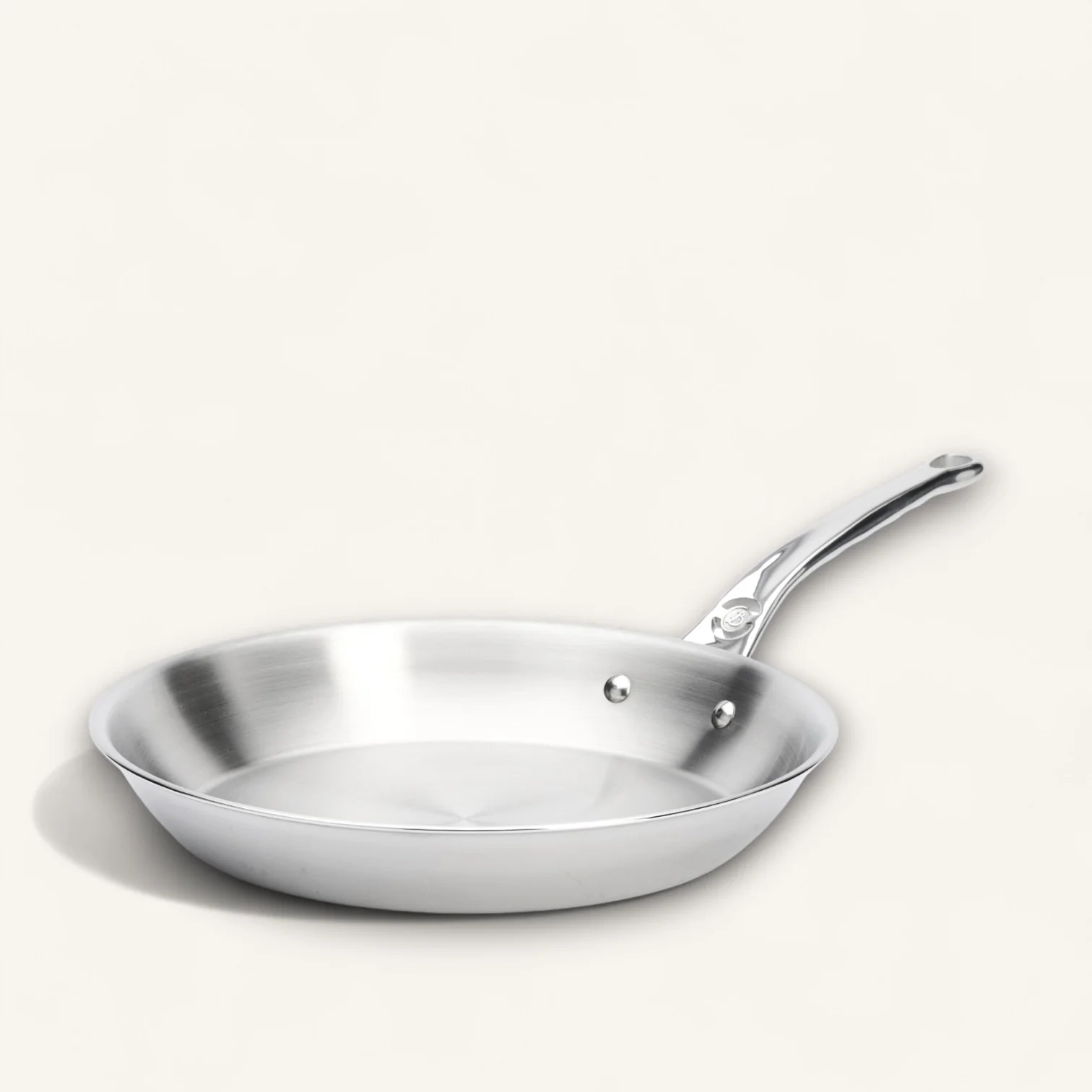
Hestan
A cold-forged Italian 11-inch tri-ply skillet with a pure-aluminum ProCore, sealed rim, and flush handle rivets.
de Buyer
A French-made 11-inch, five-ply stainless fry pan with a 7.9-inch cooking surface and cast heat-stop handle.
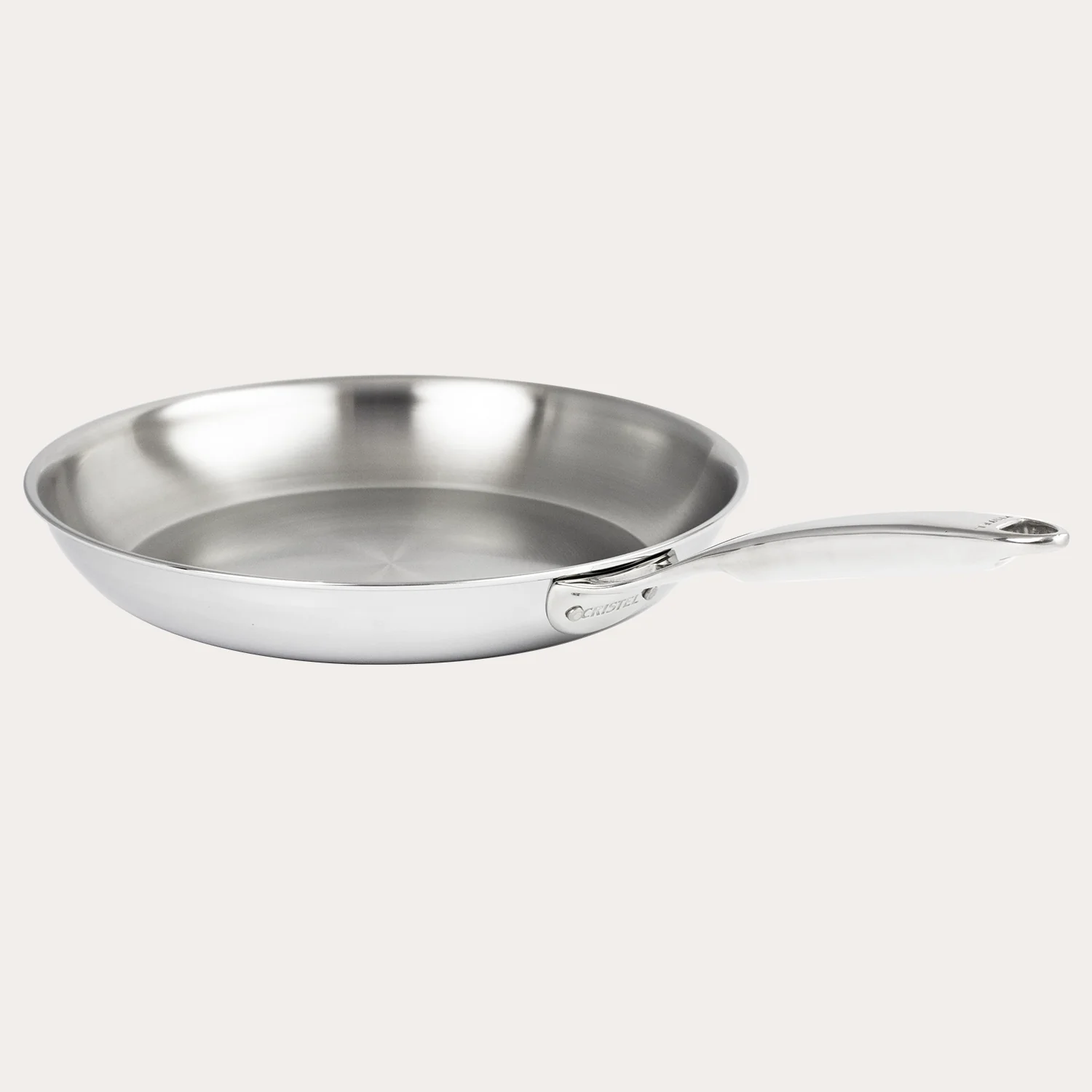
CRISTEL
A French-made 28 cm five-ply stainless fry pan with three aluminum layers, a rounded profile, and an athermic fixed handle.
1 products
Budget-conscious selections offering the best value and reliability for essential needs.
Shop by brand
Buying guide
Start with what must fit in one layer and the diameter of your burner, not just the advertised rim size. A fry pan’s sloped walls make turning food and reducing a pan sauce easier; a sauté pan’s straighter walls preserve more volume for braises and other liquid-heavy work. Compare listed dimensions, loaded weight, handle reach, and lid availability. If possible, lift the pan with one hand and check whether a helper handle makes a full pan safer to move.
Stainless steel supplies a durable cooking surface, while an aluminum or copper layer spreads heat. Look beyond the ply count: confirm whether the conductive core runs through the walls or only across the base, and compare disclosed thickness where manufacturers provide it. DEMEYERE, for example, describes different 5-ply, 7-ply, and capsule-base designs for different jobs. The useful question is whether the pan distributes heat across its working area while remaining flat and manageable—not which label has the largest number.
For induction, do not assume every stainless pan works: the cooktop needs a magnetic outer layer. Check the maker’s compatibility statement and use a magnet on the base as a quick screening test. Also verify the separate temperature limits for the pan and lid rather than treating “oven safe” as unlimited. Inspect welded or riveted handle joints for movement and comfortable clearance; either approach can be durable when well executed. A tightly fitting metal lid and a helper handle are especially useful on deeper, heavier sauté pans.
Preheat on low to moderate heat, add oil when the pan is ready, and avoid leaving an empty pan over a hot burner. Let cookware cool before washing; sudden cold water on a hot pan can promote warping. All-Clad also advises adding salt only after liquid boils or food begins cooking to reduce cosmetic pitting. For residue, begin with soap and a soft sponge, then use a nonabrasive, non-chlorine cleanser if needed. Vinegar can remove rainbow discoloration or hard-water film; avoid steel wool and bleach-containing cleaners.
Prefer clear material disclosures over vague terms such as “surgical steel.” A laboratory study using acidic tomato sauce found that nickel and chromium transfer varied with stainless grade, cooking duration, and prior cooking cycles; new cookware and unusually long cooking produced the highest values in that experiment. Those conditions do not establish the exposure from every meal or pan. Buyers with known nickel or chromium sensitivity should discuss their individual risk with a qualified clinician rather than relying on marketing claims alone.
FAQ
A fry pan has low, sloped sides that make tossing food and reaching it with a spatula easier. A sauté pan has taller, straighter walls, usually more flat cooking area for the same rim diameter, and often a lid and helper handle. Choose the fry-pan shape for quick searing and tossing; choose the sauté-pan shape when a recipe contains more liquid or needs greater capacity and splatter control.
Compare the flat cooking-surface diameter, capacity, and weight rather than relying only on the advertised rim diameter. Sloped fry-pan walls reduce the flat area, while straight sauté-pan walls preserve more of it and add volume. Make sure the base fits the burner, and consider whether you can safely lift the pan when it is full; a sauté pan of similar diameter can be noticeably heavier.
No single layer count settles the question. Construction also matters: some cookware bonds heat-spreading metal through the full vessel, while other designs concentrate it in the base. Manufacturers describe both five-ply, rim-to-rim construction and fully bonded or base-bonded approaches. Compare base flatness, cladding coverage, weight, handle attachment, warranty terms, and published compatibility instead of treating ply count as a stand-alone quality grade.
No. Stainless cookware varies by product line, base construction, handle, and lid. Confirm induction compatibility and the oven and broiler limits on the exact model rather than assuming all stainless pans share one rating. For example, Demeyere lists the cited Industry 5 line as induction compatible and oven/broiler safe to 500°F, while All-Clad publishes different temperature limits for different cookware types on its care page.
Use moderate heat and allow the pan to preheat before adding oil. Made In advises checking preheat with a small amount of water: beads that move across the surface indicate readiness, while immediate sizzling can mean the pan is too hot. Let the oil heat, dry food surfaces when practical, and give proteins time to brown and release before turning them. Delicate foods may require more fat and closer heat control.
Avoid prolonged empty heating, and do not shock a hot pan under cold water because abrupt cooling can promote warping. To reduce salt pitting, add salt after liquid boils or food begins cooking, then stir. For stuck residue, use soap, a sponge, and a nonabrasive, non-chlorine cleanser when needed. Avoid oven cleaner, steel wool, harsh scouring pads, and cleaners containing chlorine bleach or peroxide unless the pan maker explicitly permits them.
Stainless cookware is not exposure-free for every user. A controlled study of tomato sauce found that nickel and chromium release varied with steel grade, cooking duration, and prior cooking cycles; release was greater from new cookware and declined across repeated cycles. That study does not establish an individual clinical threshold. Anyone with diagnosed nickel sensitivity should discuss cookware exposure with a qualified clinician and compare clearly identified materials.
Honoring the visionaries whose work paved the way for the products we rely on today.
At Brown Firth Laboratories, Harry Brearley investigated chromium steels for a small-arms maker seeking longer-lasting gun barrels. The British Stainless Steel Association records that on 13 August 1913 he produced a 12.8% chromium, 0.24% carbon steel argued to be the first stainless steel, a foundational material milestone for this category.
All-Clad's history page identifies founder John Ulam as a renowned metallurgist with more than 75 metal-crafting patents. It says he applied that knowledge to cookware by bonding layers of stainless steel with aluminum, then founded All-Clad Metalcrafters in 1971 after the resulting cookware cooked more evenly and resisted tarnish and warping.
CRISTEL's history credits Paul Dodane with the Cook & Serve concept and removable handles that let stainless-steel saucepans move from stovetop to serving. The page says he formed a research team with EDF, Ugine, and a ceramic-hob manufacturer in the 1990s; it also records his role in CRISTEL's 1987 relaunch and later induction-compatible solution.
Research last refreshed
Arnold H. Dodge · 1957
A two-year service comparison of nickel-bearing type 302 and nickel-free type 430 stainless utensils found better corrosion resistance in type 302, while also stressing that thorough cleaning materially affected rust, pitting, and service life in both grades.
R. J. Gilbert · 1970
Field trials compared cleaning procedures and bacterial sampling on stainless steel and other food-contact surfaces. A two-step treatment using anionic detergent followed by hypochlorite gave the most satisfactory plate-count results, supporting disciplined cleaning rather than material claims alone.
T. Mitsushima · 1961
This indexed historical study focuses on basic cooking-utensil requirements in hospital food service. It offers period context for matching utensil provision to operating needs; because PubMed provides no abstract, no specific performance result should be inferred from the citation alone.