8.2/10
Premium35 yr life
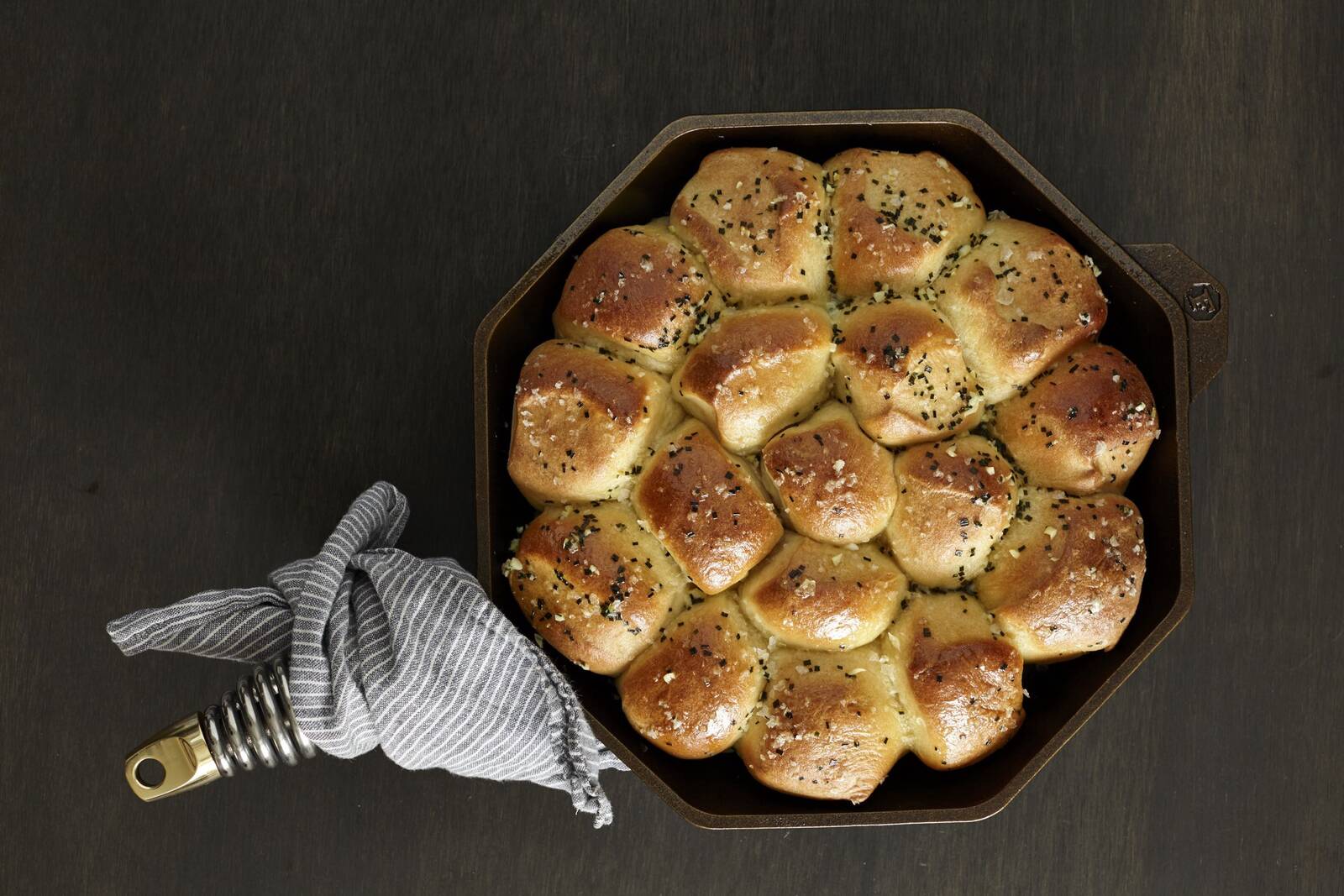
12-Inch Cast Iron Skillet
FINEX
An octagonal, polished cast-iron skillet with eight pour corners and a stainless spring handle with brass end cap.
- Repair
- 8.8/10
- TCO
- 8.8/10
$299.95
Durable buying guide
Cast iron and carbon steel cookware offer durable, seasonable cooking surfaces but handle differently: cast iron is heavier and retains heat longer, while carbon steel heats and responds faster. Compare weight, handle design, heat-source compatibility, and care; dry promptly and maintain seasoning to limit rust.
1 products
Superior features, extended warranties, and high-end materials for enhanced performance.
FINEX
An octagonal, polished cast-iron skillet with eight pour corners and a stainless spring handle with brass end cap.
8 products
A balanced blend of performance, quality, and price for the discerning user.
Field Company
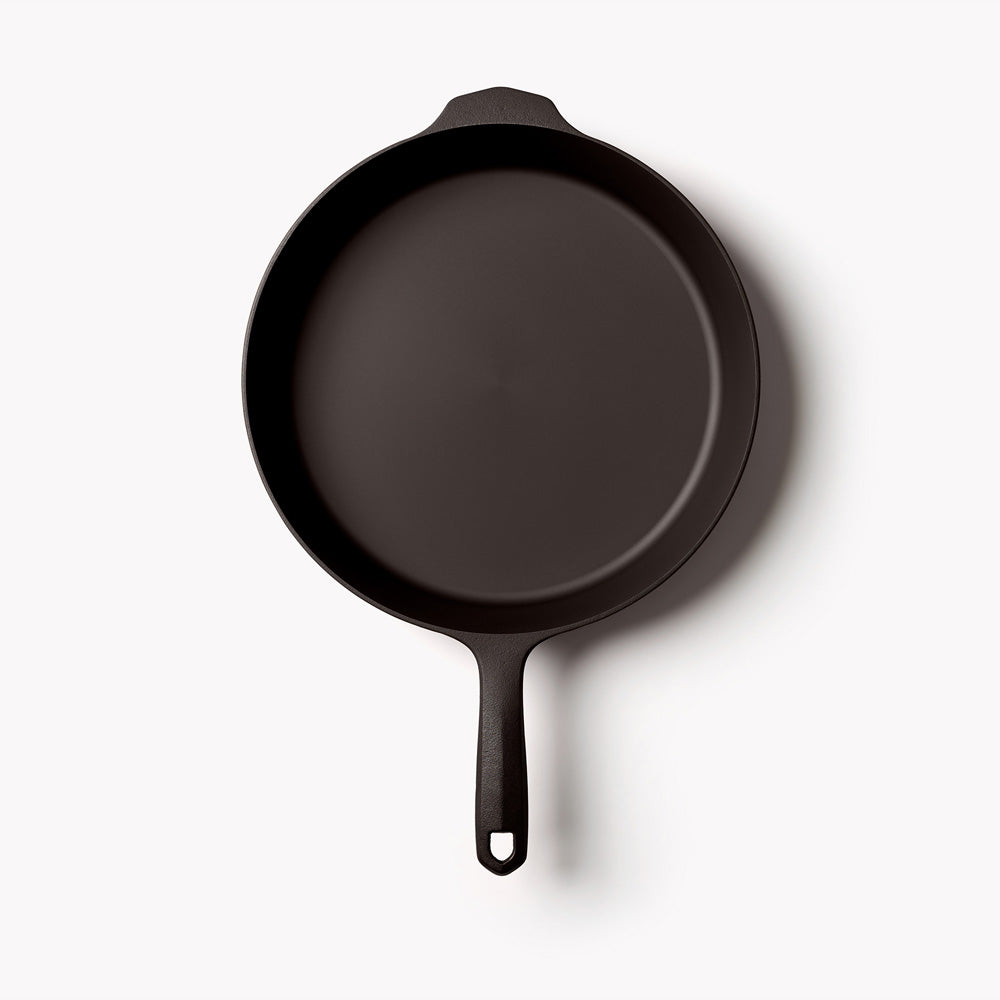
A US-made, machined-smooth 11.6-inch cast-iron skillet designed with thinner walls and a balanced handle.
Le Creuset
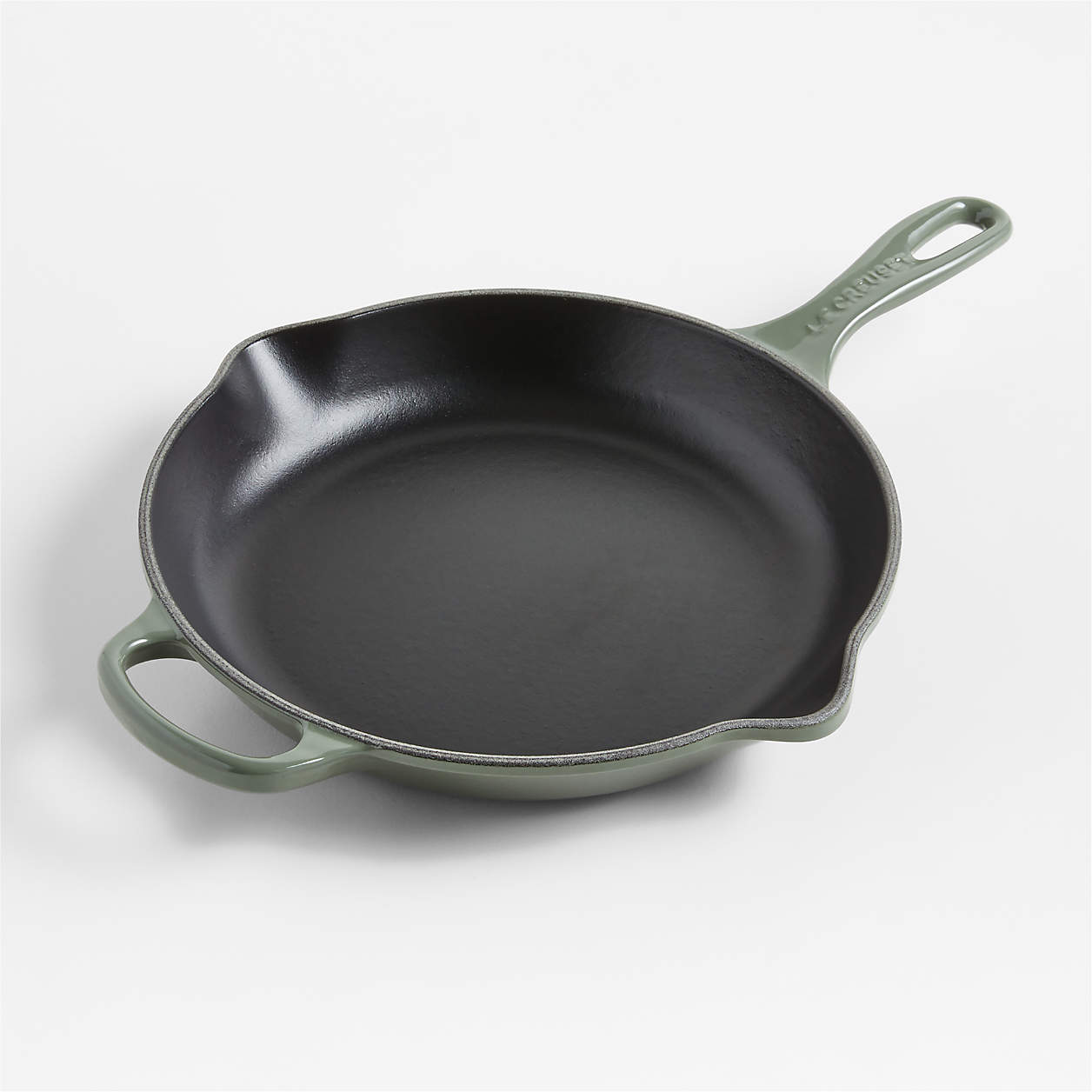
A French-made 10.25-inch enameled cast-iron skillet with black satin interior, helper handle, and pour spouts.
STAUB
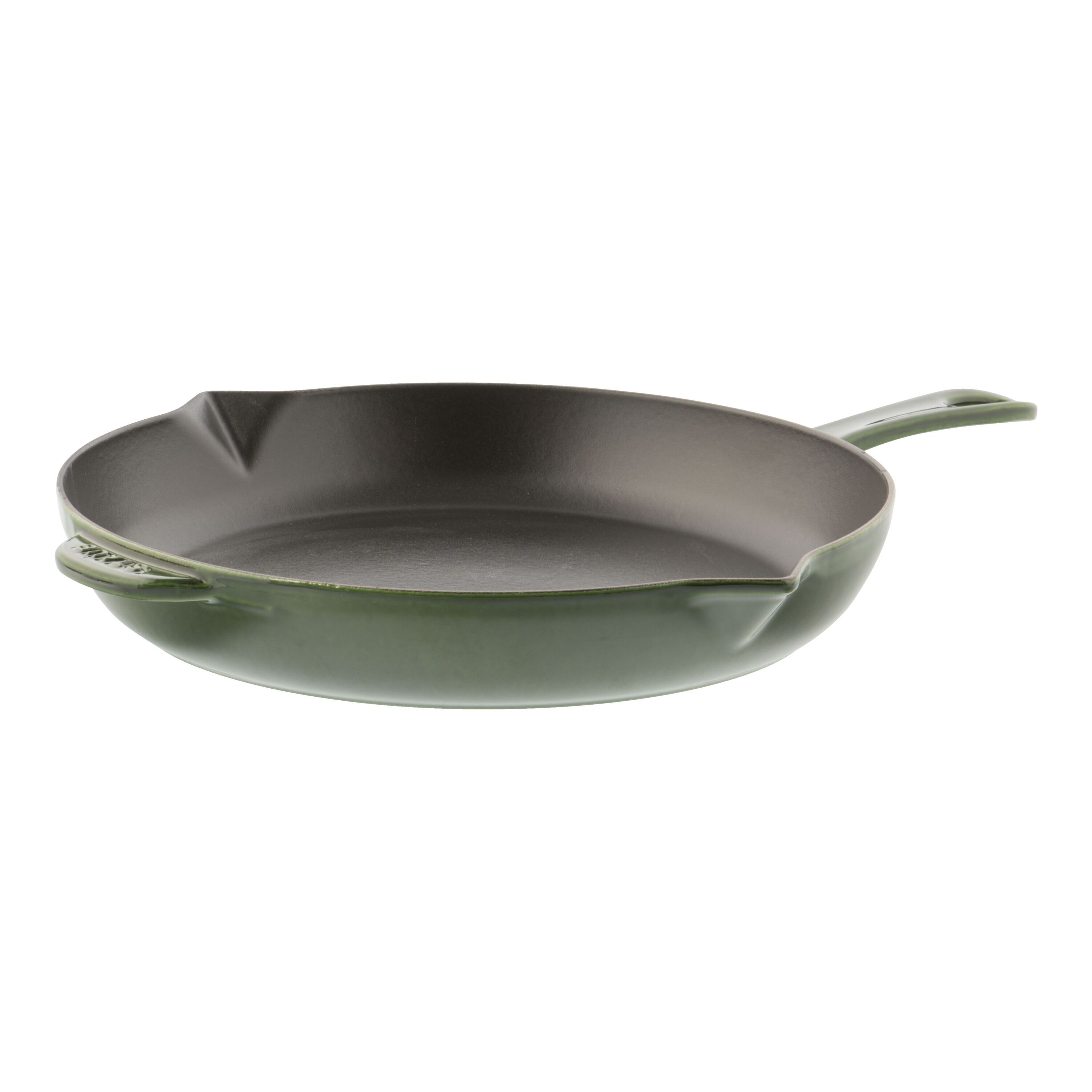
A French-made 12-inch enameled cast-iron fry pan with matte black interior, helper handle, and pouring spouts.
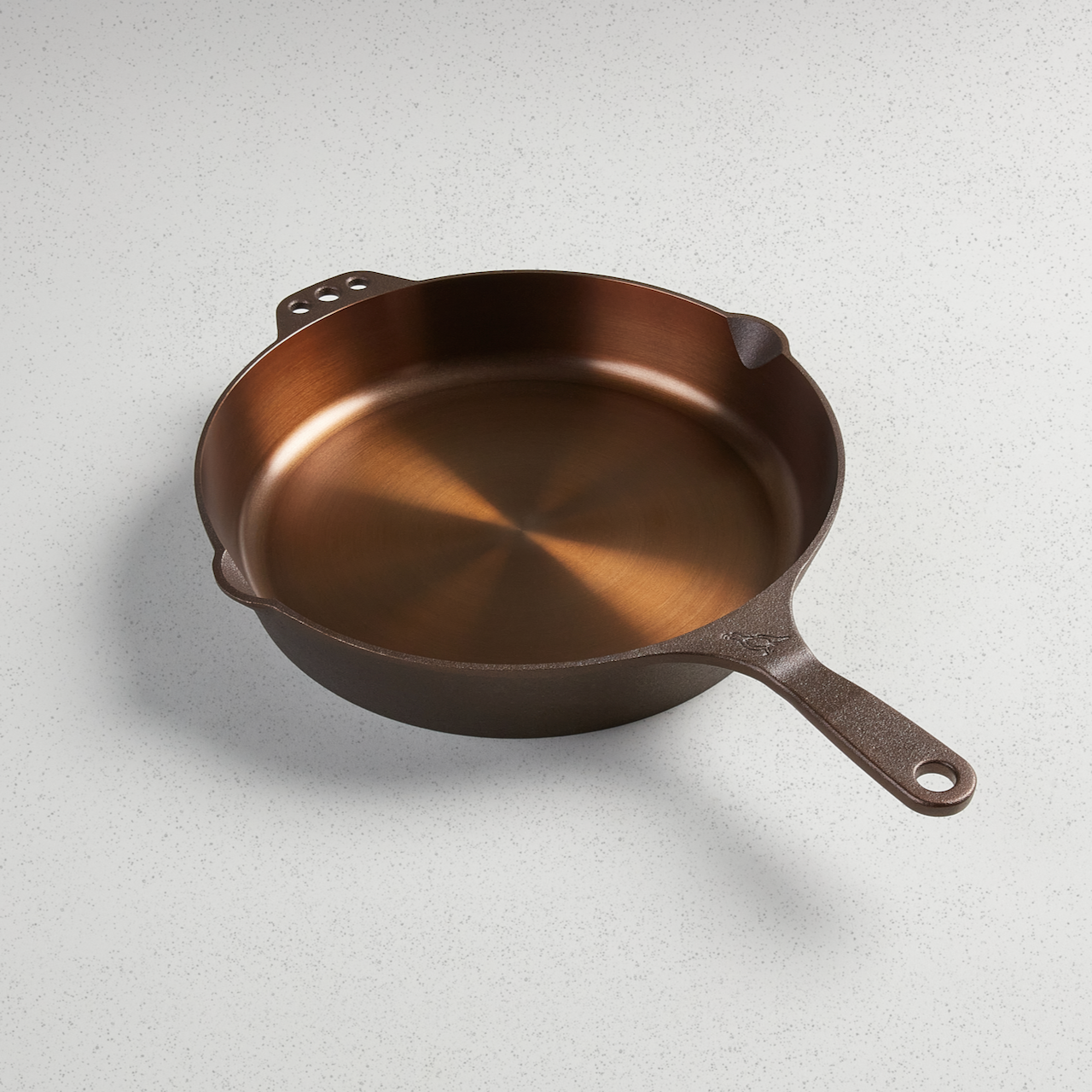
Smithey Ironware
A polished, satin-smooth 12-inch cast-iron skillet with grapeseed-oil seasoning, helper handle, and pour spouts.
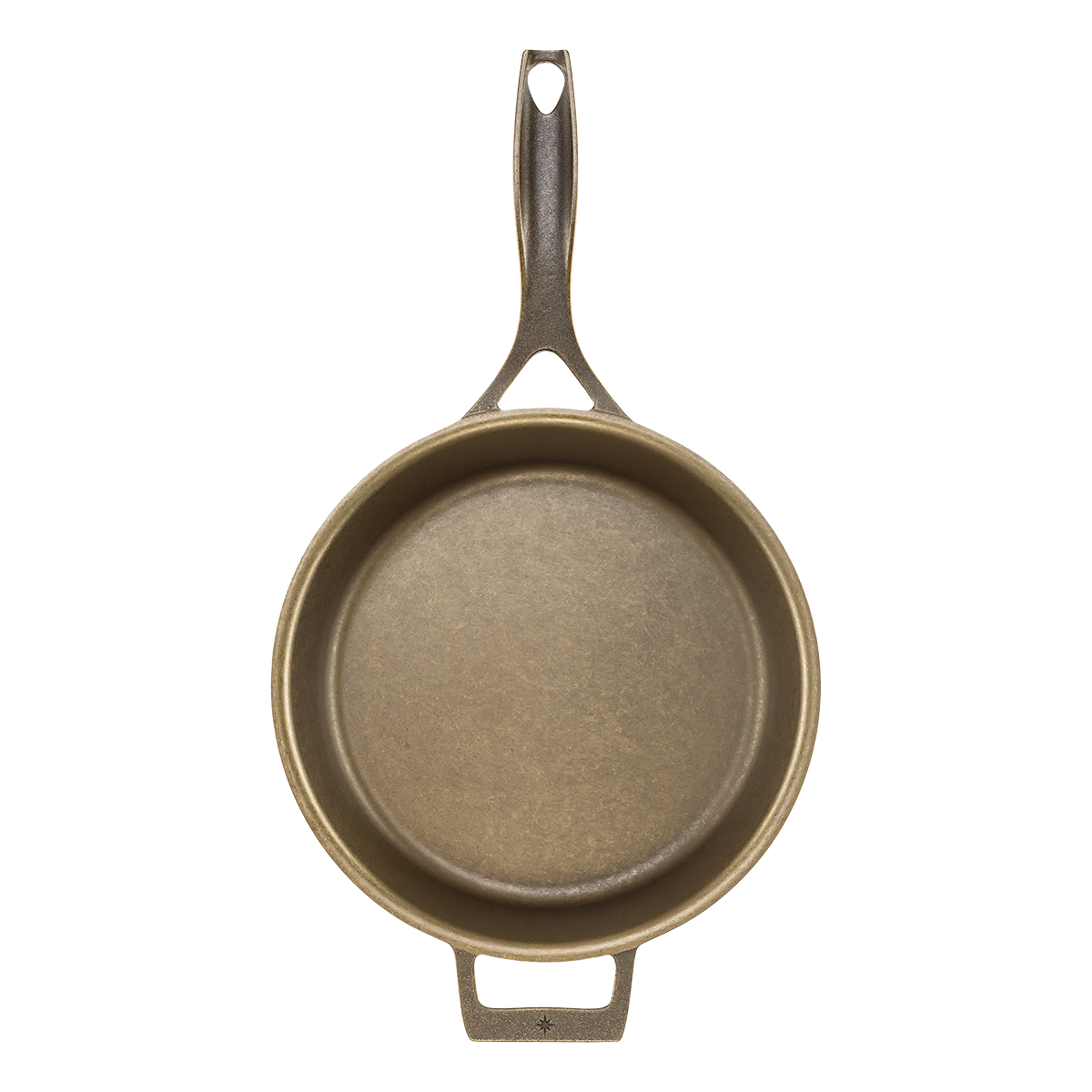
Stargazer
A US-made 12-inch cast-iron skillet with machined surface, flared drip-free rim, and long stay-cool handle design.
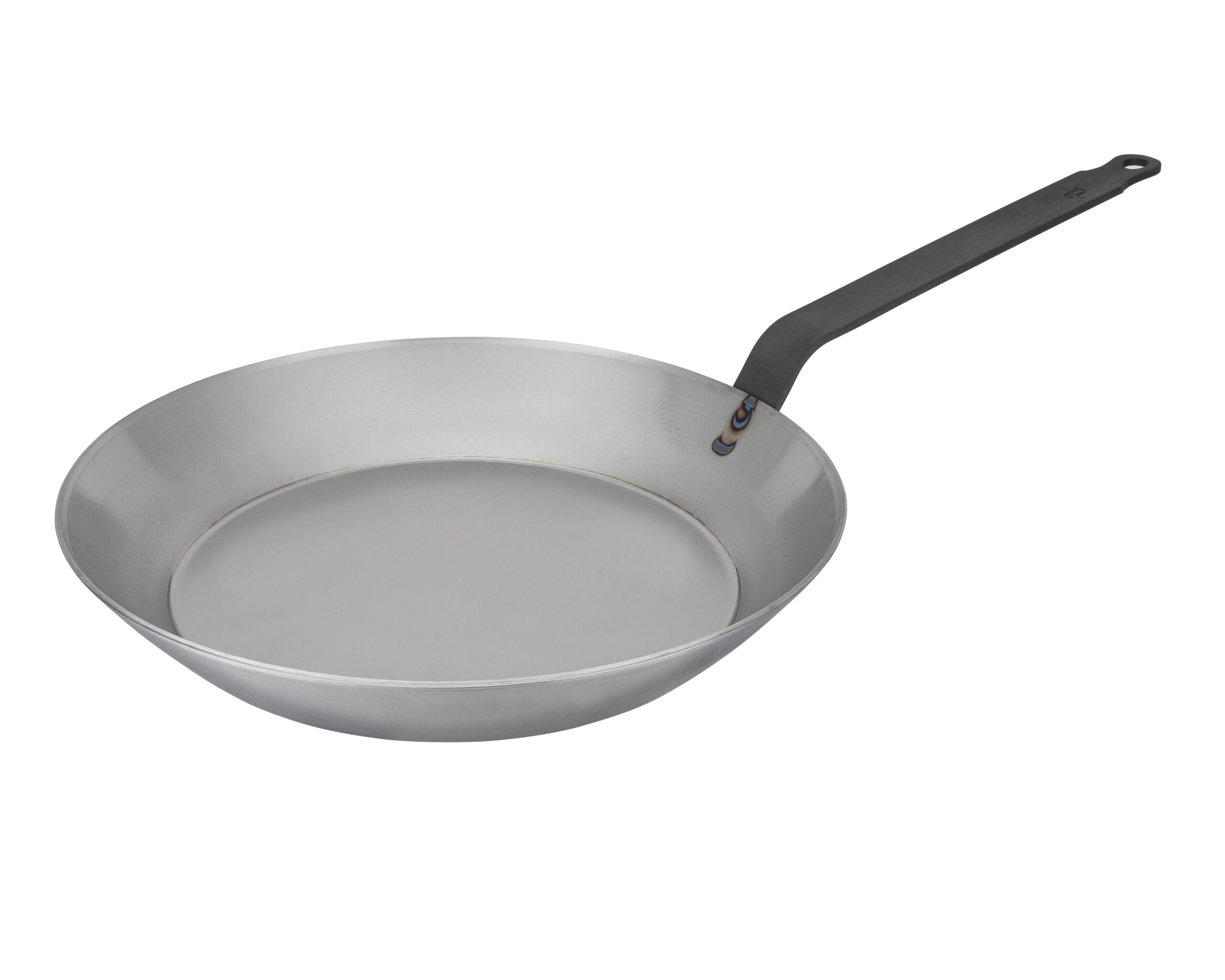
Matfer Bourgeat
A French carbon-steel pan with a welded, rivet-free steel handle and an approximately 11.8-inch rim.
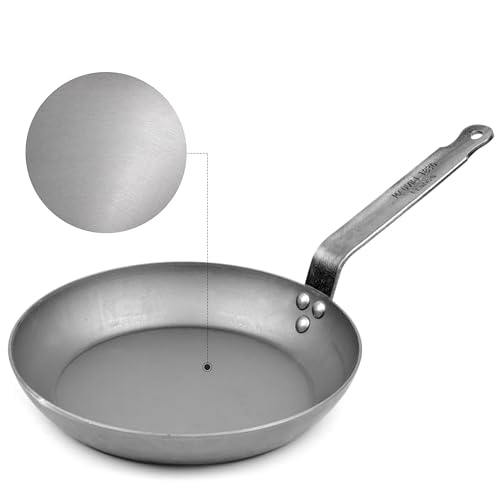
Mauviel 1830
An 11-inch, 2-to-2.5 mm carbon-steel fry pan with riveted iron handle, beeswax transit coating, and 680°F oven rating.
Solidteknics
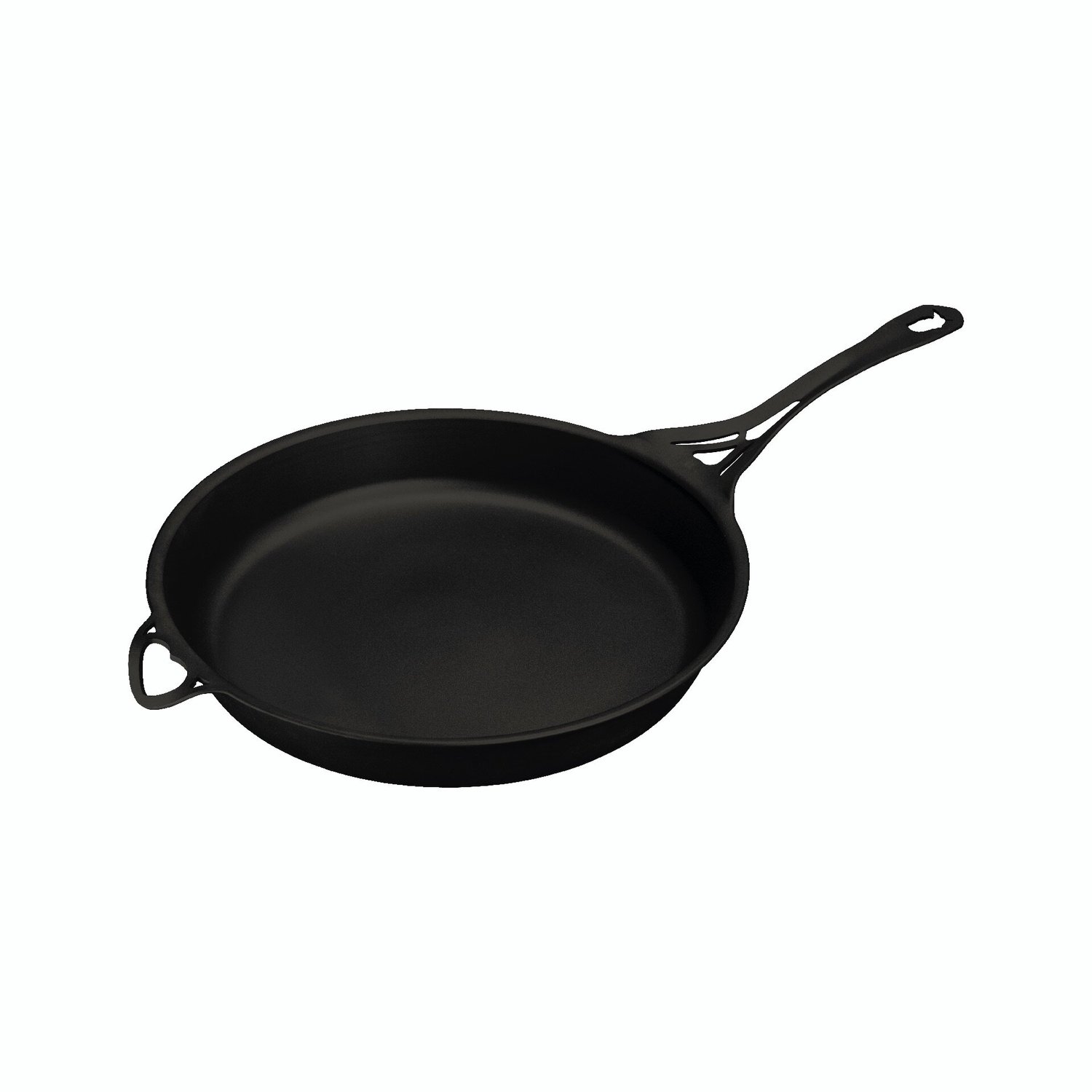
A discontinued US-made 12-inch wrought-iron skillet formed as one seamless, rivet-free piece and factory seasoned.
3 products
Budget-conscious selections offering the best value and reliability for essential needs.
Lodge
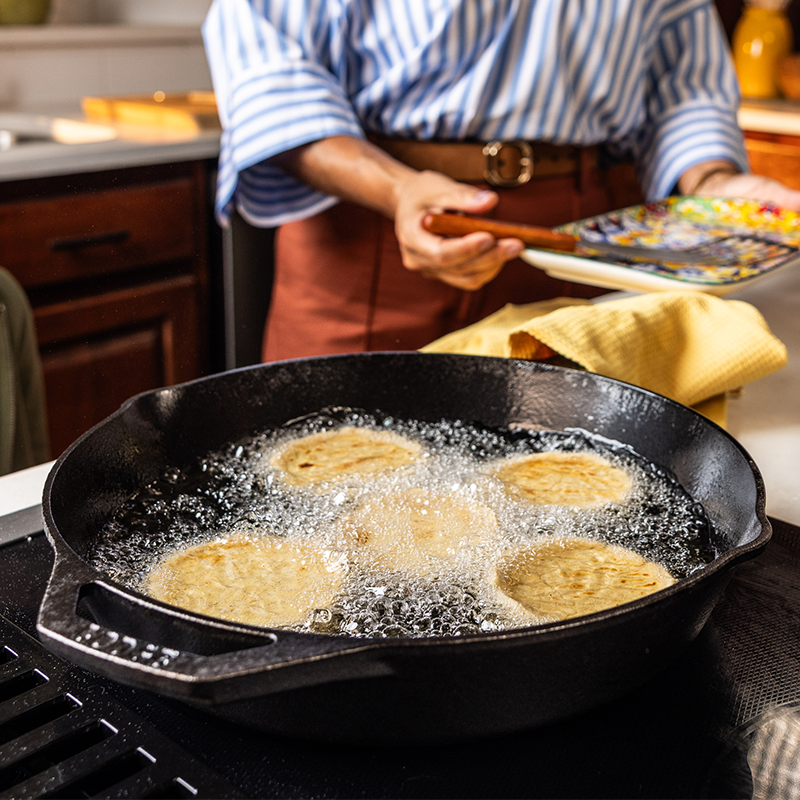
A pre-seasoned, US-made 12-inch cast-iron skillet with helper handle, pour spouts, and broad heat-source compatibility.
Lodge
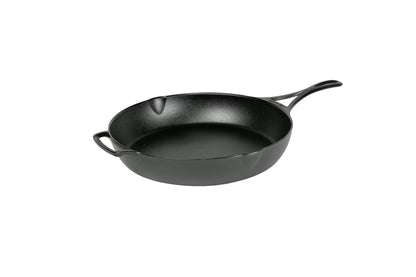
A lighter 12-inch cast-iron skillet with triple seasoning, raised extended handle, helper handle, and pour spouts.
de Buyer
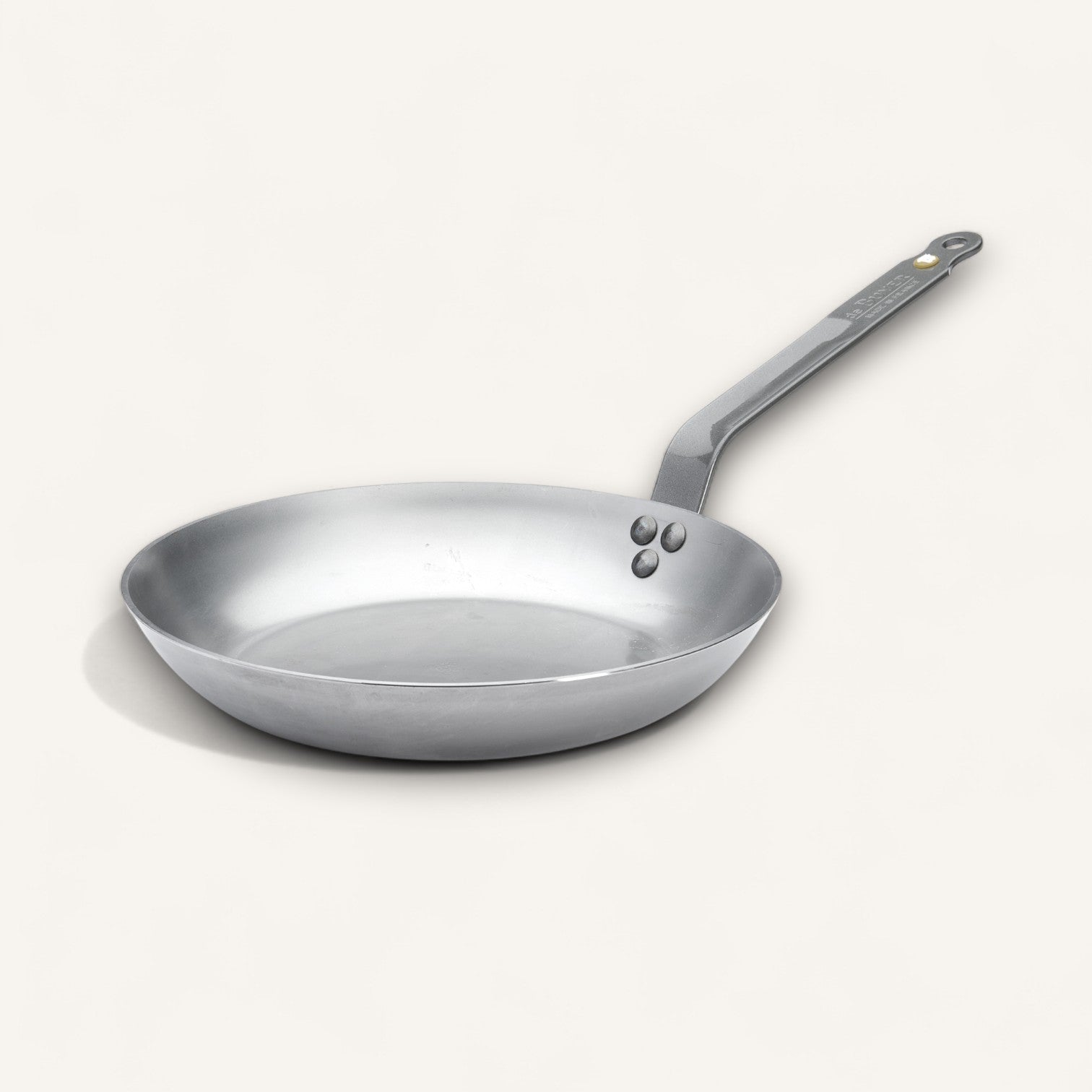
A French-made 11-inch, 3 mm carbon-steel fry pan with welded steel handle, beeswax transit coating, and no synthetic coating.
Shop by brand
Buying guide
Cast iron’s thicker mass generally holds heat longer, while thinner carbon steel heats and responds to adjustments faster. That makes cast iron attractive for steady searing and baking, and carbon steel convenient for sautéing, tossing, and frequent temperature changes. Do not choose by material name alone: thickness, diameter, and handle design change weight and behavior. Lift the actual pan—or check its listed weight—and allow for the food it will carry; a pan that is awkward when empty is unlikely to improve when loaded.
Check the maker’s compatibility statement for the exact pan, especially for induction and oven use. On a radiant glass cooktop, prioritize a flat, smooth base: GE says full contact is important for heat transfer, permits smooth flat-bottom carbon steel, and warns that rough bare cast iron may scratch glass ceramic. Keep the base close to the active burner’s diameter and lift rather than slide heavy cookware. Also verify the handle’s oven limit; a metal body does not guarantee that coatings, grips, or attached parts tolerate the same temperature.
Seasoning can be renewed, but geometry and structural damage remain. Set the pan on a known-flat surface and check for rocking or spinning; inspect cast iron for cracks and carbon steel for pronounced warping. Confirm that long handles and helper grips are comfortable with an oven mitt, that rivets or welds are sound, and that the pan clears the oven and neighboring burners. Surface rust alone need not end a purchase: university extension guidance describes removing light rust and re-seasoning, while a crack or unstable base is a more consequential defect.
Seasoning is a thin layer of oil polymerized onto bare iron or steel; it helps resist rust and improves release, but it is not a permanent factory feature. Pre-seasoning can shorten setup, yet normal use may still require touch-ups. Prefer bare surfaces if you want the ability to strip and rebuild that layer. Apply oil very thinly to a completely dry pan and heat it according to the cookware maker’s directions. Thick or uneven oil is not a shortcut, and seasoning does not repair cracks, deep warping, loose hardware, or damaged enamel.
Long life depends more on moisture control than on ritual. Clean soon after cooking, avoid prolonged soaking, and dry the pan completely before storage; gentle stovetop heat can remove residual moisture. Re-oil lightly when the surface looks dry or seasoning has been disturbed. If rust appears, address it promptly rather than discarding the pan: extension guidance describes abrasion for light rust and cautious brief vinegar treatment for more stubborn areas, followed by re-seasoning. Follow the pan maker’s care directions when they differ, particularly for enameled pieces.
FAQ
Choose by cooking style and handling, not by a promise that one material is universally better. Thinner carbon steel is generally lighter and responds faster when heat changes, which suits sautéing and pan movement. Heavier cast iron stores heat longer and is well suited to steady searing and baking. Compare the actual pan weight, handle shape, and usable cooking area before buying.
Treat weight as a practical safety and usability specification. Published examples show that same-diameter carbon-steel and cast-iron pans can differ substantially in weight, but construction varies by maker. Check the listed weight for the exact pan, then consider the food load and whether you can lift, tilt, and carry it securely. A helper handle can matter more than a small difference in diameter.
Seasoning is oil heated until it polymerizes into a hardened layer bonded to bare iron. It can improve food release and help protect the surface, but it is renewable maintenance rather than a permanent synthetic coating. Thin applications are important; Lodge notes that cooking with fat adds seasoning over time and that occasional oven reseasoning may still be needed.
A factory-preseasoned bare pan can be ready for cooking, but preseasoning is only the starting layer. Lodge explains that early seasoning can look uneven because cooking method, burner hot spots, and temperature affect where oil bonds. Expect the finish to change with use, and plan to add very thin seasoning layers when the surface becomes dull, sticky, stripped, or poorly protected.
Usually not. Lodge states that even substantial surface rust can be removed by scouring, washing, drying completely, applying a very thin oil layer, and baking on new seasoning. That makes ordinary rust a maintenance problem rather than automatic end of life. Inspect separately for structural damage such as a crack or a severely distorted base, which seasoning cannot correct.
Both materials are iron-rich and are generally induction compatible, but pan geometry still matters. A flat bottom makes better contact and heats more evenly than a warped or uneven base. Carbon steel can heat very quickly on induction, so begin at a moderate setting and increase heat gradually; rapid, concentrated heating can contribute to thermal stress or warping. Confirm the exact product’s cooktop guidance.
Honoring the visionaries whose work paved the way for the products we rely on today.
Abraham Darby I developed coke-fuelled blast-furnace ironmaking and, at his Bristol foundry, adapted greensand moulds to cast thinner, lighter iron pots. He patented the casting method in 1707; his successors later sold cooking pots across wide areas of England and Wales.
Joseph Lodge founded the Blacklock Foundry in South Pittsburg, Tennessee, in 1896; after a 1910 fire, he rebuilt and renamed it Lodge Manufacturing. The company continued making cast-iron cookware in its foundry and introduced a carbon-steel cookware line in 2013.
Matthew Griswold and the Selden brothers founded an Erie, Pennsylvania, manufacturer in 1865. Griswold began making skillets, pots, grinding mills, and waffle irons in the 1870s, expanded its cast-iron cookware line, and acquired patents over the years. Its marked pieces are now used by collectors to date approximate production periods.
Research last refreshed
S. M. Shelton · 1934
Shelton measured thermal conductivity from 100 to 500 °C for 20 commercial irons and steels, including two cast irons and plain carbon steel. The results show that composition, heat treatment, and temperature all affect heat flow, providing useful physical context for comparing ferrous cookware without reducing performance to material name alone.
C. M. Saeger Jr. and E. J. Ash · 1934
Saeger and Ash tested gray cast irons made under different maximum heating and casting conditions, measuring strength, deflection, hardness, density, and microstructure. Their findings connect graphite-flake size, matrix structure, section size, and processing with strength, supporting close attention to casting quality in durable cookware.
A. I. Krynitsky and W. N. Harrison · 1930
Krynitsky and Harrison investigated blister formation when vitreous enamel is fired onto cast iron. They traced defects to casting porosity, enamel formulation and application, and gases associated with a thin chilled surface layer, while showing that surface preparation could reduce blistering—directly relevant to the integrity of enameled cast-iron cookware.