7.7/10
Premium20 yr life
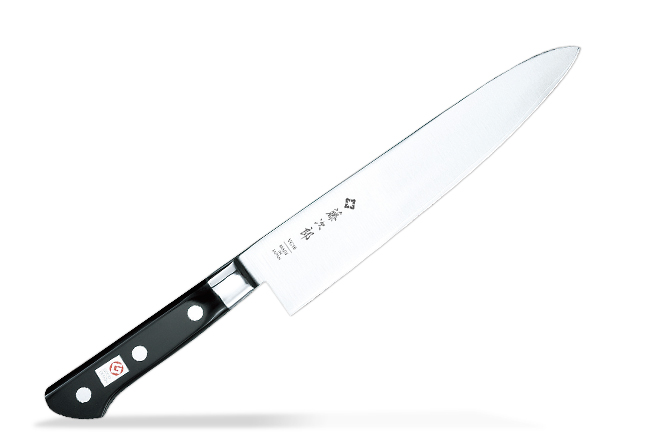
CLASSIC Chef Knife 210mm (F-808)
TOJIRO
A 210 mm double-bevel chef's knife with a VG10 core, 13-chrome stainless cladding, full-tang laminated handle and bolster.
- Repair
- 8.7/10
- TCO
- 8.7/10
$139.00
Durable buying guide
Choose chef’s knives and cutting tools by blade geometry, steel’s balance of edge retention and toughness, handle control, and ease of maintenance. Durable designs pair predictable cutting performance with accessible honing, sharpening, and replacement support.
2 products
Superior features, extended warranties, and high-end materials for enhanced performance.
TOJIRO
A 210 mm double-bevel chef's knife with a VG10 core, 13-chrome stainless cladding, full-tang laminated handle and bolster.
8 products
A balanced blend of performance, quality, and price for the discerning user.
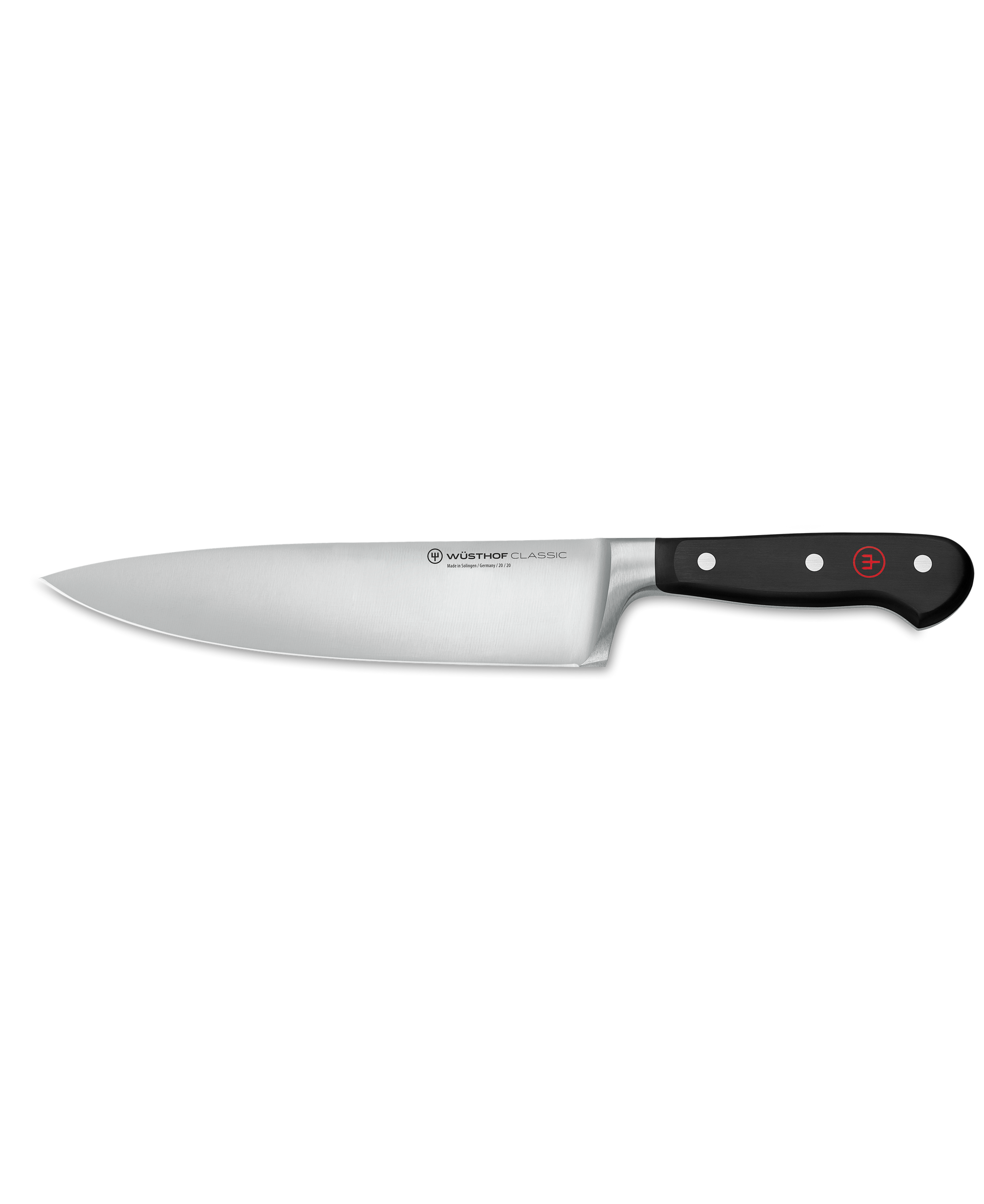
WÜSTHOF
A full-tang, fully forged Solingen chef's knife with a 58 HRC blade, full bolster and resilient triple-riveted synthetic handle.

ZWILLING
A German-forged chef's knife with a curved bolster, full tang, fine V-edge and 55–58 HRC FRIODUR blade.
GLOBAL
An all-stainless Japanese chef's knife with CROMOVA 18 steel, a convex edge and sand-balanced hollow dimpled handle.
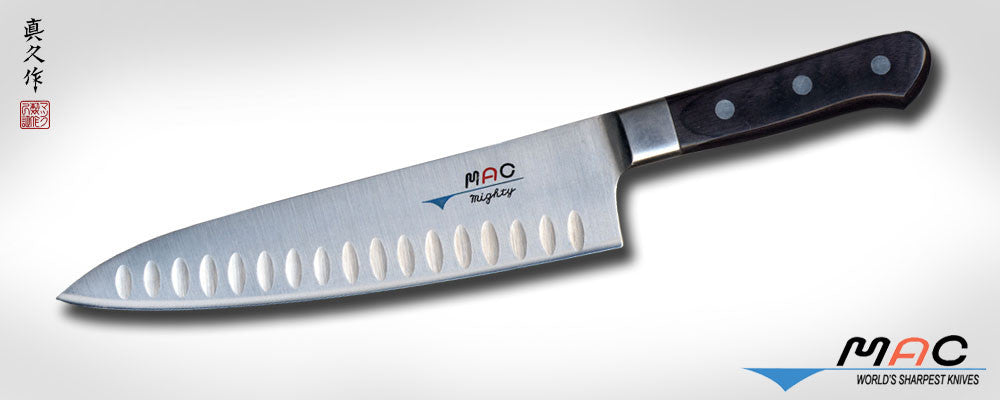
MAC Knife
A light Japanese chef's knife with a 7.88-inch dimpled blade, slim 2.5 mm stock and compact bolster.
Shun
A 6.7-ounce Japanese chef's knife with a VG-MAX core, 69-layer Damascus blade and 16-degree double edge.

Misono
A 210 mm Seki-made UX10 gyutou using high-purity EU stainless steel hardened to a documented 59–60 HRC.
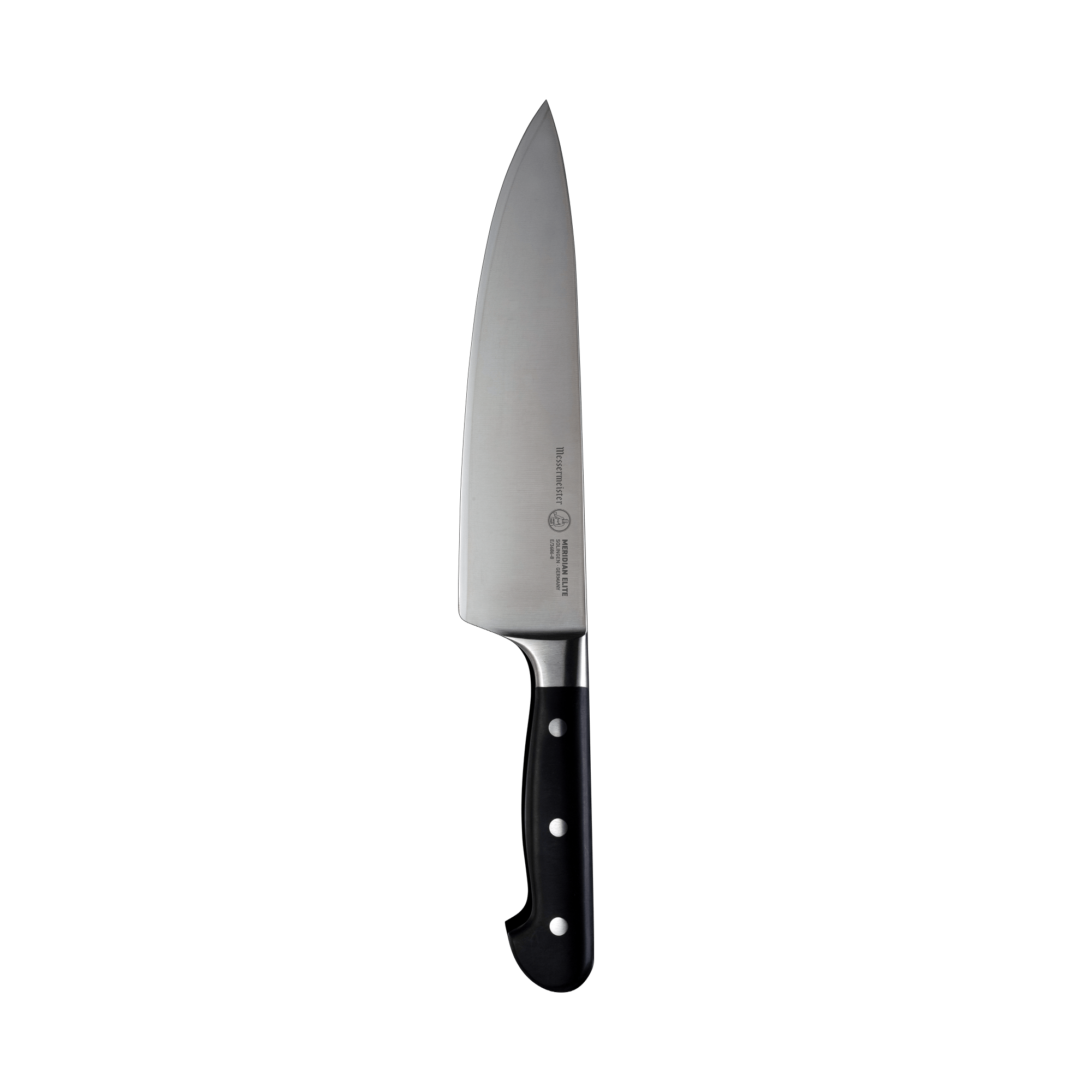
Messermeister
A Solingen-forged 8-inch chef's knife with 1.4116 steel at 58 HRC, a flat 15-degree edge and durable POM handle.
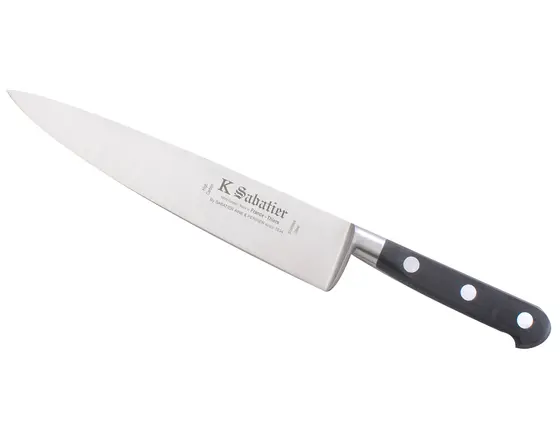
K Sabatier
A Thiers-forged 20 cm chef's knife made from one piece of Z50C13 stainless steel with black POM scales and three aluminum rivets.
2 products
Budget-conscious selections offering the best value and reliability for essential needs.
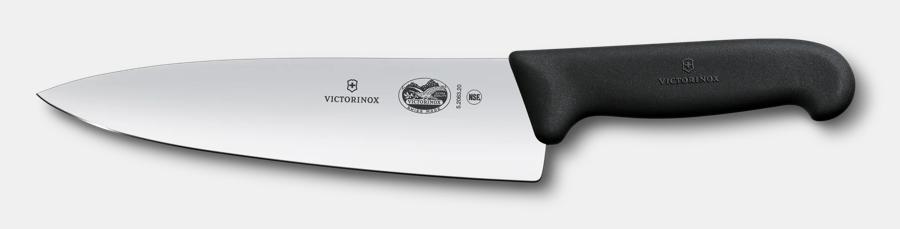
Victorinox
A lightweight, Swiss-made stamped chef's knife with a 7.9-inch straight edge and non-slip TPE Fibrox handle.
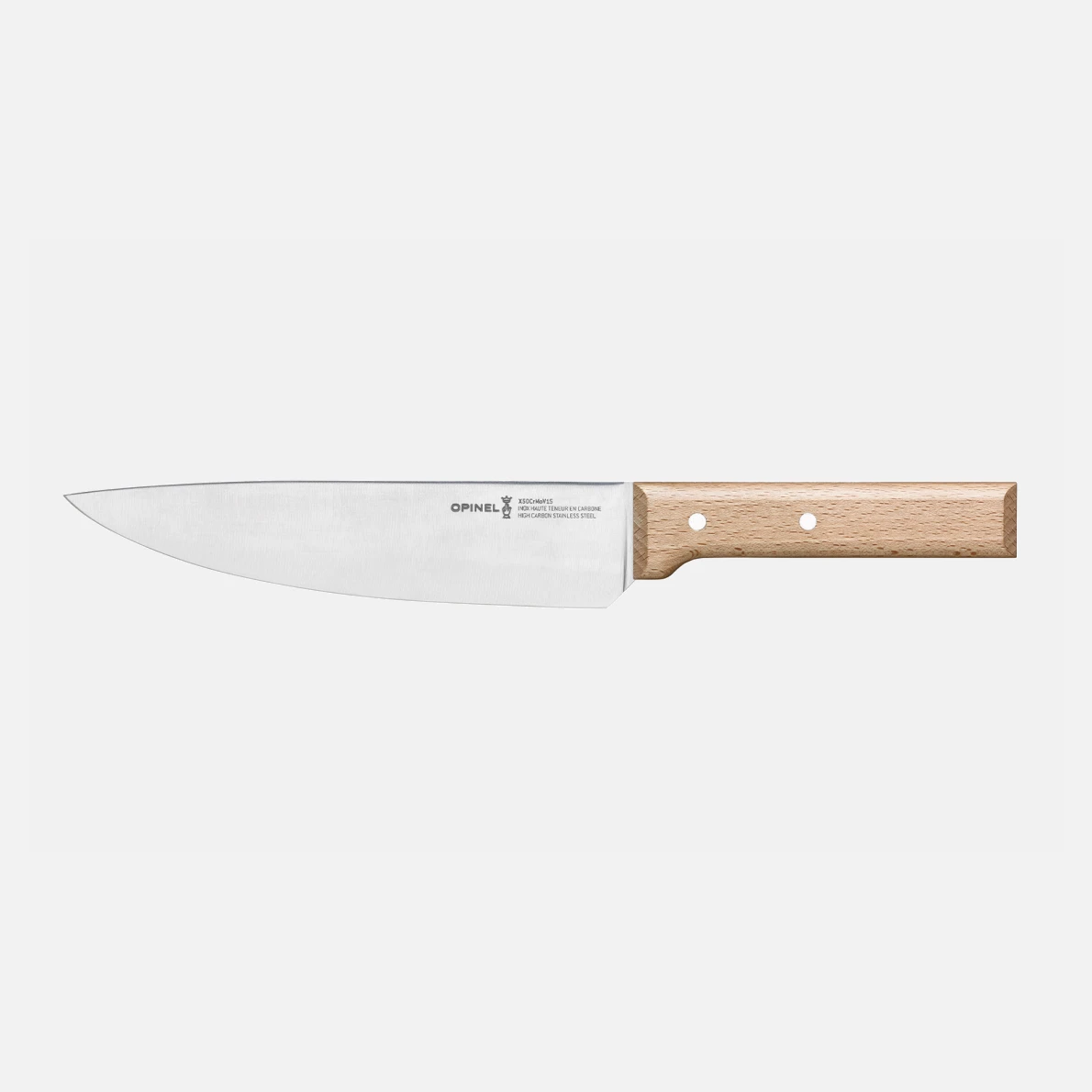
Opinel
A light French chef's knife with a 20 cm, 3 mm X50CrMoV15 blade and varnished PEFC-certified beech handle.
Shop by brand
Buying guide
Start with the foods and motions you use most. A curved chef’s-knife belly supports gentle rocking, while flatter profiles favor push cuts; a compact utility or paring knife can be better for detail work. Then test the grip rather than choosing by blade length or prestige alone. Check knuckle clearance, whether the pinch point is comfortable, and whether the handle, bolster, and balance let you guide the blade without squeezing. A knife that feels controlled through repeated cuts is more likely to remain your daily tool.
Look straight down the spine and along the edge before buying: the blade should not be visibly bent, the grind should appear even, and the handle should have no movement or moisture-catching gaps. Examine the spine, choil, bolster area, and handle transitions for sharp corners or rough finishing where your hand rests. Do not treat a visible full tang as a complete durability test; tangs may be visible or hidden. What matters in use is secure assembly, comfortable contact points, predictable balance, and a blade shape suited to the intended cuts.
Thin, acute edges can cut efficiently but should not be treated like wedges or cleavers. Follow the maker’s limits for the specific knife, and use a purpose-built blade when working near bone or joints. Choose a board that yields under the edge: Victorinox recommends wood or plastic instead of natural or artificial stone, while Shun advises against marble, granite, glass, and rigid synthetic surfaces. Move chopped food with the spine rather than scraping the cutting edge across the board. These habits reduce avoidable dulling and edge damage.
A factory edge is temporary, so confirm how the knife will be maintained before purchase. Honing and sharpening are different: honing realigns a rolled edge, while sharpening removes metal to form a new edge. Check whether the maker recommends a rod, guided sharpener, or whetstone for that blade, and whether professional sharpening is available. Favor conventional, serviceable geometry and clear care guidance over unsupported claims that a knife never needs sharpening. Regular light maintenance is preferable to waiting until excess cutting force feels normal.
For long life, plan to hand wash a large chef’s knife with mild soap, then dry it promptly. Victorinox says hand washing is gentler on large blades even when a synthetic-handled model is dishwasher-safe; Zwilling likewise recommends hand cleaning to limit premature wear from aggressive cleaning agents. Store the edge in a block, fitted drawer organizer, sleeve, or suitable magnetic holder rather than loose among utensils. If the handle is wood, follow its maker’s oiling and washing guidance. Care requirements should match the routine you will actually follow.
FAQ
Start with the foods, board size, and cutting motions you use regularly, then choose a blade you can control without crowding the board. Victorinox notes that shorter blades offer agility while longer blades help with larger ingredients, and recommends matching blade length to the cutting board. Check knuckle clearance, pinch-grip comfort, balance, and whether the edge profile suits rocking or push cuts before prioritizing appearance.
No. Forged and stamped describe manufacturing routes, not a complete durability verdict. Victorinox explains that forged knives tend to be heavier and may use harder steel, while stamped knives can be lighter and easier to resharpen; it treats the choice as a matter of preference. ZWILLING likewise describes distinct forging and stamping processes. Compare the actual steel, heat treatment, grind, handle fit, weight, and sharpening support rather than using construction method alone.
Honing mainly realigns an edge that has bent slightly in use, whereas sharpening removes metal to form a new edge. Victorinox advises sharpening when honing no longer restores useful cutting performance and notes that frequency depends on use and maintenance. Use a tool compatible with the blade’s steel and edge geometry; if you cannot hold a stable angle safely, a qualified sharpening service is a reasonable alternative.
Hand washing is the lower-risk routine even when a maker labels a synthetic-handled knife dishwasher-safe. Victorinox recommends washing large knives by hand because contact with the basket or other metal can damage the blade, and gentler washing can preserve the edge. Clean soon after use, especially after salty or acidic foods, keep fingers away from the edge, and dry the knife promptly rather than leaving it wet in the sink or machine.
Use a clean, stable wood or appropriate plastic board and avoid cutting directly on stone or similarly hard worktops. Victorinox states that natural and artificial stone dull blades and recommends wood or plastic instead. Do not scrape chopped food with the cutting edge; turn the knife and use the spine. Board hygiene and replacement remain separate considerations, so inspect the surface and follow its maker’s cleaning guidance.
Do not leave unprotected knives loose in a drawer, where blades can strike one another and the edge can be damaged. Victorinox recommends a knife block, an in-drawer holder, or a magnetic wall holder. Whatever system you choose, it should keep each edge separated, hold the knife securely, allow retrieval without contacting the edge, and remain clean and dry. A fitted blade guard is another practical option for drawer storage or transport.
Honoring the visionaries whose work paved the way for the products we rely on today.
Invented the Opinel pocket knife in 1890 while working in his family's edge-tool workshop. The design became part of Savoyard and French cultural heritage, and the company's history presents it as a long-running design lineage in cutting tools.
Founded a cutler's workshop in Ibach in 1884, established the Association of Swiss Master Cutlers, and developed the Swiss Officer's and Sports Knife, patented in 1897. His work provides a documented multi-purpose pocket-knife lineage within modern cutlery.
Designed GLOBAL kitchen knives in 1985 after being commissioned to develop a new range for professional chefs and home cooks. The brand's account links the resulting design to Japanese manufacture, double-sided grinding, and attention to hand balance.
Founded a shears and steel works in Solingen in 1814. Under later generations, the company expanded into handmade pocket, bread, vegetable, butcher's, and forged kitchen knives while retaining production in the Solingen cutlery center.
Research last refreshed
P. W. Goad · 1955
Goad describes a 500× microscopic method for judging cutting-edge sharpness, illustrates edges of differing quality, and outlines a working definition and alternative tests. The paper supports inspecting apex condition rather than treating brand or nominal steel grade as a substitute for edge quality.
James Hillier · 1951
Hillier separates repair of large nicks from routine resharpening and describes a method using a fixed sharpening back, fine abrasives, polishing powders, and prepared glass plates. Although written for microtome knives, it provides useful historical evidence that repeatable geometry and progressively fine finishing govern edge restoration.
P. Albrecht · 1960
Albrecht models the extra ploughing force created by a cutting edge with finite sharpness and experimentally checks the resulting force diagram. The work concerns machining rather than food preparation, but it clarifies the general mechanical reason a rounded edge demands additional force and changes cutting behavior.
